Charlie G reports back from the June 12th launch of the Bread & Roses caucus of the NSW Socialists, held at the Red Rattler Theatre in Marrickville, Sydney.
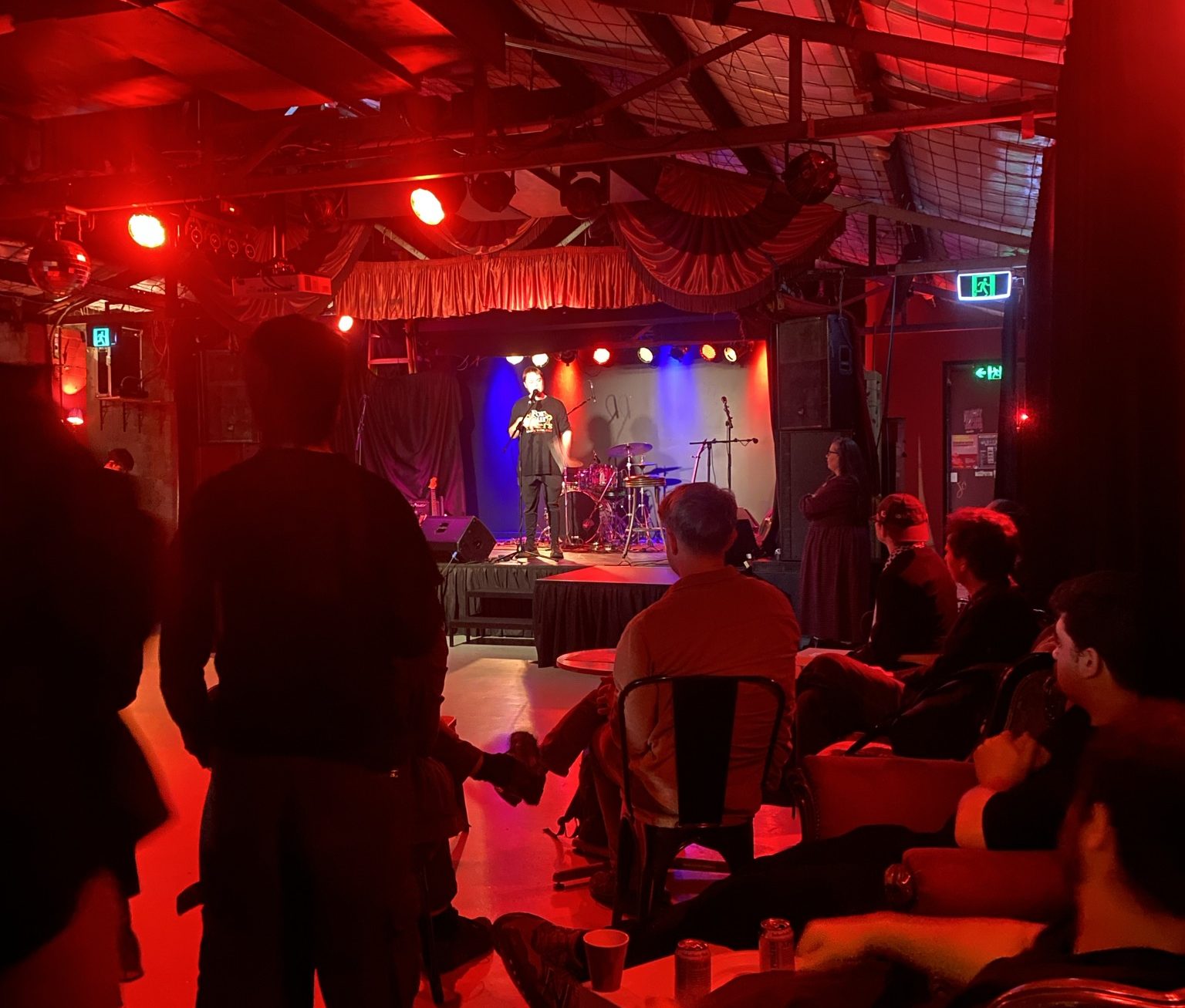
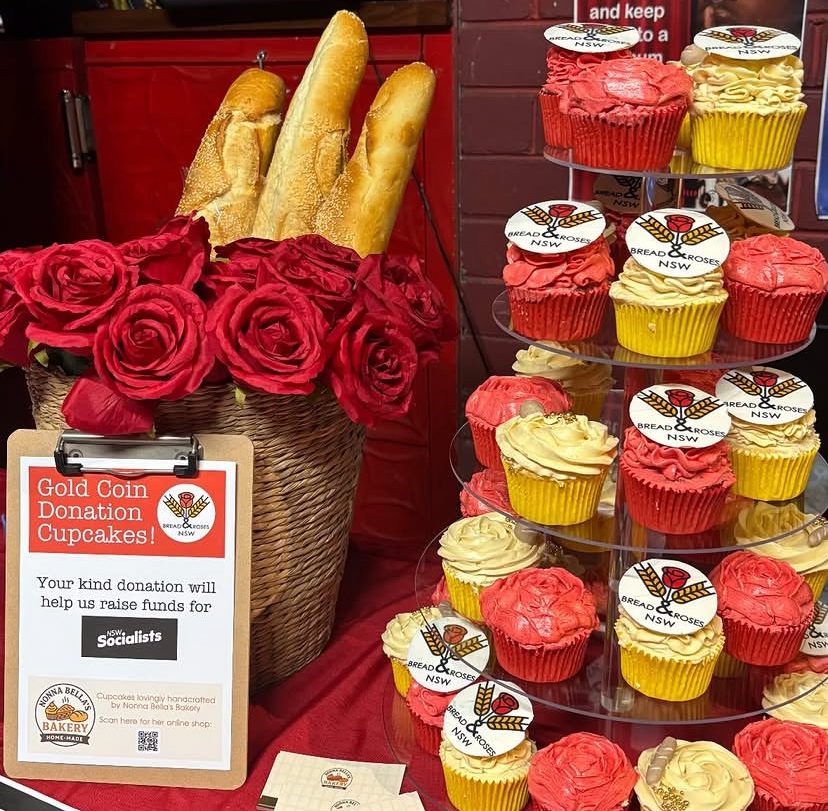
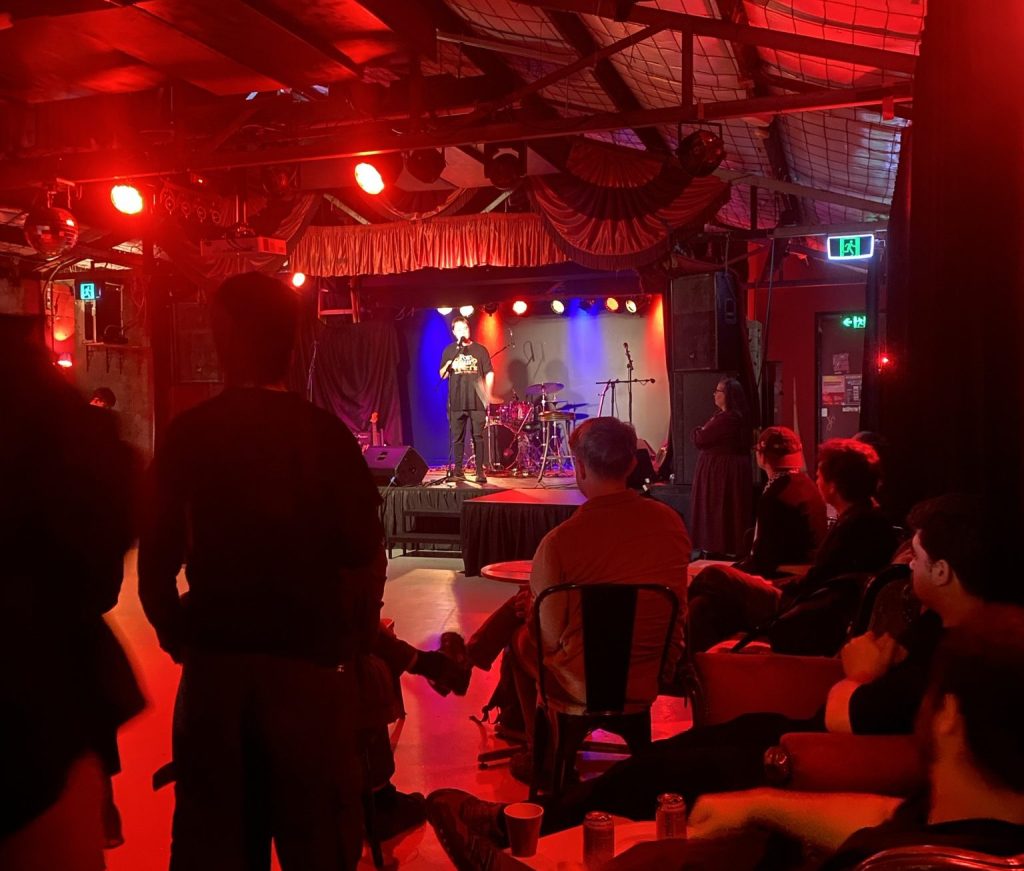
Bread & Roses, the independent socialist caucus of the NSW Socialists, held a launch party to announce their formation on June 12th. The event was well attended and sported a decent number of talented performances from folk musicians, a jazz band, and a poetry open mic. An excess of around forty people turned up to the party, which was no small feat for a socialist event in Sydney. Many sects were present: Communist Unity, the Red Anti-Imperialist Collective (Red Ant), Red Spark, and the Platypus Affiliated Society. Solidarity’s Sydney branch also attended, uncharacteristic for the lesser twin of the dominant Socialist Alternative.
The name of the caucus is a homage to the slogan of the 1912 strike by mostly women migrant workers in a Massachusetts textile factory. It is intended to show the caucus’ position as proponents of women’s liberation and socialism. However, somewhat ironically, the gender balance at the launch event was firmly male dominated; an issue which much of the socialist left struggles with, although Communist Unity is no exception.
Seeing such a diverse array of tendencies hanging out was certainly an inspiring spectacle, and hopefully is a sign of things to come on the NSW left. Bread & Roses should be proud of what they have achieved. However, the question remains, on what basis have these tendencies been brought together?
The Caucus’s core principles are generally unobjectionable that even the dominant SAlt bloc within NSW Socialists would agree with them, at least in theory, if not in practice. These principles are: political unity in action, internal democracy, organising and community building, equality and respect, raising political consciousness through engagement. The generality of these principles is such that they are unable to act as a tangible basis for unity. When a political ‘program’, if it can be called that, is so broad that everyone can agree with it, it becomes devoid of political content. When speaking to members and examining the origin of the caucus, it becomes clear that its primary organisational basis is purely to oppose the SA block within the party.
The Caucus was formed in a somewhat ad hoc manner. It grew out of a number of independents, ie; non-SAlt members of NSW socialists, who were concerned by SAlt’s domination of the party’s founding conference in November last year. My colleagues at the Labor Tribune have written extensively about SA’s questionable conduct at the founding conference, their subsequent bureaucratic crackdown on Bread & Rose’s use of the party’s name, and their uncomradely behaviour towards Bread & Roses members at a number of Sydney preselection meetings.
These events make it clear that rivalling SAlt within NSW Socialists is an essential task for those who wish to see this party become anything more than a recruiting front for the largest sect on the continent. To this end, Bread & Roses have made a great start, standing a number of delegates for the party’s national conference at this weekend’s delegate elections. However, absent a concrete positive political vision for the party, the caucus is destined to fall apart come the first test of its’ opposition to SAly. If a caucus wishes to stand the political tests that come with factional organising, then it must have a positive vision for the party, the class, and the workers’ movement.
It is clear that members of the Caucus do have such a vision. Comrade Kylee gave a speech containing the beginnings of a more concrete politics which the caucus requires. She states that the caucus is for political pluralism, freedom of criticism and debate. It is for rigorous democracy in the party by creating local units of power in the form of geographical branches; a position that SAlt has been opposed to as this level of member engagement would jeopardise their monopoly on decision making. Bread and Roses wants to educate and train cadre within the party. Moreover, Kylee stressed the importance of organising and agitating constantly, not merely around elections, and most importantly, in a non-sectarian manner.
These positions are fundamental to the formation of a mass communist party which would be able to act as a nerve centre; a brain of the class struggle, and ultimately constitute itself as a real challenger to the bourgeois state. However, such a position cannot exist solely in the minds of the members of a caucus which wishes to bring such a party about. It must be open in its political program and agitational material. It must be explicitly fought for within the socialist party, in plain view of all its members and the entirety of the workers’ movement and class it wishes to represent.
The astute reader will observe that the apparent aims of Bread & Roses are more or less aligned with that of the Communist Caucus in Victoria and Queensland. Those aims are partyist. That is; for the formation of a mass communist party, able to merge scientific socialism with the workers’ movement, and form a systematic opposition to the capitalist state.
In their article What Is the Communist Caucus?, Anthony Furia negatively defines the communist caucus:
What the caucus is not, has never claimed to be, and does not aspire to be, is a broad tent ‘opposition’ to the current orientation of The Socialists; one dominated by the attitude of Socialist Alternative to the project (an attitude which, it seems, is increasingly less monolithic, and often unclear, in character). We are not attempting to embody some sort of Frankenstein’s monster of sects; a cobbled-together mishmash of groups which find themselves opposed to Socialist Alternative simply because Socialist Alternative is the biggest target.
This type of “cobbled together mishmash of groups which find themselves opposed to Socialist Alternative” is precisely what Bread & Roses will be absent a positive politics. In the absence of a NSW Communist Caucus, will Bread & Roses take up the mantle of partyist tendency within NSW Socialists? In conversation with their members, it appears as though many are sympathetic to such a position. That much was evident in comrade Kylee’s speech.
The tendency of loyalism to the bourgeois constitutional state is one that socialists worth the name must oppose. The Socialist Party project, in its current form, is little more than the Greens in slightly more agitational language. In my experience, this is a tendency that comrades in the Bread & Roses Caucus are ardently opposed to. While they are not a monolith, they are certainly revolutionary. As comrade Kylee aptly stated; “Freedom is acquired by conquest, not by gift. No one is going to hand liberation down to us”. In order to carry this opposition into the realm of organisation and action, the caucus must adopt a concrete platform outlining these revolutionary ends. The Communist Caucus has a number of such programmatic documents which they would be more than willing to share with Bread & Roses.
While the Bread & Roses Caucus, and the Socialist Party for that matter, are still in their infancy, it is clear that these organisations contain the seed of the mass party of the working class, its organ and its champion which the movement so desperately needs. However, it is still to be seen whether this seed will be nurtured into the militant, fighting organisation it has the potential to be, or if it will be uprooted by the forces of opportunism, by the logic of capital, by loyalism to the state form, the forces of reaction, or the political entropy many an electoral formation have fallen to. Bread & Roses has immense potential to play a key role in forging this kind of party in NSW. At risk of sounding like a broken record, doing such is a matter of program. The rest will follow.



 PARTISAN!
You must be logged in to post a comment.