Thomas Tews argues that the Trump administration is the latest stage of 128 years of US imperialism toward Cuba.
At a meeting of US President Trump’s cabinet on May 27, 2026, Secretary of State Marco Rubio stated:
Cuba’s in a lot of trouble because, unfortunately for them, it’s run by a bunch of incompetent communists. […] It’s 90 miles from our shores, and having a failed state 90 miles from our shores is a threat to the national security of the United States.
Cuba—a country strangled by US sanctions, with a land area equal to 1 percent of that of the United States and a population equal to 3 percent of the US population—is supposed to pose a threat to US national security? It appears that the Trump administration is preparing yet another imperialist intervention in Cuba under flimsy pretexts. The first such intervention took place 128 years ago, as Russian revolutionary Leon Trotsky (1879–1940) pointed out in a speech delivered to Russian workers in 1924, and included in a later pamphlet entitled “Europe and America”, characterising the international role of US power and wealth:
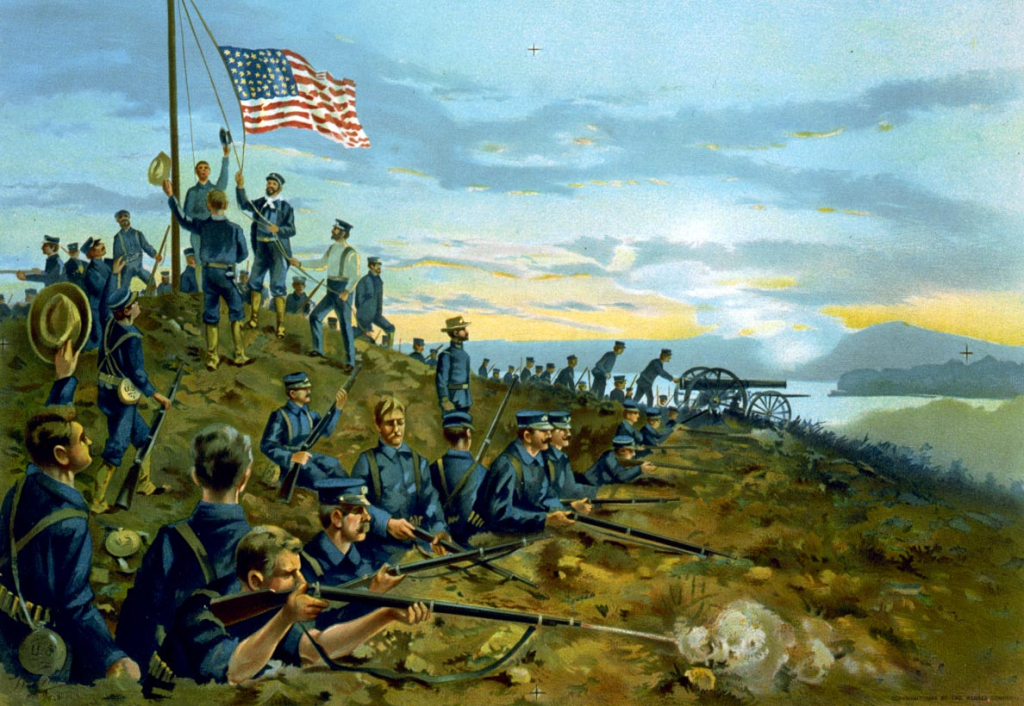
America’s full and complete entry into active world imperialist policy does not date back to yesterday. If we try to fix the date, we might say that the decisive breaking point in the policy of the US coincides approximately with the turn of the century. The Spanish American war occurred in 1898 when America seized Cuba, thereby assuring herself the key to Panama, and consequently the entry to the Pacific Ocean, China and the continent of Asia.
On April 25, 1898, the US government declared war on the Spanish colonial power in Cuba over the mysterious explosion of the US battleship Maine in Havana harbour. The following “splendid little war”, as future US Secretary of State John Hay (1838–1905) described it, officially ended with the Treaty of Paris, signed by the US and Spanish governments on December 10, 1898. Although Cuba formally gained independence under this treaty, it came under US dominance, as evidenced, for example, by the US right to intervene in Cuba in the event of political unrest, which was amended to the Cuban Constitution in 1901 (and only repealed in 1934). This system can be characterised as neo-colonialism, which Kwame Nkrumah (1909–1972), the first President of Ghana, defined in his book Neo-Colonialism: The Last Stage of Imperialism, first published in 1965, as follows:
The essence of neo-colonialism is that the State which is subject to it is, in theory, independent and has all the outward trappings of international sovereignty. In reality its economic system and thus its political policy is directed from outside.
The current US administration’s efforts to re-establish neo-colonial or imperialist dominance over Cuba are the antithesis of the vision of the Cuban poet and freedom fighter José Martí (1853–1895), the idol of Cuban revolutionary Fidel Castro (1926–2016), who, in his essay “The Truth About the United States”, first published in 1894, saw “the continent’s peace and glory secure only in the frank and free development of its various native entities.”

 PARTISAN!
You must be logged in to post a comment.