O. Dziga argues that the deepening US imperialist offensive across the globe, and a bonapartist drive in Indonesia, demands a unifying anti-imperialist struggle which fights the dead ends of imperialist backed liberalism and working class misleadership. The following presentation was given at a Melbourne panel organised by the Solidarity Committee For Rakyat Indonesia And Papua (SCRIP) in April.
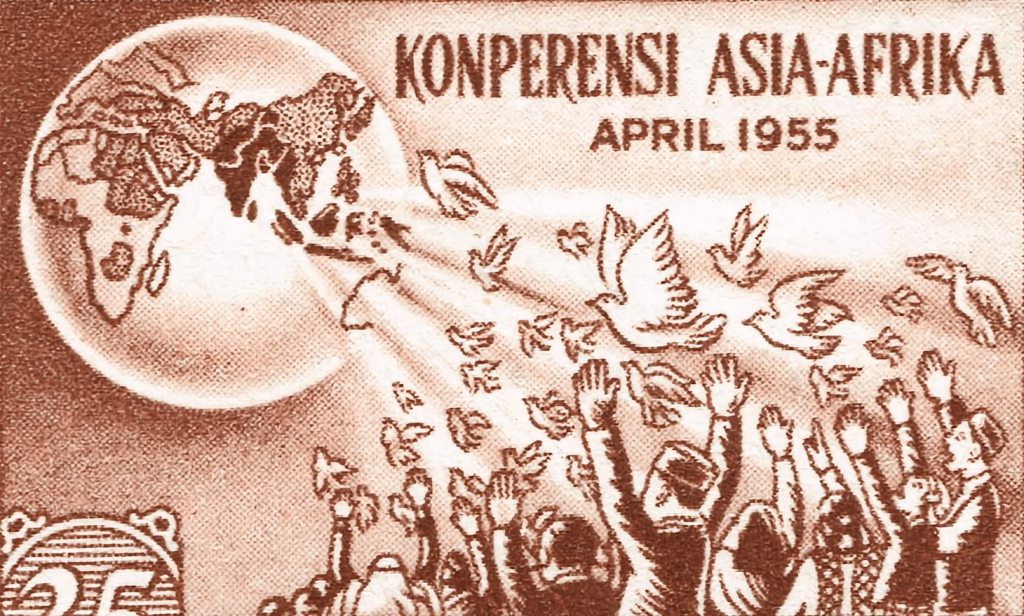
It is vital that communists in imperialist nations engage deeply with the political struggles and questions of other countries, especially those in the neo-colonial world, and especially in the region we live in. This not just a basic political duty but has deep implications for our own work here and the struggle to break it from stultifying national narrowness. World imperialism is a global system on the rampage, and it will only be defeated by a global working class anti-imperialist struggle. Its up to us to start building this.
Comrades today have laid out quite clearly the drive towards deeper bonapartism and militarism in Indonesia. I think it is important to stress the global conjuncture that this is taking place in. Thirty years of unchecked US imperialist hegemony were waged under the watchwords of liberal democracy and the “rules based international order.” This liberal world order of multinational institutions masked a globalised US cartel system of imperialist exploitation, propped up by the dominance of the United States and its military might.
Today the stability of this liberal imperialist order is done for. But what the imperialists want to unleash on the world is even greater brutality. Declining hegemony is forcing the US into a corner. In response it is lashing out across the world, turning the screws and ripping up those global institutions which it built but which no longer serve much use to it. The American Empire is projecting force more and more nakedly against regional adversaries, attempting to line up and regiment its allies (including Australia), and to put the squeeze especially on the neocolonial countries of the global south. In office, Trump has imposed tariffs on most of the world, gone to war with Iran, bombed Nigeria, facilitated the genocide in Gaza, kidnapped the president of Venezuela, threatened Mexico, Greenland, Colombia and more, and is starving Cuba. This process is not exactly rational, but there is a logic behind it: the logic of a powerful animal being backed into a corner. We can’t discount this.
In 1998, the partial victory of bourgeois-democratic reform in Indonesia followed the collapse of the New-Order military regime and mass protests. This was the outcome of a tremendous struggle, but what followed was conditioned not just by national but global conditions. With US liberal hegemony at its hight at the so called “end of history”, American imperialism had not much use for a Cold War holdover like Suharto in the saddle. If anything, it ideologically favoured a more “democratic” shell for neocolonial exploitation.
Of course, militarism and bonapartism were never really defeated by reformasi. But this restructuring of power did provide stability to the system and foster real illusions in it. The liberal order also provided a degree of relative global stability for the Indonesian elite. It allowed it to reap the benefits of investment driven development, especially in the commodities sector, and to navigate between US imperialism and China to do so. Today, with the US offensive deepening against the whole world, the space for this stability is unwinding. Illusions in peaceful and gradualist development towards national prosperity in Indonesia are coming up against the stark nature of social inequality and often worsening conditions. The result is an increasingly explosive situation, as we’ve seen in the last year not just in Indonesia (from late August) but in countries across the neocolonial world. The legacies of predatory bonapartist rule in these countries are the historic product of colonial and neo-colonial underdevelopment and uneven development, and the dominance of imperialism. They reflect the nature of a weak national bourgeoisie, which exists in an intermediary position between world imperialism and the masses.
The dive back towards a more openly militarist and predatory politics in Indonesia has to be seen in this context of a global US offensive which is squeezing counties across the global south. We see throughout history that the national bourgeoisie is unwilling to rely the struggle of the masses against imperialism, since doing so would undermine their own intermediary position. When put under pressure, these elites can rely only on attempts to placate the imperialists, to exploit and repress the working class, and to shore up political stability by leaning on the military. This is in many ways what is happening today once again.
How do we fight back? The challenges facing the left in Indonesia and Australia often seem very different, but they overlap in real ways. The fight to reunify and reorient the left on a revolutionary basis and with a revolutionary program is key. We know that in Indonesia there is ferment and combustibility among broad layers of the masses. But again and again large explosions of anger escalate and ebb with nothing to show, becoming wielded by competing sections of the state and economic elite for their own sectoral interests. Breaking this cycle demands a real political fight against the politics which reproduces it: collaborationist, careerist student politics, the labour bureaucracy attached to the elite, and the politics of the liberal NGOs, which are fundamentally entwined with the liberal imperialist institutions. What Indonesian social movements need is not just more solidarity or coordination but revolutionary leadership: a program and path towards victory against imperialism.
Here in Australia we face a splintered and divided left and a weak struggle against imperialism. Months of large protests against the genocide in Gaza could do nothing to challenge the government’s slavish devotion to the US alliance, and through it to Israel. What remains missing is the mobilisation of the social power of the working class. But to take a step in this direction, and towards the unification of the left, will require a political fight against ideological ties to liberalism, and against the pro-imperialist politics which infect the workers movement from the Labor party down into the unions and into the left itself. The struggle to break the American connection in this country would deal a blow against our own ruling class and advance the anti-imperialist struggle in the oppressed world.
There are a few key conclusions which come out of this. Firstly, the anti-imperialist struggle is key. The struggle against Australian imperialism’s place in the American imperialist system, which underpins its place in the world, is critical. In Indonesia inequality, corruption, the bonapartist nature of the elite are all are connected fundamentally to imperialist subjugation and neo-colonial oppression. This means the struggle for democracy is fundamentally entwined with the anti-imperialist struggle, which demands a break with the politics of liberal reformasi. Tied to this ideological remnant of US hegemony, the left will never break the hold of the national bourgeoisie on the masses.
Deeply connected to this struggle is the defence of national minorities and the fight for the freedom of the people of West Papua. History shows that every period of political and economic crisis in Indonesia leads to an explosion of the national question. Only an anti-imperialist alliance of oppressed nationalities and ethnicities with the whole Indonesian working class offers a real path to emancipation. What must be demonstrated in struggle is the common interest of all the peoples of the archipelago in the fight against imperialist subjugation.
Its critical that all of these fights are taken to the workers movement in both Indonesia and Australia. The working class, with its immense social power, must become the fighting force of social progress, carrying behind it the whole of the masses. But to unleash this force we need to fight those misleaders of the class who tie it to class collaborationist elite politics and to the imperialists. This fight is also one to make the working class conscious of its international mission and its interest in global solidarity against imperialism.
In an immediately practical sense, we have to recognise that the coming period of international imperialist offensive, right wing reaction, and global crisis demands that the left prepare to engage in international united front action against state repression. Last years’ demonstrations in Indonesia resulted in the most significant period of state repression in the country since 1998, with every tool short of a formal declaration of martial law deployed. Thousands were arrested in this crackdown and activists are still being prosecuted, with some facing years in prison. In Australia too, state repression against those fighting for Palestinian liberation and others has deepened in recent years and months. In this period, leftists need to take the lead in mobilising united campaigns of the broadest possible forces in defence of all those caught in the coming waves of repression. SCRIP has the potential to serve as an platform for waging international campaigns of solidarity with the struggle in Indonesia and West Papua from here in Australia. Communist Unity and the Partisan Defence Committee are committed to this perspective. Genuinely engaging with and fighting to consolidate the splintered Indonesian and Australian left behind united-front actions can act as a first step to breaking down sectarian barriers and forging real unity.
I’ll end with a quote from Russian revolutionary Leon Trotsky on the Permanent Revolution in countries oppressed by imperialism:
Everything that brings the oppressed and exploited masses of the toilers to their feet inevitably pushes the national bourgeoisie into an open bloc with the imperialists. The class struggle between the bourgeoisie and the masses of workers and peasants is not weakened, but, on the contrary, it is sharpened by imperialist oppression…


 PARTISAN!
You must be logged in to post a comment.