Activists set up a camp at 251 Cope St in Waterloo, Sydney on May 24th to protest Homes NSW’s planned demolition. After the activists were dispersed on June 19th, Charlie G. and Porco report on the encampment and what the future may hold for the Waterloo encampment.
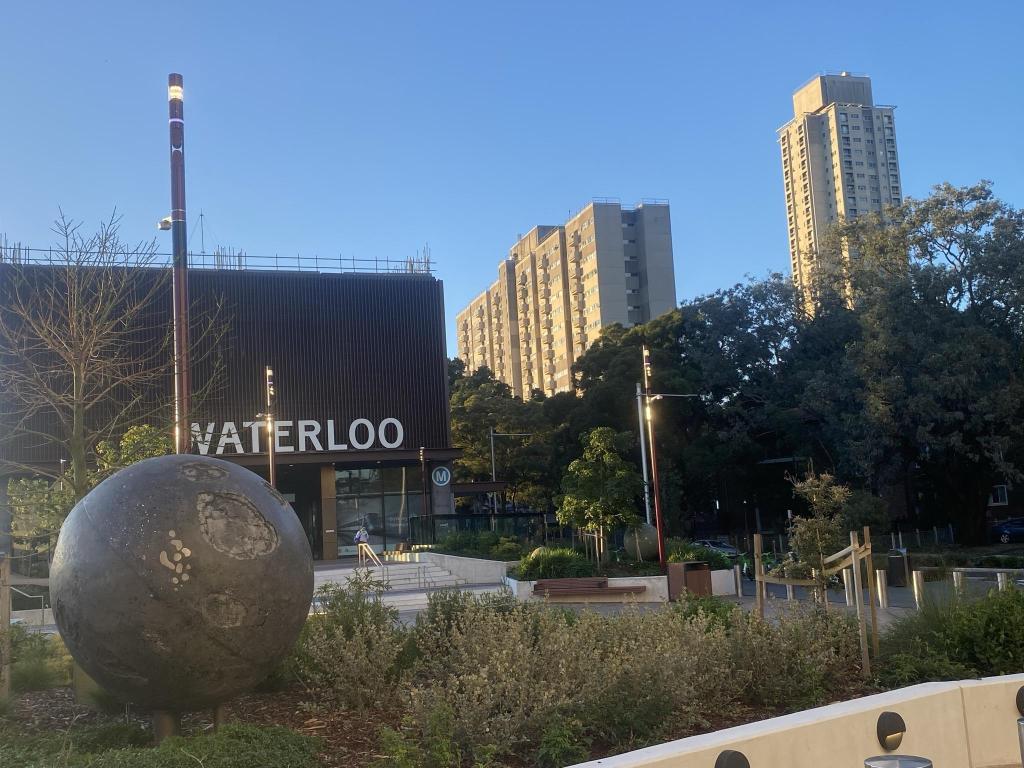
Sydney’s residents have a long history of resisting evictions and demolitions through occupations, from The Block in Redfern to the BLF ‘green bans’. Cope St in Waterloo, an inner-city suburb, was the site of the latest occupation in defence of public housing in Sydney. Redfern and surrounding suburbs have been the target of the largest and most widespread gentrification wave in Australia. Historically, Redfern is a suburb with a large Indigenous population, much of which is being dispersed by sell-offs, demolitions, and redevelopments. Redfern and its surrounding suburbs have been the target of possibly the most radical gentrification in Australia. Historically a suburb with a high proportion of First Nations residents, over the past two decades, Redfern has seen dramatic sell-offs of public housing, demolition and redevelopment. Redfern’s ‘The Block’, a block of social housing once under the ownership of the Aboriginal Housing Corporation, has since been demolished and replaced with expensive student accommodation and a retail precinct.
The Waterloo public housing developments are, more or less, the last, and certainly the largest holdout of public housing in the area. Importantly, they sit on land worth over 1 billion dollars. This is why they are next on Homes NSW’s list for privatisation and sell-offs. Homes NSW states that they aim to replace the Waterloo estates with upwards of 3,500 new homes, half of which would be private, with the rest being “social and affordable housing”. Over two thousand new ‘social and affordable’ homes would be a significant improvement from the 750 run-down homes that currently exist, but it’s a far shot from a significant improvement in public housing.
While public housing would be owned by the state government and managed by Homes NSW, ‘social housing’ is often privately owned, but government subsidised, long-term rentals for low-income residents. Rent is often capped at around 25-30% of a resident’s income. Social housing also includes ‘community housing’, which are rentals owned and managed by non-profit housing providers, called Community Housing Providers (CHPs). ‘Affordable housing’ is aimed at low-income residents who aren’t eligible for crisis housing, but are nonetheless priced out of the rental market. These are managed by CHPs, but unlike community or social housing, are managed like private rentals.
An occupation in the form of an activist encampment was established at the Waterloo estate on May 24th by various activists, mainly from Action for Public Housing (A4PH) and Socialist Alliance, on Cope St and John St. The aim of the occupation was to prevent the demolition of the buildings. While it was set up, the encampment received widespread support from Sydney’s activist left, who made up the majority of the campers. The camp, however, did not seem to have a concrete list of demands. Rather, it was organised around slogans such as “save public housing”, “refurbish, not demolish”, “housing is a human right”, and “100% public housing”. A4PH made their own demands clear on their website, which included:
- “Stop this redevelopment, which will mean a massive loss of public housing, to be replaced with private and charity-run housing, in the midst of a housing crisis and with the public housing waiting list only growing.”
- “Prioritise the repair and retrofit of existing buildings while exploring opportunities for infill.”
- “If redevelopment does proceed, massively increase the provision of social housing, Aboriginal-owned and operated housing, and public housing.”
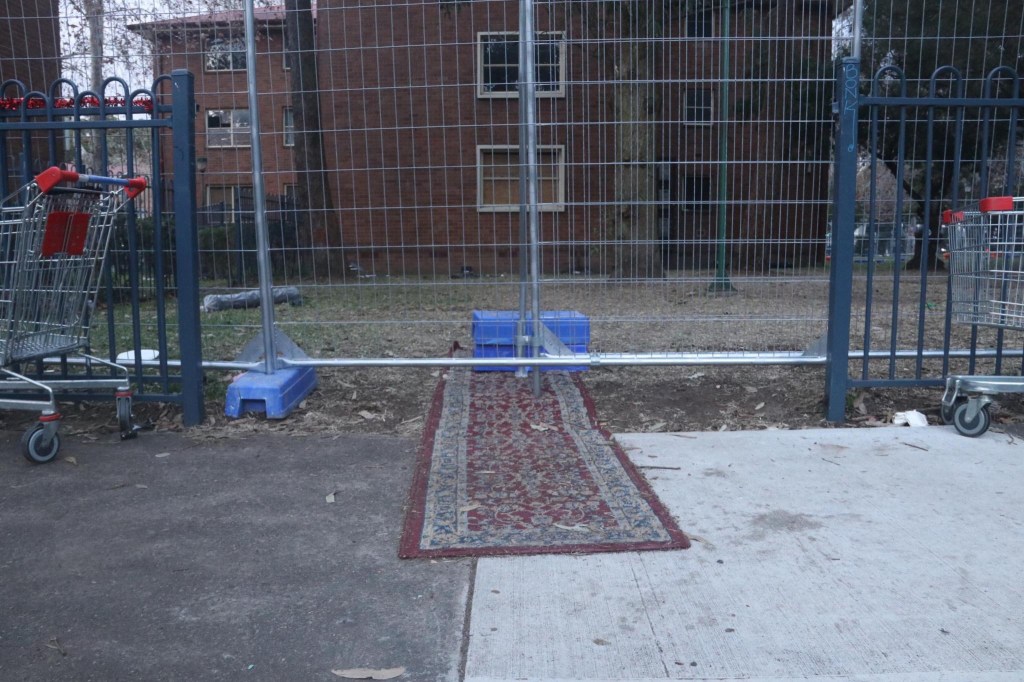
Lasting barely under a month, the camp was disbanded, and activists were swept away by a surprise move by NSW Police, who dispatched riot officers early in the morning on June 19th. This sweep was done to make way for construction equipment and demolition workers, who set up in advance of the scheduled demolition. While activists attempted to resist this sweep, with one activist chaining themselves to the bottom of a truck, they were ultimately dispersed.
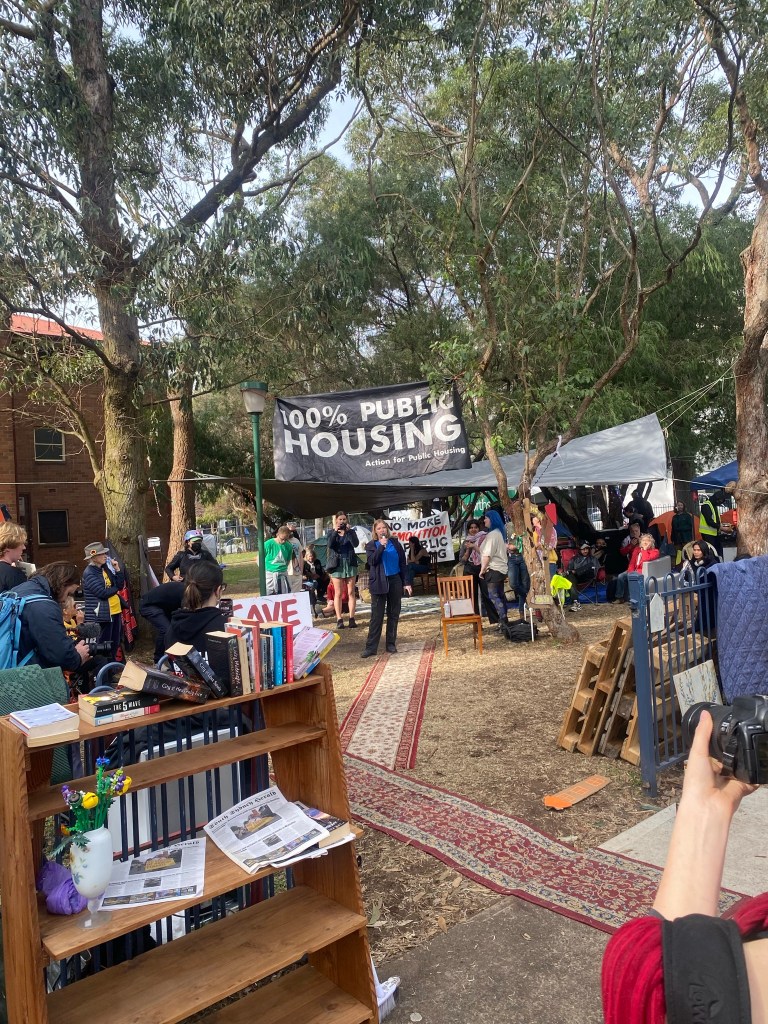
Speaking at a snap rally on June 18th, Rising Tide Organiser Zack Schofield outlined what the current strategy was at the time. He stated that the camp needed to “kick up so much of a fuss that we create political friction for this decision”, and that we need to contest the decision to demolish the houses up until the next election (March 2027), at which we need to “change the government”. Speaking on his experience on the recent Sumud Flotilla for Gaza, Schofield stressed the importance of an offensive campaign; one where “every person in a position to attack Labor” does so.
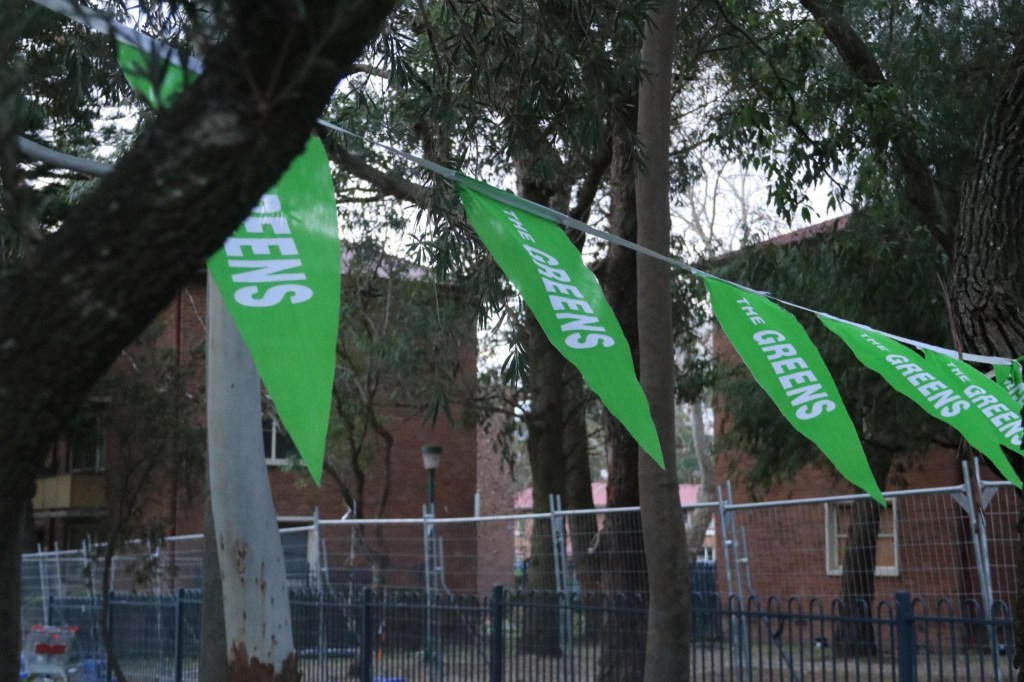
Greens councillor Philipa Veitch also spoke. She highlighted how the current housing crisis is the fault of state government policy over the past two decades, and that public/private housing partnerships, like the one planned for Waterloo, have only delivered millions in profit to the big banks and development firms. I gathered from these speeches that the main strategy at play is to block the demolition and agitate around it until the next state election. Presumably, they will then advocate for voting for the Greens, who will act against the demolition and future sell-offs.
The other interpretation is that we simply create so much political friction and public outrage at this decision that Labor is forced to stop the demolition and sell-offs or risk being voted out. Both strategies boil down to pressuring the state to renege on a legally binding, multi-billion-dollar contract with one of Australia’s largest developers. These delivery partner contracts are not merely a sheet of paper. If it wishes to terminate the contract, the government would have to, at minimum, pay potentially billions in damages to Stocklands, and at worst, be drawn into a lengthy legal battle, which may end in performance of the contract being mandated.
This would mean the development goes ahead anyway. Moreover, even if another party were to be elected, they are still bound by the contract executed by the previous government. In comparison to such costly measures, sending in riot squads to sweep out activists is a small price to pay. Ultimately, it is unclear what leverage the encampment has to get the government to enter the costly battle of terminating the development contract, beyond delaying demolition via direct action. Even then, this is not a viable long-term strategy.
In her speech, camp organiser and Socialist Alliance candidate Rachel Evans made a point on how “Vienna has 60% of its residents living in beautiful, affordable public housing. We can have this too, if we organise”. Evans is here referring to the ‘Vienna Model’, which in recent decades has been characterised by public/private partnerships, precisely what the encampment seeks to block. Furthermore, policies to reform Australian cities to have even remotely the same level of social housing as Vienna would be met with such fierce resistance from both domestic and international capital that they would not make it through the legislative process.
Just look at the reaction of civil society to Labor’s minuscule negative gearing reforms. This is to say that in Australia, such a demand is a revolutionary one, and will not be met via electoral pacts between socialists and the Greens. Pressuring Labor into such housing reforms is a dead end. Moreover, the entire Australian economy is predicated upon ever-increasing property prices, which the working class is tied to via superannuation. A change to this structure of the magnitude that Evans is proposing would cause an economic catastrophe and would do such harm to the interests of capital that no bourgeois party, let alone the bourgeois state apparatus itself, would entertain the idea. Ultimately, the issue lies in the economic base of Australian society, not its political superstructure.
Prior to Veitch’s speech, Charlotte, a camp organiser and member of Watch the Cops, spoke on how the police were not at the camp at that particular moment, because they were not directly threatening capital. She identified that this demolition was symptomatic of “the latest stage of consumer capitalism”. There is a stark juxtaposition between those who have been doing the grunt work, the direct action of blocking the demolition and manning the encampment, and those who turn up to give speeches at rallies, such as Veitch, and to a lesser extent, Socialist Alliance.
The difference is that the former, for the most part, do not believe in electoral politics; they are ostensibly revolutionary. The latter are reformists, so their loyalty ostensibly lies with the state. They are able to use movements like the encampment as a platform to do activism as campaign stunts. Moreover, if the Greens or even The Socialists were able to get elected to a position where they were able to meaningfully act to prevent the redevelopment of public housing, they would be subject to the same economic forces and contractual obligations as the major parties, albeit with fewer corporate donors. The prevention of this demolition requires a broadening of the agitational work around housing, and eventually the development of a revolutionary program to decommodify housing for all.
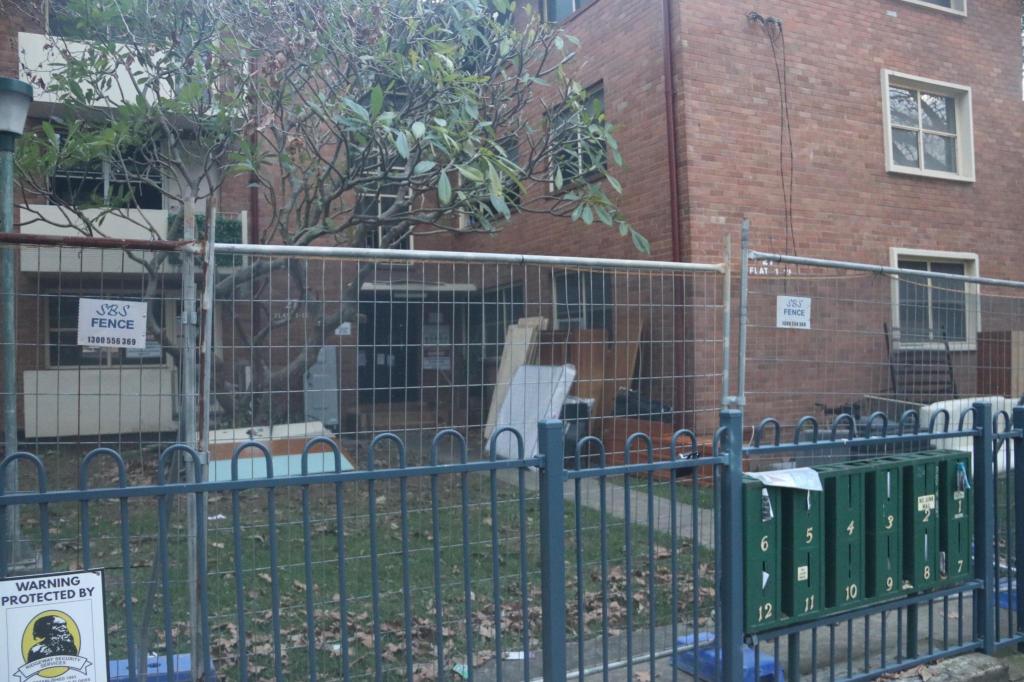
A4PH has attempted occupations in the past. Their most notable occupation was at 82 Wentworth Park Road in 2023. This occupation in the suburb of Glebe lasted only three days and was prematurely ended without police intervention. This was because a returning tenant felt uncomfortable with the number of activists residing at the occupation. This was unfortunate, but it revealed the tension between the residents and the activists engaging in the protest. While other residents were connected with A4PH, there did not seem to be particularly deep roots in the surrounding neighbourhood. There was especially no interaction with the homeless encampment nearby.
Miki, a writer and former activist, attended this 2023 housing occupation for two nights, carrying out nightshifts and supporting the organising crew. They found the organisers of the Glebe occupation to be uncertain about the approach to defending the buildings from demolition, and there did not seem to be a long-term strategy. After the occupation was forced to end, the campaign was only to be resuscitated just before the demolition began again in 2025.
Unfortunately, the strategy seemed to amount to a media campaign to try and “pressure” the newly elected Labor state government to stop the demolition plans. This strategy led to NSW Housing Minister Rose Jackson “promising” in a tweet that the government would not sell off the new homes to private owners. But the question which remains, whether in Waterloo or Glebe, what power do we have to stop it? If the events in Waterloo are anything to go by, this strategy has not meaningfully changed, and it has not become more effective.
82 Wentworth Park Road has since been demolished. The redevelopments are much the same as in Waterloo. It will deliver 43 social and affordable homes, which will be under the management of community housing organisations. It seems that this strategy, which ultimately proved ineffective in Glebe, is being utilised again in Waterloo. Overall, the encampment has provided more questions than answers. How can this well-meaning activism be scaled to actually build new high-quality public housing, and what leverage do we have to make this happen? To what extent is the community around these projects being mobilised? The movement to save and build public housing in Sydney seems to be at an impasse. It must reckon with its ineffectiveness. While there are plans from the organisers of the encampment to re-establish it somewhere in the surrounding apartment blocks, the question still remains: where to for Waterloo?
Homes NSW and the Labor government have answered this question themselves. Their answer is to bulldoze the blocks, which they deem unsafe and replace them with “affordable” housing provided via public/private partnerships, which they claim will “revitalise the community.” The residents at Waterloo are disempowered, uncertain, and somewhat divided on the question of whether to stay or simply accept the deal they’re being offered by the state. A4PH wants to build a campaign to place political pressure on the government, regardless of whether that has succeeded historically. For the rest of the activists and organisers, the question of strategy and political demands overshadows their optimism about the viability of Direct Action and Mutual Aid as tactics. If they can’t save the houses, all that remains is to endlessly delay the demolition.


 PARTISAN!
You must be logged in to post a comment.