David Clarke’s latest article on the Red Ant blog argues that US imperialism is detrimental, not beneficial, to Australia. Anthony Furia argues instead that US imperialism benefits Australia to such a degree that the Australian state is unquestioningly in lockstep with Washington.
In May, an article by David Clarke, a member of the NSW Teachers Federation (NSWTF) and presumably Red Ant, was released on Red Ant’s website. The article, titled ‘A Boot on Our Necks, a Bill in Our Hands: How US Imperialism Steals Our Livelihoods and How We Fight Back’ makes the case for the organisation of workers through a rank-and-file strategy in opposition to ‘US imperialism’, by linking the ‘bread and butter’ demands of these workers to the problem of Australian militarism (tied to our alliance to the United States).
This article, unfortunately, slides right past its own object (imperialism) entirely, and thereby fails to provide an answer to the question of the organisation of workers in the imperial core. We hope to correct the trajectory of Clarke’s analysis of imperialism and thereby demonstrate the pitfalls and shortcomings of his proposed ‘strategy’ to overcome it.
Clarke begins his article with the assertion that this is “not an abstract debate”. We agree – imperialism exists materially, as an international structure of relations of production and exchange. The debate is not abstract, because the structure is real, and ever present in the structure of the Australian state and society. Unfortunately, Clarke spares only a sentence describing this structure to us: “Imperialism is not an arbitrary foreign policy choice driven by deranged individual actors, but rather an expression of the highest stage of capitalism – a system where monopoly capital must constantly expand, dominate, and militarise to protect its profits…”
Clarke presents us with what he believes to be the ‘symptoms’ of the imperialist system domestically. The prioritisation of militarist expenditure over a social democratic state apparatus (“…a direct transfer of wealth from social need to corporate greed and militarism”) in terms of both public and private capital, and the sacrifice of civil liberties in the name of national security through repression and restrictions on speech and assembly. The argument, then, is that militarism, a product of imperialism, robs Australian workers of a livelihood.
We could proceed in several ways from here – if imperialism systematically disadvantages Australian workers, why is there so little organisation against it? How come sections of the class, historically, have organised in favour of Australia’s relation to the UK, for example, or in favour of the White Australia Policy? Why have Australian wages, job security, and standards of living been comparatively good for most of our 70+ year alliance with the imperialist superpower?
Alternatively, we could attack the weak program presented by comrade Clarke as a basis for organisation, or his alternative form of organisation. How does “workplace power” differ from prior efforts at union organisation? What makes this form of organisation, with the program presented by Clarke, more than simply another form of negotiation and transaction (‘redirect money to these projects and we will return to work’ etc.)?
We are much better off addressing the underlying weakness to the piece, which is Clarke’s understanding of imperialism. The definition provided, which contents itself purely with the terms “expand, dominate, and militarise”, fails to capture the reality of the imperialist world system, and Australia’s place within it. The hard truth for socialists is that Australian workers are not flat out “robbed” by imperialism. Australian workers in fact benefit from the structural inequality in exchange which underpins imperialism. This is an inequality in which wealth in terms of labour, energy, and land is transferred from a global south (the imperial periphery and semi-periphery, being Africa, Asia, the Pacific, and Central/South America) to a global north, an imperial core to which Australia belongs.
We should spend some time with this reality. Look around you. Where you sit now, what device you are reading this on (if you are reading it online), what you ate today, what you bought, what you wore. Where do these products come from? They certainly aren’t produced entirely in Australia (if at all). Yet, they are sold here, at varying price points, from varying places. This is globalised production. Nothing sinister strikes us about it at first, until we consider the conduit through which it is organised (bracketing for now the question of the state): the Trans-National Corporation (TNC).
TNCs, since the 1970s, have separated production and consumption internationally. Production, in most if not all stages, takes place in the global south. Electronic devices, clothing, furniture, appliances, etc. are produced from components, and often (but not always) assembled in the south, largely by contracted third-party manufacturers. Then, for final assembly and high-end finishes (what keeps the ‘manufacturing’ industries of the USA, Germany, and Japan alive) and finally, for sale, these commodities are sent to the global north. The act of sale consummates a hidden, mass-scale transfer of wealth. Commodities are produced at reduced global south prices (where wages are suppressed, kept at a minimum 10-20-fold below imperial core wages) and sold as if produced in the imperial core. Even when these commodities are sold below the assumed cost of production in the imperial core, the profits are far above what would be possible otherwise.
How does this process of unequal exchange benefit Australian workers? In two ways. The first is through the distribution of a ‘social wage’. Taxation on companies involved on various levels in the realisation of this wealth, including the TNCs themselves, facilitates the social benefits we take for granted. Medicare, Centrelink, our potable water, roads, public transport, public schools, universities, social services, aquatics centres, etc., are paid for not simply through our income tax and GST, but company and corporate taxes.
The second benefit is wages. Because of the mass-transfer of wealth from South-North in North-South trade, exports to the south generate massive amounts of value domestically (making possible the high wages of export-heavy industries), whilst imports from the south have no effect whatsoever on per-capita incomes, as prices are matched at or below, these incomes due to the low cost of production.Similarly, in union struggle, companies in the imperial core can afford certain concessions in terms of wages and benefits that those contracted factories and manufacturers in the south cannot, due to the mass-influx of wealth, thus enabling wage increases (provided struggle is present) that are not remotely possible in the global south.
We could elaborate further on the pricing and wage system at work, and how this also functions to give workers in Australia access to comparatively cheap goods (see: Temu, Shein, online tutors, delivery drivers, Uber drivers, etc.), but this would require a whole article of its own. It suffices to gesture towards its existence to make our point here.
We can now return to Clarke’s article with new eyes. What is the problem with his analysis? It forgets that the social wealth of Australia is predicated on a transfer of, on average, a total amount of wealth equivalent to a quarter of the global north GDP (including Australia) in embodied land, wages, and energy from the global south.It was, to say the least, quite surprising to have read such an article published by the Red Anti-Imperialist Collective, whom I considered to possess a much stronger understanding of imperialism as structural exploitation.
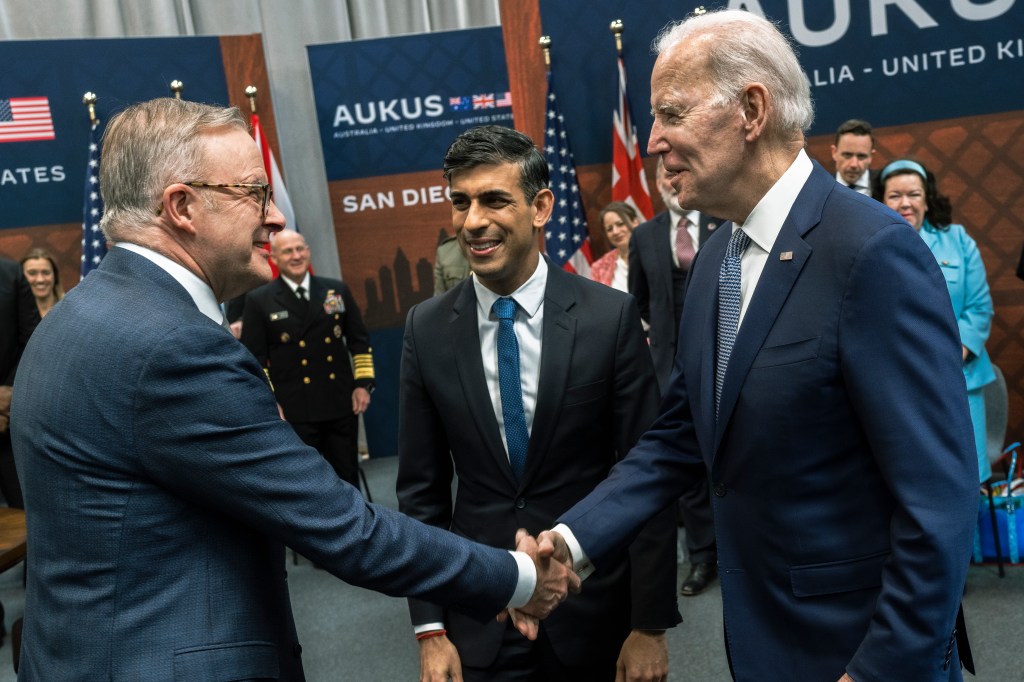
Clarke argues that our cost-of-living crisis “is intimately and structurally linked to the boot of US imperialism in the Pacific, and to the Australian state’s willing servitude beneath it.” He argues further that “Here in the Pacific, this [US imperialist reach] manifests through AUKUS, the web of ‘joint facilities’, and through the billions pledged for submarines while public housing crumbles”.
It is true that we live in polycrisis, in which multiple global catastrophes make themselves felt as systems deteriorate. One of these crises, and one of these systems, is US imperialist hegemony. Would the cost-of-living crisis improve if we decoupled from this imperialist system? Absolutely not, at least not in the short and medium term. The welfare interests of workers in Australia as it stands are not for an end to unequal exchange in a form that benefits them. Currently, the most reliable guarantor of this is the US imperialist world system.
Clarke’s error is in refusing to address the thorny question of the implicit blood-pact between the state and swathes of Australian society, including unions, workers, and political progressives. Our cost of living is high, yes, imperialism is, in a sense, in crisis, yes – but the reproduction of Australian society is dependent on its continuation. 80% of Australians work in services as opposed to production. Two-way investment with the US was over $2.6 trillion AUD in 2025, and our mining sector depends on technology patents (from the global north) for its immense productivity advantage over operations in the global south – these technologies themselves are produced in the global south.
To tell workers, then, that the cost-of-living crisis is “due to imperialism” is a comical sleight of hand. Yes, military spending detracts from wealth directed into public goods and services, but where does this wealth come from? It isn’t just from the value generated by Australia’s working population. What is the military spending for? Principally, to attempt to defend Australia’s position in this imperialist world system, as a net beneficiary within the imperialist core. If “the wealth of this country… serve[d] those who create it”, we would for sure be a lot poorer.
Because the Australian state depends upon unequal exchange for its own wealth, and thus for social reproduction, the program Clarke offers as the basis for an ‘anti-imperialist’ movement is far too limited. Clarke lists three demands:
“Severing military ties: Scrap AUKUS. End the “joint facilities.” Dramatically cut defence spending.
Redirecting the wealth: Take every billion saved from the war budget and pour it into a Commonwealth of public goods…
Building international solidarity: Forge real links with workers across the Pacific (for instance, in the Philippines, in Okinawa, or in Guam) who bear the brunt of US military bases.”
Nowhere is debt cancellation, trade restructuring, or the free movement of labour in and out of Australia mentioned, features critical to bringing an end to imperialism structurally, not simply militarism as a symptom of this structure. Unfortunately for Clarke, “the fight for a safe job and the fight against imperial war” are not “one and the same”. A safe job can be secured comfortably within the structure of imperialism. Public transport can be built by anybody from social democrats to fascists. There is nothing revolutionary. and certainly nothing anti-imperialist, about the policy of the type of anti-militarist welfare state described above.
As difficult as it is to admit, the task of constructing a mass communist party in Australia means confronting and overcoming the immediate welfare interests of significant sections of the population. Scientific socialist consciousness is not found fully-formed in the spontaneous struggle of the class, but is formed from above, within and without, through cadre-isation, agitation, and propaganda, through education. Australian workers are still workers, yes: they are still exploited, their overarching class interests are still with emancipation. These immediate interests in the maintenance of the imperialist system must be overcome just as the narrow interests of a trade-union consciousness must be. Unfortunate? Yes. Unavoidable? Absolutely.
The emancipatory struggle is international, because the class is international, and to win we must struggle internationally. This article professes no strategy for such a struggle, ignores the concrete benefits wrought by Australians through imperialism, and refuses to engage in the question of consciousness-building seriously. We are turning the world on its head – did you ever expect it to be easy?


 PARTISAN!
You must be logged in to post a comment.