With competition between the United States and China heating up, a conflict over Taiwan now seems inevitable. For Antonio Garcia, this is an inevitable product of inter-imperialist competition.
Introduction
Imperialism is a subject that goes without introduction. Leftists ensure that it, before everything else, is not forgotten. Yet for all their anti-imperialist slogans, all their anti-imperialist rallies, and all their anti-imperialist organisations, there exists a pervasive misunderstanding of imperialism. It is commonly understood as a choice of foreign policy, one that certain ‘bad actors’ choose to extract personal profits, establish dominance, win domestic support,
etc. This is an incorrect view with considerable consequences for the workers’ movement, and by extension, any genuine attempt to overturn imperialism. Indeed, this definition of imperialism
has nothing to do with imperialism, it is nothing but an imagined boogeyman. As Marxists, it is our duty to understand imperialism not as it’s fantasised, but as it actually is. As Marxists, it is our duty to apply our understanding of imperialism to our present material conditions. Then, with an adequate comprehension and application of the theory of imperialism, we will be capable of genuinely opposing the present, imperial, state of affairs.
The Marxist Critique of Imperialism
The foundational error today is believing that imperialism is a question of foreign policy. The modern leftist mind, brought into a hall of mirrors by chauvinist state propaganda and ‘Great Man’-esque views of history, is duped into seeing imperialism as a deliberate choice. In doing so, imperialism shifts from a fundamental element of capitalism to a simple case of malevolent individuals choosing cruel policies. This is a counterproductive viewpoint. When applied to the foreign bourgeoisie, it allows leftists to champion their national bourgeoisie as heroes fighting back against evil, scary, foreigners. When applied to the local, national bourgeoisie, it creates the illusion of choice. “The XYZ Party are a gang of imperialist thugs!” bellows the leftist. “We must vote for the ZYX Party to stop their crimes!” Through the illusion of choice, the leftist is deceived into supporting the political aims of one faction of the bourgeoisie against another, thereby reinforcing, rather than transcending, capitalism. Moreover, since imperialism is not the choice of evil individuals but rather a stage of capitalism, the leftist finds their efforts fruitless. For all their protests and rallies, imperialism persists all the same. This, especially for the leftist entrenched in ‘anti-imperial’ movements, is a drain on energy and resources, and their constant failures lead to one of two outcomes: latching onto any small victory they can find, tricking themselves into believing these minuscule matters mean much to the wider world, or fully embracing defeatism, thus snuffing out any potential they may have had. In any case, the misunderstanding is lethal, diminishing the revolutionary sentiments of many who are willing and capable of serving the proletarian movement. Thus, one thing must be made clear: imperialism is not a question of foreign policy.
Then what is imperialism? Let us review the existing literature.
Marx, in Capital, Volume I, noted that European colonies were inefficient and, in his time, not yet fully capitalist. Rather, the colonies were dominated by small producers, allowing feudal or even pre-feudal modes of productions to prevail in their societies. This was evident in both indigenous populations, who had not yet developed capitalism, and in settler communities, who often operated on homestead-style farms, producing solely to feed themselves and their families. However, Marx noted that the global capitalist revolution was underway in the colonies. In Indonesia, large rubber farms were enforcing wage labour, commodity production, and expropriating land and labour to the bourgeoisie. In the United States, impoverished homesteaders and ex-slaves were increasingly abandoning their farms to move into cities, thereby becoming the urban proletariat. In Australia, people flocked from across the world to find employment in gold mines, selling themselves to the bourgeoisie and accelerating the development of capitalism on the continent. Thus, Marx wrote “the only thing that interests us is the secret discovered in the new world by the Political Economy of the old world, and proclaimed on the housetops: that the capitalist mode of production and accumulation, and therefore capitalist private property, have for their fundamental condition the annihilation of self-earned private property; in other words, the expropriation of the labourer.”
Lenin, in Imperialism, the Highest Stage of Capitalism, elaborated on this view. Relating it to the capitalism of his epoch, he noted that the aforementioned expropriation of workers and small producers led to the centralisation of capitalism around banks and monopolistic companies. To be sure, Marx also understood this process to be underway in his work Wage Labour and Capital. This form of capitalism is highly centralised and globalised, one where empires evolve into massive production lines, where resource-rich colonies extract raw materials, industrial centres refine these resources, and centres of finance fund and extract profits from both. This results in the nationalisation and bureaucratisation of capitalist firms as they became too large for individual bourgeoisie to manage, and led to hitherto unprecedented cooperation between “private” and “public” industries. This then leads to different factions of the bourgeoisie, most often represented by different states, struggling against each other to secure resources, hubs of industry, and economic dominance over rival imperial blocs. Lenin, as the title states, understood that this is not the choice of individual political leaders, but a stage of capitalism. Whilst political leaders obviously benefit from such arrangements, at such a highly developed, highly interdependent, stage of capitalism, various national bourgeoisies must partake in imperialism to remain afloat. To not participate in imperialism is to not participate in capitalism- an impossibility for a capitalist. It is for this reason that Lenin reprimands “a certain disreputable writer who […] believes that imperialism is a bad habit of a certain nation…”1
Mansoor Hekmat, a markedly more recent theorist, reiterated many of Lenin’s points. Hekmat underlined that imperialism is ubiquitous within contemporary capitalism, and that no state can escape its reach without first and foremost transcending capitalism2. Thus, the opposition to imperialism in ‘victim’ states is almost always a facade for inter-bourgeois conflict. Calls to rebuke a given imperial power only serve to switch which imperial bloc a certain state services, just as calls to shift away from export-dominated economics only serve to alter which position a given state has within an imperial bloc. Thus, the typical cries of leftists to struggle for ‘independence,’ ‘self-reliance,’ and ‘national liberation,’ are not revolutionary in any sense. Rather, they are merely reforms pushed by segments of the national bourgeoisie and parroted by sympathetic intellectuals and activists. Rather than overthrowing capitalism, it only serves to exchange one set of bourgeois for another, to exchange one form of exploited labour for another. Thus, as Hekmat stresses, the national bourgeoisie is as much the enemy as the ‘foreign’ bourgeoisie and the ‘collaborator’ bourgeoisie. Whilst they may hold qualms with each other, they all seek to exploit the proletariat and maintain capitalism.
The Marxist view of imperialism is therefore evident: it is not a “bad habit” of politicians but a stage of capitalism. It is not a choice, nor a policy, nor a habit, but an integral element of highly-developed capitalism. Its objective is the same now as it was one-hundred-and-fifty years ago: to expropriate and exploit the international proletariat for the purpose of profit. Moreover, capitalism has developed to the degree that imperialism becomes integral, leading states to converge into various imperial blocs according to which monopoly dominates a given region. Such is the groundwork of modern imperial conflict. This system holds no space for individual cruelty or kindness, nor is it shaped by cliques of wrongdoers or heroes. Rather, it is as ubiquitous as capitalism itself, for imperialism is capitalism itself. Just as we cannot point fingers at someone for all the crimes of capitalism, there is not one person or group to blame for imperialism. There is but one enemy which must be faced if imperialism is to be overturned, and that foe is capitalism itself.
The Taiwan Conflict: Imperialism in Motion
We now have an overview of the Marxist critique of imperialism. It is a stage of capitalism, the stage which we presently find ourselves in, and is therefore synonymous with capitalism. Due to their symbiosis, we cannot struggle against one without the other. Those who seek to ‘first defeat imperialism, then capitalism’ or to ‘achieve national liberation, then build socialism’ are, at best, theoretically misguided, and are, at worst, stooges of the bourgeoisie. Imperialism is not a choice made by a cabal of evildoers, it is capitalism as it currently stands. It is the system by which the division of labour spreads across not just individuals, but entire societies. It is the manner by which capitalism organises the global economy, designating certain zones for mining, agriculture, industrial production, finance, etc.
We therefore find the Taiwan conflict to be an uninspiring reiteration of this charade.
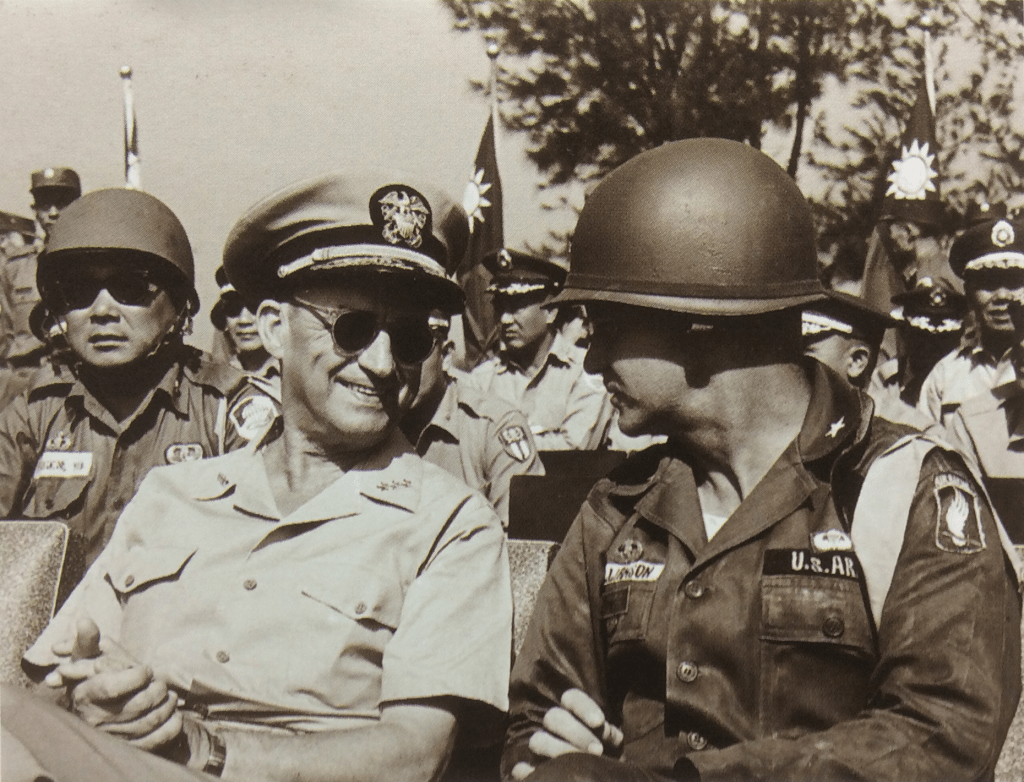
To make a long history short, Taiwan was initially conquered by the Chinese Qing Dynasty in 1683. From then until 1895, it was ruled by the Qing, who surrendered it after their defeat in the First Sino-Japanese War. The Japanese held the island until the end of World War II, which saw the island handed over to the Republic of China (RoC). This handover was critical, as the RoC would be pushed out of ‘mainland’ China in 1949, taking refuge on the island and evolving into the ‘Taiwan’ we know today. Taiwanese independence, though not directly called such by any involved party, was fiercely opposed by the Chinese ‘communists,’ who sought ‘national unification.’ This resulted in several skirmishes and attempted invasions through the 1950s-1960s, with the conflict eventually cooling without a clear victor. That was, until the 1990s. Suddenly, the issue reared its head again, with Beijing’s government undertaking military exercises around the island, asserting claim to neighbouring waters, and doubling-down on its rhetoric of ‘national unification.’
The response to Beijing’s newfound zeal for ‘unification’ has been one of international opposition. Former US Speaker of the House Nancy Pelosi visited the island in 2022, later saying “Beijing’s continued aggression against Taiwan is cowardly and cannot be met with silence.” A joint statement from the US’ Donald Trump and Japan’s Ishiba Shigeru affirmed their opposition to “any attempts to unilaterally change the status quo [of Taiwan] by force or coercion.” Australia’s previous defence minister went further, claiming it was “inconceivable” that Canberra wouldn’t support the Americans and Taiwanese were Beijing to invade the island. It is then obvious both China, a rising imperial power, and the United States-led bloc, an established imperial power, both suddenly have a keen interest in obtaining or protecting Taiwan.
What a coincidence!
The common sense of contemporary political scientists is that this is nothing but a ‘new direction’ taken by the Communist Party of China (CPC), one that is perceived as hostile by Taiwan’s allies, i.e., the US-bloc. To these ‘scientists,’ it is merely the result of Xi Jingping’s personal ambition, or of Beijing’s frustrations with Taiwanese foreign policy. This viewpoint is a thoroughly bourgeois one, one that appeals to bourgeois thinking and bourgeois ideals. It resorts to a watered-down theory of imperialism that reduces a stage of capitalism to a simple choice made by ‘bad people.’ It is also one that conveniently conceals the actual stakes of the Taiwan conflict. Indeed, the struggle for Taiwan is nothing but another struggle for resources and economic power.
Since the 1990s, Taiwan has held the lion’s share of semiconductor production. Semiconductors are vital to the world economy, as they are an essential component in computers. Your computer, phone, vehicle, and many more electronics, all need semiconductors to function. Moreover, other household appliances, such as jets, tanks, and ballistic missiles, require semiconductors to work. Without semiconductors, computers cannot be made or repaired, something which holds incredible significance to our digital-driven world. It is then no coincidence that both imperial blocs revived their interest in the island when this monopoly emerged in the 1990s. Indeed, semiconductor production is so thoroughly-monopolised that one corporation, the Taiwan Semiconductor Manufacturing Company, produced 55% of the world’s semiconductors, with Taiwanese businesses producing 65% of all semiconductors, in 2021. Further, other large producers of semiconductors are within the US’ sphere, with South Korea producing 18% of the world’s semiconductors, and GlobalFoundries, an American company, producing 7% in 2021. China, in contrast, produced 5%. With such an obvious disparity, it is apparent that the United States’ bloc holds a monopoly on semiconductor production, and that Taiwan is the heart of this monopoly. Whilst this has, thus far, not caused any major issue in international commerce, it can very easily create one. Were Taiwan to cut off their exports, world economy would certainly fall into crisis.
Thus, the motivation to capture or protect Taiwan is obvious. For Beijing, it is a matter of securing access to semiconductors, and thus, the technology which drives our world. It is imperative for Beijing to, in the short term, ensure it has access to semiconductors should Taiwan cease trade, and, in the long term, to conquer Taiwan’s monopoly for itself. This process is already underway. According to a Taiwanese report from early 2025, China already produced 23% of its semiconductors locally, with the report projecting this to raise this to 26.6% by 2027. Instead, China reached 28% self-sufficiency by the end of the year. Moreover, preparations are already underway for the capture of Taiwan, as Chinese military exercises in the region have become increasingly common over the last few years. In response, Taiwan has seen its own steady uptick of military exercises in preparation of the next great imperial slaughter. Indeed, preparations for such a war are taking place on both sides, with the United States pressing Taiwan to invest in American semiconductor projects, encouraging businesses to avoid producing semiconductors in China, and demanding that 50% of Taiwanese semiconductor production be moved stateside. In other words, both blocs are already evacuating semiconductor production from Taiwan, loosening their reliance on the island before they level it into a battlefield. Were these capital flights not enough, the United States, as well as its allies, have been undertaking naval exercises in the South China Sea almost constantly throughout the last few years. It is then obvious that both sides are preparing, both economically and militarily, for war.
The situation is then as such: Taiwan holds a global monopoly over semiconductor production. World economy therefore relies on Taiwan, as semiconductors are a critical component in virtually all modern technology. However, as China’s rise has led to an inter-imperial rivalry with the United States, it becomes clear that this global ‘sharing’ of Taiwan’s technology is no longer feasible. Both imperial blocs must establish control over semiconductor production, as, without it, they are entirely at the mercy of their enemy. Both China and the United States are actively plotting to seize or hold Taiwan for this purpose. Their methods are two-pronged, onshoring production whilst preparing to take the island by force.
As these preparations grow ever riper, we have seen increasing confusion among the workers’ movement to establish a course of action. In this regard, we find ourselves in much the same situation as the Second International. National-chauvinists campaign for their ‘national interests,’ demanding the proletariat surrender its historic mission for the defence of the bourgeois state. All the while, much of the workers’ movement stands stagnant and aloof, lacking the confidence to take a stance on the matter. Both doctrines are insufficient for the proletariat, and both can only lead to the same slaughter of millions that the Second International oversaw. We must therefore chart a correct course for the proletariat, one that opposes inter-imperial conflicts such as these and offers a sincere solution to the problems of capitalism and imperialism.
The Proletarian Opposition to Imperialism
Two bourgeois myths are being peddled to arouse support for the Taiwan conflict. On the Chinese side, we see rhetoric of ‘national unification,’ of restoring the nation and its people’s ‘rightful borders.’ On the American side, we see calls for ‘national liberation,’ for the ‘sovereignty of all nations.’ Both of these illusions are the same sorts of propaganda we’ve weathered time and time again, and must be unwaveringly opposed if the proletarian programme is to succeed.
When the German, Italian, and American bourgeoisies rose to the status of imperial power, did we not hear similar demands surrounding ‘national unification?’ Did we not see the German state demand ‘its’ people in the Sudetenland and Austria be ‘reunified with the fatherland?’ Was the same story not spun for the Italians in Dalmatia, and for the Americans in Texas? What did these programmes accomplish for the workers? Nothing. The German and Italian states drummed up chauvinistic fervour as they sent millions of proletarians to the slaughter, whilst the American workers received truly nothing. As American soldiers marched through Mexico City, workers’ lungs were blackened in the mines; as new maps of a greater America were printed, women’s faces were being melted by radium; as oil and capital flowed into American coffers, its workers were burned alive in factories. Conquest accomplishes nothing for the workers. At best, they receive no change in their conditions, and at worse, they are ground up and butchered by the war machine.
The arguments for ‘national independence-’ or if one likes, ‘national liberation’ -these words have served as nothing but diversions to the proletariat since their invention. It is precisely these sorts of arguments that Marxists have refuted countless times before. When factions of the Second International demanded support for Polish independence, it was Rosa Luxemburg who corrected such notions, noting that “What is especially striking about this formula [national liberation] is the fact that it doesn’t represent anything specifically connected with socialism nor with the politics of the working class.” It was a rallying cry of the leftist segment of the bourgeoisie, one who sought—though the term wasn’t used yet— a ‘Wilsonian’ order, one that extends the rights of man to the nation-state, promising ‘independence,’ ‘liberty,’ and ‘democracy,’ whilst maintaining imperialism behind the curtain.
When these same opportunists demanded ‘anti-imperial’ wars between ‘imperialising’ and ‘imperialised’ states, and rallied support for the First World War, it was Lenin who soberly analogised, “But picture to yourselves a slave-owner who owned 100 slaves warring against a slave-owner who owned 200 slaves for a more ‘just’ distribution of slaves. Clearly, the application of the term ‘defensive’ war, or war ‘for the defence of the fatherland’ in such a case would be historically false, and in practice would be sheer deception of the common people, of philistines, of ignorant people, by the astute slaveowners.” These points stand true, remaining firmly in-line with the aforementioned Marxist Theory of Imperialism. Struggles for ‘independence,’ ‘self-reliance,’ and ‘national liberation,’ are nothing, as Hekmat noted, but struggles by one faction of the bourgeoisie against another. They are the attempt of a slave-owner of 100 slaves to capture another slave-owner’s 200 slaves, a mere transfer of wealth from one capitalist conglomerate to another. National liberation then offers nothing to the workers but a new face to their exploitation.
To these arguments of ‘national unification’ and ‘national sovereignty,’ we find Anton Pannekoek’s Class Struggle and Nation to succinctly state our Marxist opposition:
To all the nationalist slogans and arguments, the response will be: exploitation, surplus value, bourgeoisie, class rule, class struggle. If they speak of their demands for national schools, we shall call attention to the insufficiency of the teaching dispensed to the children of the workers, who learn no more than what is necessary for their subsequent life of back-breaking toil at the service of capital. If they speak of street signs and administrative posts, we will speak of the misery which compels the proletarians to emigrate. If they speak of the unity of the nation, we will speak of exploitation and class oppression. If they speak of the greatness of the nation, we will speak of the solidarity of the proletariat of the whole world. Only when the great reality of today’s world—capitalist development, exploitation, the class struggle and its final goal, socialism—has entirely impregnated the minds of the workers, will the little bourgeois ideals of nationalism fade away and disappear.
The proletarian position on imperialism is then twofold: it is internationalist, and it maintains revolutionary defeatism. It is internationalist in the sense that it opposes nationalism and the stories it spins. It recognises that the proletarian movement is not restrained by national borders, but is a conflict between all the world’s workers on one side, and all the world’s bourgeois on the other. No segment of the bourgeoisie, even the most ‘patriotic’ or ‘progressive,’ is capable of withdrawing from imperialism, nor are they capable of giving the workers anything but the most minimal of concessions. On the other hand, the workers, even those of ‘enemy’ states, are the only means by which history will progress; maintaining the firm ranks of the proletarian movement, even across borders, is then of utmost importance. And at no point must international solidarity between workers be forgotten- this is the essence of revolutionary defeatism. We must not support the bourgeoisie’s slaughter of proletarians, no matter which imperial faction we happen to reside in. The victories of a ‘democratic’ bourgeoisie against an ‘authoritarian’ one only results in countless proletarian deaths and a new charade to mask bourgeois dictatorship. The victory of an ‘anti-imperial’ bourgeoisie against an ‘imperial’ one only marks the redrawing of boundaries between imperial blocs. The workers’ movement does not seek national glory or unification, it seeks the emancipation of the proletariat. In turn, the workers may only find liberation when they seize all power and production for themselves, which necessitates the destruction of the bourgeoisie’s geopolitical tool: the nation-state. When the workers seize power, they will not only sweep away capitalism, but by necessity, imperialism and nationalism as well.
Such is the proletarian position on imperialism. This is the line which Marxists must uphold regardless of which imperial slaughter they speak of. As our forebears invariantly applied this theorem to the conflicts of their times, from the Balkan War to the First World War, we too must apply it to the wars in Ukraine, Myanmar, the Congo, Gaza, Sudan, and yes, the one brewing over Taiwan, too. The struggle of the workers then becomes ending, or better yet, preventing such a conflict. The proletariat of the United States, China, and Taiwan, lie on the frontlines of the struggle, and face the steepest obstacles; it is likely that war is inevitable, but the workers can accelerate its end. The proletariat of close US allies (Japan, South Korea, Australia, etc.) and those of China’s (Laos, North Korea) face a rigorous struggle to avoid such a war, and will be crucial in turning this imperial struggle into a class struggle. And those on the sidelines, the workers of Europe and Southeast Asia, will certainly face strong currents dragging them ever closer to the imperial slaughter, but are also best-equipped to avoid the war entirely. Nevertheless, the proletarians of all nations and of both imperial blocs must maintain the invariant lines of internationalism and revolutionary defeatism. It is the only way to proceed past the agonies of imperialism. By maintaining our position, we build our credibility as the only earnest opposition to imperial war, as the Bolsheviks’ success along similar lines demonstrates. Through credibility, we garner support, through support, we garner strength, and through strength, we may finally seize all power for the proletariat.
We therefore find that the proletarian position on imperialism is not solely an issue of being ‘scientific’ or ‘correct,’ but also a tactical decision to awaken class consciousness.
- It is also valuable to note this understanding of imperialism was the position held not only by Lenin, but of the Bolshevik Party in general. This is evidenced through other works on imperialism by Bolshevik leaders, such as Nikolai Bukharin’s Imperialism and World Economy, which argues along the same basis as Lenin’s work and served as a direct inspiration for Lenin’s Imperialism. ↩︎
- See Hekmat’s The Myth of the National and Progressive Bourgeoisie. ↩︎

 PARTISAN!
You must be logged in to post a comment.