In an appendix for his previous article, Ewan Tilley presents a series of theses on the tasks of forging an International today. We republish them below.
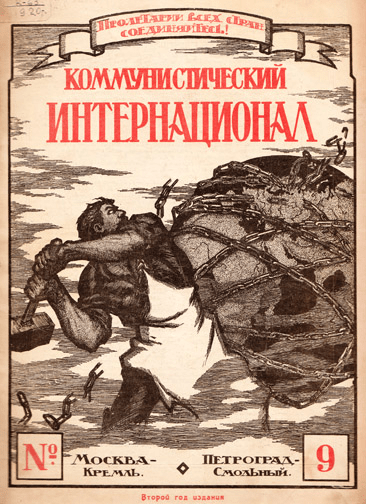
1. The working class is not nationally constituted. Capital is organised internationally with a discipline the left has never matched. The party that organises nationally without international discipline has conceded the terrain before the struggle has begun.
2. The collapse of the Second International in 1914 was not a failure of good intentions. The parties of the International were formally committed to internationalism and failed under pressure because the commitment was moral and procedural while the organisation was national. The organisation won. The lesson is not that moral commitments to internationalism are worthless. It is that moral commitments without organisational expression are worthless under pressure.
3. The federated international with genuine binding authority over its national sections is the organisational form the present moment requires. It is not a coordination mechanism, not a conference of fraternal parties, not a shared platform for the exchange of positions without organisational consequence. It is a political organisation at the international level whose constituent sections are subject to its programmatic decisions.
4. The distinction between a federated international and a merely coordinating one is the distinction between an organisation and a network. A network connects. A federation contends. The international that produces binding programme through the genuine contention of national sections is a qualitatively different form from the international that produces shared statements through the negotiated consensus of national leaderships.
5. The Fourth International’s political intelligence is real. Its organisational form is not adequate to the present moment. Decades of fragmentation have consumed its theoretical energy in questions of historical continuity rather than present adequacy. The relationship to its various fragments is conducted on the basis of their current political positions and organisational capacity, not on the basis of their claim to Trotsky’s authority.
6. The IMCWP’s difficulty is subordination. Its leading parties’ positions on the war in Ukraine, Chinese capitalism, and the Russian state are not products of independent class analysis. They are products of geopolitical alignment. The party that affiliates to the IMCWP inherits that alignment whether it intends to or not.
7. The Party of European Socialists is the organisational expression of European social democracy’s managed decline. Affiliation is incompatible with the party’s programme on the same grounds that participation in capitalist governance is incompatible with it.
8. The Progressive International constituted itself around the political figures of a specific conjunctural moment rather than around a programme developed through the contention of political forces. When that moment passed the Progressive International was left without the political basis on which it had been constituted. A political formation constituted around conjunctural figures cannot survive the conjuncture that produced it.
9. The case-by-case approach to the existing internationals follows from these assessments. The party does not affiliate to any existing international as a bloc. It assesses each formation on the basis of its current political positions, its organisational capacity, and the compatibility of its programme with the party’s own.
10. The areas in which international authority must be binding are those in which national autonomy directly undermines the international programme. The assessment of imperialist conflicts is the clearest case. A national section captured by the geopolitical logic of its national ruling class has ceased to function as a section of an international working class organisation. The federated international’s constitutional architecture must make this capture structurally more difficult rather than relying on the good intentions of national leaderships under pressure.
11. The areas reserved to national sections are those in which the concrete political conditions of the national terrain require independent judgement: electoral strategy, the specific content of the national programme beyond the international minimum, the relationship to national trade union structures, the question of alliances with other national political forces. The international minimum programme establishes the political ground on which all sections stand. The national programme develops from it in response to national conditions.
12. The federated international is a horizon toward which the party orients its international relationships rather than a structure it can immediately constitute. The interim formation must from its founding identify parties and tendencies in other national contexts whose political positions are compatible with the international minimum programme and establish fraternal relationships on that basis.
13. The domestic and international questions are not sequential. The party that consolidates its domestic organisation before turning to the international question has already made a political choice that the organic framework explicitly refuses. The class is internationally constituted. The party adequate to it must be internationally oriented from the beginning.
14. The parliamentary platform is an international instrument. Parliamentary statements are reported internationally. Parliamentary questions compel governmental responses on foreign policy that would otherwise be conducted outside public scrutiny. The tribune who refuses to use this platform internationally has accepted a self-imposed limitation that serves no one except the diplomatic class whose management of international relations the party exists to challenge.
15. The federated international’s founding congress becomes possible when sufficient programmatic convergence has been developed through the fraternal relationships of the first stage. Its transition conditions are analogous to those established for the domestic founding conference: programme developed through genuine contention, national sections demonstrating the capacity for simultaneous autonomous operation and international discipline, a collective political subject produced through the political struggle of the preparatory period.
 PARTISAN!
You must be logged in to post a comment.