The following perspectives document was adopted by the Fourth General Conference of Communist Unity, Melbourne, January 2026.
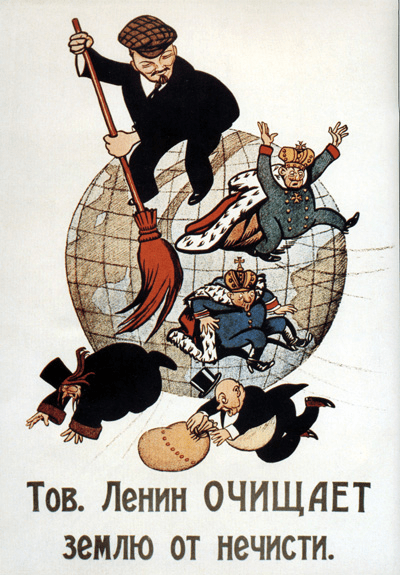
We live in the epoch of the transition from global capitalism to global communism. However, nowhere is the working-class in a position to take power. This fact has produced and continues to produce all manner of combined forms, pathetic half-measures, negative anticipations and strange dead-ends. The primary contradiction facing world communism today is between the advanced objective conditions for world-revolution, and the backwards subjective conditions.
Capitalist society refuses to leave the stage of history. The historical transition between capitalism and communism has been derailed by the dismantling of the Soviet Union and its allies, the defeat of the Third World and the world anti-imperialist struggle, and the defeat of the bureaucratic-reformist wings of the workers movement. This systematic defeat of world socialism was preceded by the capitulation of the socialist movement to a variety of nationalist, reformist, liquidationist, populist, and opportunist deviations. These deviations overwhelmingly sought to fuse the workers movement to the project to reform and manage the capitalist state, and to form systematic coalitions with the parties of the bourgeoisie and petit-bourgeoisie. They produced a form of manipulative reintegration, in which the working-class was effectively integrated into capitalist programs of development, and the struggle for emancipation was hopelessly delayed. This defeat, and the absence of a systematic communist alternative, has unleashed a special period of reaction — a permanent, pre-emptive counter-revolution.
The characteristics of this period are the generalised collapse of the socialist movement: the decline of working-class organisations, the fragmentation and confusion of the social movements, the marginalisation of communist politics, and the degeneration of Marxism as an intellectual project. In turn, this epoch has produced a narrow, stultifying bourgeois culture of individualism and consumerism, and a triumphant liberalism.
Capitalism’s counterrevolutionary offensive, symbolised by global US economic, military, and political hegemony, has been catastrophic for humanity and the rest of the biosphere. Ecological collapse, imperialist wars, pandemic diseases, and economic crises are an inevitable result. However, history marches forward and as long as the working-class exists, so too does the possibility of socialism.
Capitalism & Imperialism
The development of capitalist society proceeded according to the combined and uneven development of distinct regimes of accumulation and regulation. From the origins of commercial capitalism in the trade cities of the Indo-Arab-Mediterranean littoral, through the development of mercantile society and manufacture, through the transition to machine industry and the expansion of free competition, capitalism has passed into a systematic period of centralisation, consolidation, and monopoly. The epoch of monopoly capitalism has further passed into an epoch of state-dependency, which in turn was globalised with the end of the Fordist mode of accumulation. Today, the highest form of capitalist organisation is the transnational corporation, coordinated by an international financial system and a powerful bloc of finance capitalists.
Along with the progressive development of capitalism, so too have grown the system’s contradictions. The relations of capitalist production, which give the system its historical dynamism, have become fetters upon the development of the forces of production. Capital experiences periods of over-accumulation and systematic devaluation. Financial markets explode with under-utilised money-capital while industry rots. Nations of peasants with barely extant manufacturing sectors find themselves prematurely de-industrialised. Returns on investment fall as productivity flatlines. All of this is symptomatic of a falling world rate of profit — the chief indicator of both the maturity and the obsolescence of the capitalist world-system.
The signal crises of the current world system were first felt in the 1970s, and by the 1990s the system had reached maturity. However, the systematic intervention of the state has allowed the system to avoid systematic economic crashes through the expansion of credit. This has produced a unique malaise — slow growth, underinvestment in productive industry, low wages, and a vast expansion of personal, corporate, and state debt. This system is itself an expression of capitalist decay — and has produced its own host of “morbid symptoms”, not least among which is the Suicide State of Trump and Milei.
The contemporary world system is characterised by a specific form of capitalist organisation: imperialism. Imperialism divides the world into a core of exploiter powers, and a periphery of exploited nations.
Imperialism has passed through several stages of development. Emerging out of the early colonial system and the growth of world trade, imperialism first took the form of competing, distinct spheres of influence governed by colonial regimes. The European empires of France and Britain came to typify this system, which placed hundreds of millions under direct colonial rule, and even more under indirect colonial power. This system came to an end with the great epoch of inter-imperialist conflict between Anglo-French-American imperialism and the rising powers of Germany, Italy, and Japan. With the end of the European Civil War and the War in the Pacific, there emerged a new imperialist order under American hegemony. This world order was premised on the restructuring of German and Japanese imperialism as loyal clients of American imperialism, and the (often fractious and contradictory) subordination of British and French capital to American hegemony. Direct inter-imperialist conflict was sublimated through the Bretton-Woods system, which allowed the capitalist world to directly confront and defeat the USSR and the Third World. With the defeat of the Soviet project, and the collapse of the Non-Aligned Movement, the second epoch of imperialist development ended, and a period of uncontested American unipolarity began.
Today, this post-Soviet world order has entered into a period of historic crisis. With economic turmoil, inter-imperialist competition, and the rise of powerful reactionary mass movements in the imperialist countries, the system has clearly entered a sustained economic, political, and ideological crisis. The end of the Biden Interregnum has seen the return of Trump, a herald for the collapse of the liberal political order characterised by the division between the state and the firm. The long-standing desire of the American state to quash its potential rival power, China, has only become more naked and remains the central pillar of American foreign, domestic, and military policy.
Imperialism in the 21st century involves exporting labour-intensive manufacturing processes from organised high-wage nations to their low-wage counterparts. This has contributed to the proletarianization of these countries, generalising the phenomenon where “the bourgeoisie therefore produces[…] its own gravediggers,” (Communist Manifesto) while also keeping them subjugated under the combined dictatorship of multinational corporations and global finance. This order operates out of the First World and the international military regime spearheaded by the U.S., creating a common enemy for the international proletariat.
The development of capitalism on a world scale has produced a world proletariat and an international system of capitalist production. In doing so, international capital has produced the preconditions for world communist revolution. Nationalist programs, such as an alliance between the haute and petty bourgeoisie for national independence and development have been rendered historically obsolete.
The 20th and early 21st centuries have seen the development of capitalist agricultural production and exchange, forcing the urbanisation of vast swathes of the population. Only in 2008 did the majority of the world population no longer live rurally, a development that has only been accelerating. Agricultural production has been revolutionised, however increases in agricultural productivity have come linked with environmental degradation and continued exploitation of the rural proletariat. With the increasing historical obsolescence of the bourgeois revolutions, the conditions for the socialist revolution and transition to Communism only further develop within the belly of decaying capitalism. Despite this, the agrarian question is posed consistently, most of all in the Third World, and many of the traditional schemas of orthodox Marxism remain insufficient to address these problems.
Inter-imperialist competition in the contemporary world-order takes the form of antagonistic cooperation. The integrated world market created by the American world order has seen the collapse of traditional spheres of influence. In this form of competition, extensive economic cooperation and joint investment by rival powers accompanies covert and overt conflict and rivalry. All capitalist blocs are necessarily engaged in the joint exploitation of the global proletariat, with the uneven distribution of the spoils being the source of extensive antagonism.
This order relies on the ongoing willingness of the United States to act as the political and social enforcer of a world-system built in its image. The Biden Interregnum saw the most naked and open forms of imperialism at work, with American support for Ukraine, Israel, and Saudi Arabia, the AUKUS pact, and an increasing pressure on NATO countries to rearm and remilitarise. This nexus of policies reflect the American need to isolate China and maintain world hegemony. As the primary imperialist power, and both historic and ongoing bastion of counter-revolution, the United States is the largest block to the development of a socialist world. The victory of the world revolution is therefore dependent upon a Third American Revolution.
Despite being the most powerful state on earth, the era of American unipolarity is coming to an end. With the systematic crisis in world capitalism comes the systematic disinvestment and de-industrialisation of key ally states, as well as a secular economic and social decay rooted in a falling rate of profit. Inter-imperialist conflict, as well as epidemiological and ecological crises threaten the supply chains that have allowed for relatively cheap consumer products. Sanctions regimes, once crippling, seem less effective in the face of a waning domination of the US Dollar. German, British, and Japanese capitalism look stagnant and fragile. French imperialism is increasingly weary of European dependence on the American alliance. A resurgent protectionism has weakened many historically close alliances, as well as driven NATO re-armament, marking a clear shift within American geopolitical strategy. All of this heralds the decline of the American Empire.
In turn, the rapid industrialisation of parts of the periphery has led to the emergence of a belt of sub-imperialist powers operating within the system of antagonistic cooperation. These powers occupy a secondary status within the imperialist order, and usually suffer from serious forms of uneven development, but also have developed concentrations of imperialist capital. Struggles between these powers, who often serve the gendarmes of imperialism in their regions, is one of the primary forms of inter-imperialist competition. South Africa, the United Arab Emirates, Saudi Arabia, Turkey, Israel, Egypt, Brazil, India, and Russia all serve this function.
The structural overaccumulation of capital and the decline of the world capitalist system has a singular expression: deindustrialisation. In the advanced capitalist countries, deindustrialisation began after the Volcker Shock of the 1970s and signalled a shift from industrial production in the metropole to the so-called “developing nations” under the jackboot of imperialist domination, simultaneously increasing the capitalists’ share of profit extracted from the production process and dismantling the power of the organised industrial working-class. As the centre of global industrial production shifted to Asia, socialist opposition diminished. Now, the general glut in industrial output and increase in capital-intensive production processes are leading to premature deindustrialisation in the Third World, where capitalist development leads to lower employment in industrial sectors, instead increasing the service and informal sectors.
However, this does not lessen the effects of capitalist development in the wake of the agrarian revolution, displacing people from traditionally-held lands and expanding urban areas. This shrinking industrial proletariat presents an existential problem for the socialist parties of the world. The working-class, organised around industry, was their primary base of support. The failure of the 20th-century socialist movement has led to a loss in direction and standing amongst the global proletariat for socialism today. Promising national economic development or rebirth, the reactionaries have taken over as the primary opposition to the ruling parties on the world stage.
The capitalist world system is completing its shift from the U.S.-dominated “super-imperialist” coalition into a “multipolar world.” This is a world of more violent inter-imperialist rivalry, intensified competition of international firms, and a gradual dissolution of multilateral “Ruled Based International Order” in favour of competitive military intervention and economic warfare. In this decade, three fronts have opened in the new world war: the Russia-Ukraine war, US imperialism’s assault on Latin America, and Israel’s genocidal assault on Palestine which has spread across the Levant and threatens to envelop the whole Mashriq. Another front could open as U.S.-China relations deteriorate.
Crisis in Imperialism
The current crisis of world imperialism, which is expressed by a decline in American power, the emergence of a belt of sub-imperialist powers, and the growth of inter-imperialist antagonisms, has taken the form of a growing rift in the imperialist ruling class. This is nowhere better expressed than in the United States. The historical unity of the ruling class around a program of Atlanticism and the so-called “Washington Consensus” has been shattered. Today, the Atlanticist liberal bourgeoisie is challenged by a nativist bloc which seeks to manage the transition to a multipolar world order through the reassertion of a Kissingerite realist foreign policy, a withdrawal of American support from European capital, and a reassertion of the Monroe Doctrine in the Americas.
The re-emergence of inter-imperialist competition in the imperialist world order is nowhere better expressed than in Eastern Europe. Here, the sub-imperialist power of Russia is locked in a feverish struggle with the US-NATO bloc. The aim of Russian capital is to assert its rights to a distinctive sphere of influence in the territory of the former USSR. The aim of the American-led imperialist bloc, and its most ardent supporters–the Atlanticist liberal bourgeoisie, is to exhaust the Russian state, with the eventual aim of effecting a regime change in Russia. Having achieved that the aim is to ‘encircle’ China – and through war, regional rebellion, a colour revolution, etc, bring about regime change in Beijing. Ideologically, cover for rebooting US global hegemony is being provided by hypocritical claims about championing democracy and standing up for the rights of small nations.
Disgracefully, sections of the left have sided with the Ukrainian state, and thus their own governments, with some even calling for increases in NATO arms shipments. Naturally, social imperialism excuses itself with all sorts of pseudo-socialist and democratic phrases. We maintain that the struggle against social imperialism — support for the imperialist interests of Russia or NATO under a socialist banner — is a vital task for proletarian internationalists.
Our opposition to the interests of the US-NATO bloc should not be understood as support for the Russian Federation, a semi-peripheral capitalist state led by an oligarchic-personalist clique, that sits atop the corpse of the former Soviet Republic. In the war between Russian sub-imperialism and the imperialist ambitions of the Western Powers, we adopt a position of revolutionary defeatism.
We reject the calls by some in the socialist movement to join in an international popular front in support of “multipolarity”. In the contest between the great bandit and the lesser bandit, we do not prefer the lesser bandit. Any re-organisation of the world system on bourgeois terms, and that retains the global rule of value, would simply be a redivision of the diminishing surplus value extracted from the world working-class. International proletarian revolution is the only force that can tear down world imperialism.
One of the many faces of combined and uneven development is the People’s Republic of China. This state, led by the Chinese Communist Party, came to power in a peasant-army revolution in 1949, and proceeded to unleash a period of revolutionary transformation and abortive socialist revolution. In the years since the end of the Cultural Revolution, revolutionary politics in the People’s Republic has been frozen over by the sterile policies of “Socialism with Chinese Characteristics”. While the ascent of Chinese power, and even the emergence of a new Chinese sphere of influence, has given rise to a great many Western Sinophiles, genuine communists must view the political situation in China with analytic clarity, not romantic illusions.
Today, the People’s Republic of China has all the characteristics of a capitalist economy: wage labour, mass unemployment, an oligarchy of transnational corporations, and a significant private sector. However, it is still steered by the bureaucratic ruling class that leads the Chinese Communist Party. This contradiction expresses itself in the class struggle between the Chinese bureaucracy and the domestic and international capitalist class. However, both the Chinese state-bureaucracy and the capitalist class are united by their subservience to international capital and the need to extract surplus value from the Chinese working-class.
The struggle between US-NATO imperialism and Russian imperialism can only be properly understood in the context of the primary axis of competition in the contemporary world system — the US-China trade war. In order to strengthen its position against China, the United States has sought to establish a series of military alliances to guarantee a network of allies in the Pacific and Indian spheres. Here the AUKUS Pact and Quad Agreement are of vital importance. Communists must oppose these agreements, and any other future military pacts with American, British, or Japanese imperialism, or the fascist clique in New Delhi. Our opposition to the Atlanticist liberal world order should not be construed as support for a multipolarist, “spheres of influence” form of imperialism. The reassertion of distinct spheres of influence is an objectively reactionary program based on the defence of national industries and would see the intensification of imperialist plunder and exploitation, albeit on a distinct basis.
Of vital interest to anti-imperialists and internationalists is the struggle of the Palestinian masses for national liberation. The ongoing slaughter in Gaza, as well as the brutal occupation of the West Bank, is a direct manifestation of the capitalist world-system and the domination of American imperialism. The State of Israel is an outpost of American imperialism, a prominent client state, and a staging ground for NATO-bloc imperialism in the Middle East.
Communists must reject the so-called “solutions” offered by the social pacifists, the Arab states, and liberal international order. A negotiated settlement, a so-called “Two-State Solution” would simply create a series of Palestinian ghettos, Bantustans without military capacity, ruled by collaborator forces like those that currently dominate the Palestinian Authority.
As such, communists fight for a single, democratic, secular republic of the toilers in Palestine, from the Jordan River to the Mediterranean. Such a state would have freedom of religion and equal rights and self-determination for all national groupings, as well as the Right of Return for all Palestinian refugees. Such a republic would necessarily undertake a program of reconstruction, land reform, and systematic de-Zionisation.
With the fall of Bashar al-Assad in Syria, it has become clear that the so-called “Axis of Resistance” is an illusion, instead representing a web of alliances, rivalries and flows of arms, contradictory in their relationship with the Palestinian resistance. The folly of some Marxists in relying on the Islamic Republic of Iran and other actors within the bourgeois interstate system in the Middle East betrays a historical weakness in international socialism. Religious nationalism, and various forms of pan-Islamism, do not offer a viable road to liberation in the Middle East. After the 1979 revolution and the assumption of state power, the Islamists commenced the total annihilation of the communist movement in Iran. With the revolutionary left out of the way, the Iranian regime has been gradually moderating its reactionary anti-imperialism, marked by the long decline of the Principlist faction.
Part of the nativist-Kissingerist reassertion of the Monroe Doctrine has been an intensification of economic, military, and political pressure in Cuba, Venezuela, and other countries across Latin America and the Caribbean. The communist movement must resist the assertion of imperialist power in the Americas with all its might. In Cuba, we call for an uncompromising defence of the gains of the Cuban revolution and the Cuban masses, and seek the defence, extension and completion of the Cuban revolution. In Venezuela, we see the organisation of the working-class against imperialism, and for the extension of the Bolivarian Revolution. Across the whole of Latin America, we recognise that imperialism cannot be defeated by this or that national movement, and that the working-class must fight for a Panamerican Union of Socialist Republics.
It is the duty of internationalists to always oppose their own ruling class and its interests first and foremost. In our context, this means opposing the Australian capitalist class and its sweet-heart alliance with American imperialism. As such, the organisation of an anti-imperialist movement in Australia, based in the working-class and youth, is a primary task.
While imperialism stands astride the world, it will stamp out any flowers of socialism that may attempt to bloom. Only the international working-class, leading the labouring masses of the world, can overthrow the imperialist world order. Given the integrated nature of the contemporary imperialist world economy, the possibility of nationalist-developmental paths to socialism are more limited than ever. World revolution — against the international capitalist system and its ruling classes — is the only path to free humanity from the jackboot of imperialist domination.
The highest level of unity for the workers’ movement is on political grounds in an international party. For the international workers’ political movement, the struggle against war and the imperialist hierarchy of nations is of utmost importance. Common action across borders in trade union struggles is also a powerful weapon, and as such communists seek the internationalisation of the trade union struggle. Therefore, such concessions to the pro-imperialist politics of the trade union movement in many countries are not permissible, and national and social chauvinism must be ruthlessly combatted, along with all forms of national socialism.
The struggle against imperialism requires exposing the lies of the social imperialists and the false-promises of the social pacifists. This means exposing the nature of imperialist interests and the real aims of the imperialist powers, as well as dispelling illusions in the United Nations and other institutions of the “Rules Based International Order”.
The Struggle for a Revolutionary Party
The proletariat has never been larger than it is today. Across the world, vast labour movements contest the power of capital. In India and Bangladesh, farmers and industrial workers regularly conduct strikes that dwarf the industrial struggles of the nineteenth century. Chinese workers, locked in the political apparatus of the party-state, are nonetheless assertive, militant, and organised. In Africa, Southeast Asia, and Latin America, industrial workers are joined by masses of semi-proletarian peasants and the urban and rural poor. Workers and youth in the United States and Continental Europe are increasingly militant, with explosive strikes and battles with the police becoming a regularity. However, there exists no international force that can patiently construct a communist movement capable of bringing these forces to revolutionary consciousness and political power.
Of particular interest to communists is the revolutionary struggles of workers and youth against oligarchic, neo-colonial regimes in Indonesia, Kenya, Nepal, Bangladesh, and Madagascar. These movements, led by young people and largely politically amorphous (with the exception of Kenya), have so far been unable to bring the working-class to the brink of seizing political power. Though the emergence of these mass movements is indicative of a long upturn in the world class struggle, the working-class remains depoliticised, disorganised, and absent of a revolutionary political program. The false promises of left-developmentalism, nationalism, and Stalinist popular fronts do not help in bridging this vast organisational and ideological gap.
The wave of strikes against support for Israel in Italy has brought the militant activities of the Italian proletariat into international focus. Important lessons must be learned from these events. Firstly, despite divisions in the existing world-system, there is a capacity for workers in the imperialist countries to act decisively in solidarity with their Third World brothers and sisters. Secondly, it is the long struggle for working-class organisation that will rearm the working-class for both its economic and political battles. Thirdly, that communist politics is decisive in forging a mass working-class political movement.
The growth of the international proletariat, in particular in the belt of sub-imperialist semi-peripheral countries, means that today to look to the proletariat necessarily means to have an orientation towards the Third World. A politics that focuses exclusively on the First World and the imperialist metropoles is short sighted in such a context. However, we also reject the notion that an orientation towards the Third World must necessitate a popular frontist approach to the national capitalist blocs of these countries.
The historic task of the working-class is to form itself into an independent party with the aim of raising itself to the level of ruling class by winning the battle for democracy and establishing a democratic socialist republic. This party cannot represent a single “faction” of the socialist movement but instead be an ecumenical party of the socialist workers movement as a whole. In turn, it must be both a vanguard party, based in the most advanced and class-conscious layers of workers, and a mass party that seeks to include in its ranks hundreds of thousands of militants, and that leads a broad party-movement that can win hegemony over the entire working-class. This party would serve as the systemic opposition in both parliament and in the streets and be unified by a revolutionary minimum-maximum program.
The maximum program describes the final, communist aims of the party: the establishment of a socialist economy, the abolition of private property, the dissolution of the family and national state, and the end of class society. The minimum program represents the minimum conditions for the party to assume power – and consists of demands for an alternative political system through which the working-class can rule as well as economic measures to take upon the assumption of power and measures for the emancipation of women, nationally and racially oppressed peoples, and gender and sexual minorities. The political demands include the abolition of the monarchy, freedom for the socialist and workers press, abolition of the senate and presidential prime-minister and cabinet, and the concentration of power into a single popular assembly elected by proportional representation, the subordination of the justice system to democratic oversight, the end of the colonial system of states, and the replacement of the police and standing army with a worker’s army characterised by universal service and training as well as democratic rights of political organisation for all its members. This conception of the tasks of the proletariat for the conquest of political power is based on a recognition that the existing oligarchic liberal-constitutional monarchy imposes systematic limitations on the implementation of a working-class program. Promising not to touch the bourgeois constitutional structure with its checks on popular democracy, its bureaucracy, its military, is folly. There are no shortcuts to resolve the problem of a proletariat that is not strong enough to defend the transition to socialism. The only path is to organise its advanced section into a party that builds the strength of the class, measured in its political and economic organisation and the growth of its advanced section. The workers’ party must conduct consistent propaganda and agitation for a wholesale constitutional alternative to capitalist class rule well before the assumption of political power. It must win a crushing majority of society and the rank and file of the armed forces to the necessary reordering of social decision-making. In short, we must follow the democratic revolution to the very end.
The path to this kind of “mass vanguard” party runs through a merger of the existing forces of socialism, guided by Marxist politics, with the elemental forces of the workers’ movement. This combines the program for working-class self-emancipation with the practical organization, militancy, and numbers needed to carry it out. This requires a mutual transformation of both sides of the merger, in recognizing the strengths of each side and the necessity of a merger for both.
While it is likely to be formed out of a process of splits and fusions, there is no single force on the Left that could form the raw material for the party we need. There is no route to the conquest of political power outside of the existing Left, by a small group “appealing directly to the class.” This is an assumption held by those who imagine their small group could merge with the class in a spontaneous uprising by virtue of correct politics, or in a non-revolutionary period, on the basis of pure economic organizing or transitional politics.
The preconditions for the emergence of this party do not yet exist. As such we are in a pre-party stage, in which the primary task is the preparation of the necessary conditions for the emergence of a communist mass movement. These preconditions are: the proliferation of a Marxist intellectual movement, including study circles, socialist clubs, and Marxist publications, and the re-emergence of a proletarian vanguard forged in the class struggle. It is through the fusion of these two forces that a mass communist party is possible. Most of all, this merger requires the unity of Marxists, of communists, into a single political bloc, and the clarification of the Marxist program through thorough struggle, inquiry, and critique.
The last thirty years has seen the proliferation of “alternative” strategies for social revolution, all of which sought to marginalise and reject the centrality of the revolutionary party. These strategies, be they the movement of the squares and occupation tendencies, the “leaderless resistance” tendencies (liberal or anarchist), or the attempts to renew Social Democratic, Labourist, New Deal Liberal, or other Left Populist illusions, have been world-historic failures, reflecting the historical weakness and decomposition of our class in the epoch of globalised monopoly-financial capitalism. The partyist, revolutionary left must reassert its program: an organised fusion of the workers movement and Marxist politics in the form of a revolutionary vanguard and the formation of a mass workers party with a revolutionary platform.
In Australia
Australian capitalism was born of the British colonial system. Through a genocidal clearing of the land of indigenous peoples, a social order was established that possessed no fetters imposed by previous social orders. Because of Australia’s colonial history, capitalist development has undertaken an unusual path. Agricultural capitalism, without a class of yeoman free-farmer or peasants, was allowed to develop untrammelled, and quickly mining capital joined it as the two pillars of Australian industry. The pastoral-agricultural ruling class, however, was soon marginalised by a powerful mercantile-banking bourgeoisie. A chronic labour shortage empowered the relatively small, skilled Australian working-class, and petit-bourgeois tendencies quickly took prominence in the Australian labour movement. By the time industrial manufacturing expanded, and a proletariat proper was born, the Australian labour movement was dominated by the ideology of Laborism, and the conservative, craft-oriented trade unions.
The Australian Labor Party, a bourgeois-liberal party based in the trade union movement, is the primary party of Australian capitalism. It is the ALP that has managed Australian capitalism through its most intense crises, developed the Laborist compact that allowed the growth of Australian manufacturing, established and ended the White Australia system of migration controls, and introduced neoliberalism in the wake of the Prices & Incomes Accord. Today, it is the Labor Party that seeks to reorient Australian capitalism towards protectionism and reindustrialisation.
The latest period of capitalist accumulation, beginning in the 1980s, is best characterised as “Keatingism”. This program combined economic liberalism, the end of state-led industrial development, and the opening of Australia’s markets to Asia, with social progressivism, the superannuation system, and the growth of home ownership. Social progress, including the overcoming of social backwardness and chauvinism, would be bound up with a rising standard of living driven by financialisation, the embourgeoisement of the Australian labour aristocracy, and cheap consumer goods from the Asian markets.
Australian capitalism today is subordinate to American imperialism and is dependent upon American, British, French, Chinese, and Japanese investment. In turn, Australia is dependent upon international exports to make up for its weak balance of payments, in particular to China. This has produced a situation in which Australian capital is heavily invested in the maintenance of the existing world-order, and in particular in preserving the balance of power between the United States and China. This is expressed in a growing division between a dominant pro-American wing and a secondary, weaker pro-Chinese wing in Australian politics, particularly in the Labor Party.
The Australian economy is dominated by a handful of industries: mining, retail, finance, insurance, telecommunications, and real estate. With a general decline in productive investment, the Australian economy has become dependent upon a series of speculative bubbles, the most dramatic of which is in the housing market. This has produced a housing crisis that is now the primary expression of the social inequality and precarity produced by capitalism.
The Australian working-class today is millions strong. However, we reject the characterisation of the working-class as the “vast majority”, especially in a country like Australia with a significant petty bourgeois stratum. The Australian petty bourgeoisie is composed of three layers: petty rentiers and speculators who are entirely dependant upon housing assets and the superannuation system as well as other small investments, the traditional petty bourgeoisie of small shopkeepers, independent professionals, and handymen, and a “new” petty bourgeoisie of managerial and technical specialists who are employed by capital in order to facilitate the organisation of capitalist production and distribution.
The Australian working-class is internally divided. On the one hand, there exists an aristocracy of skilled workers, often possessing property of their own and skills monopolies that protect them from open competition in the labour market. These workers are more likely to be organised, in particular by the craft unions for both white- and blue-collar workers. On the other hand, there are precarious, unskilled, and semi-skilled workers in retail, healthcare, hospitality, manufacturing, and agriculture. These workers are considerably less likely to be organised and are significantly less likely to own property of their own. This division of the working-class also presents itself along gender, racial, and generational lines.
In the period of Keatingism, the Labor Party and the trade union bureaucracy have overseen the systematic decomposition of the organised working-class. As such, the working-class has never been less of a force in Australian political and social life. There exists no political party, no program, no social movement, that unifies the working-class. Instead, the class is fragmented, both on a sociological level, and on a political level. It is imperative for communists to conduct a systematic study of both Australian capitalism, and the dynamics and composition of the working-class in this country.
The dominant form of official ideology in contemporary Australia is progressive nationalism: a liberal state-sanctioned anti-racist/multicultural, anti-sexist, and pro-LGBT ideology with backing from elements of the capitalist class and the state, often associated with the Labor Party and the Greens, as well as the institutions of the bourgeois academy. These ideologies are ultimately pro-capitalist and individualist, being an outgrowth of the particular form taken by neo-liberalism in Australia: Keatingism. Liberal identitarianism rejects the revolutionary and progressive role of the working-class and emphasises a fragmentary politics of representation and state recognition within an imperial project over any kind of mass struggle or revolutionary anti-imperialism. There has also spawned a pseudo-radical and easily co-optable variant of identity politics, which sheds the overt pro-capitalism but is bound at the hip to the State through the same politics of recognition. It is vital that the revolutionary anti-racist, feminist, and queer liberationist movements break thoroughly with this form of bourgeois recognition. In particular, a vast network of Non-Governmental Organisations (NGOs) have become a mode of governance of popular power in much the same way that the official trade union leadership plays in industrial struggles. This layer of careerist bureaucrats owes their petit-bourgeois role to managing and “representing” various oppressed peoples and social movements. They must be swept aside by the revolutionary movement, and no real alliance can be made with such forces.
This does not mean that the oppression of women, migrants, indigenous people, or sexual minorities has ended in Australian society. These phenomena are not an ideological factor of capitalist society, but rather structural necessities of capitalist reproduction. The period of contemporary crisis has seen attempts by reactionaries to reinstall previous modes of capitalist regulation through the restoration of traditional white, patriarchal social norms. As the crisis in world capitalism persists, it can be expected that these tendencies will go on the offensive. The inability of both official and radical identity politics to counter this reactionary tendency and offer genuine freedom to all the oppressed and exploited increases the urgency of developing a Marxist approach to migrant, indigenous, women’s, and gay and trans emancipation. We recognize the working-class as the vanguard and tribune of the oppressed while emphasising the importance of these freedom struggles.
The Australian working-class has experienced several decades of political defeat and decomposition. The working-class as a whole lacks minimal trade union consciousness and is not systematically organised. Class struggle remains at a historically low level. The trade unions as well are on the retreat, representing a small minority of the broader working-class. Where unions do exist, they are overwhelmingly conservative, corporatist, and joined at the hip to the Australian Labor Party (ALP). Where social activity amongst workers and youth does take place, it largely falls into two camps: the trade union movement, and the activist left.
The Australian Labor Party is a bourgeois-liberal workers party, in that it is a bourgeois liberal party that rests upon a social base in the trade union bureaucracy and in certain layers of the labour aristocracy. This base in the working-class is joined by extensive petit bourgeois, professional, and other middling layers that find their political expression in the ALP. In its political program, the ALP is a nationalist, liberal, and corporatist party that seeks to unify labour and capital in the Australian state. Despite the relative decline of the trade union movement, the ALP maintains effective control of the working-class movement through its close alliance with and control over the Australian Council of Trade Unions (ACTU) and the various state trade union councils.
The ALP does not represent a potential vehicle for a socialist revolution in this country. Conservative, rooted in the union bureaucracy, systematically representative of the middle classes, and anti-communist, the ALP is the chief obstacle to the unity of the working-class and the victory of the socialist movement. Communists must seek to overcome the ALP-ACTU-NUS cartel that dominates the worker and student movements through successfully contesting ALP control of the trade unions and the broader working-class. This is not possible absent the emergence of a Communist Party.
In the likely event of an upswing in the class struggle, the working-class is likely to enter the ranks of its traditional organs of reformist struggle: the Labor Left and the trade union movement. In this case, it is necessary for communists to conduct systematic agitation amongst members of the trade union movement and Labor members and voters in favour of a split with Laborism and the forging of a socialist, internationalist workers movement. As such, the struggle within the Labor Party is a necessary precondition for overcoming Laborism.
The activist left comprises heterogenous layers of social activists that campaign around issues of social and political conscience. These forces include the peace movement, environmentalists, feminists, and anti-racists. Overwhelmingly, the forces that compose these movements are drawn from the middling classes, and they possess little connection to the broader working-class or the trade union movement.
The radical wing of the activist left largely represents the tradition of petit-bourgeois and lumpen-proletarian radicalism: anarchism, eclectic radicalism, radical democracy, and identitarianism. This marsh of decaying middle-class radicalism is a major impediment to the formation of a communist movement, especially amongst the youth. Into the swamp, communists must cast the light of scientific socialism, the clarity of political organisation, and the discipline of a socialist youth movement.
As a whole, the activist left tails the Australian Green party, with many activists being members or supporters of the Greens. The Australian Greens is a middle-class party, being a fusion of middle-class environmentalists with the remnants of the Australian Democrats. Its radical wing, embodied in anarchist and identitarian sentiments, largely shares the suburban localism and petit bourgeois politics of the party’s mainstream.
The most coalitionist wing of the Australian socialist movement exists within the ranks of the ALP and the Greens, as well as the trade unions. Through these organisations, these socialists hope to advance the cause of the working-class through systematic, unprincipled unity with petit bourgeois and bourgeois class forces. It is the task of communists to win socialists in Labor and the Greens to a common socialist program, and to the forging of a new communist party. Only on this basis can socialism stand on its own feet as a distinct political tendency.
Much of the socialist movement is today confined to confessional sects. These organisations are characterised by their commitment to specific points of theoretical doctrine, a resulting culture of intellectual conformity and stagnation, and a bureaucratic centralist mode of political organisation. Such a rigid unity is premised on a form of bureaucratic centralism: the slate system, de facto or de jure bans on factionalism, and an inability to carry out public debate and criticism. Importantly, these organisations represent factions of the socialist movement, but structure themselves as parties, in competition with all other sects for membership and influence. Absent an ecumenical party of the socialist movement, these organisations all undermine each other and attempt to go “directly to the masses” instead of consolidating the existing vanguard of socialist workers, activists, and youth.
Of the sects, there exist two essential tendencies: a left and a right. The left, embodied most clearly in post-Cliffite Socialist Alternative, but also expressed in the Third-Period Stalinist Australian Communist Party and the various anarchist-communist and left-communist groups, have a strikist orientation in which the forging mass party of the working-class is reliant upon spontaneous explosions in the class struggle and the organic formations of the working-class in struggle. This orientation leads to economistic tailing of workers’ struggles and fetishisation of trade unionism or poor people’s organising. Alternatively, they maintain a sectarian abstentionist orientation, disdaining to participate in politics at all.
Meanwhile, the rightist tendency within the sects is best expressed in the long Stalinised Communist Party of Australia, the Maoist Communist Party of Australia (Marxist-Leninist), the eco-socialist post-Trotskyist Socialist Alliance, and the Cliffite Solidarity. These organisations, seeking to go “directly to the masses” and avoid the difficult questions of communist unity and program, systematically tail Laborist, social democratic, or progressive forces in the trade unions or social movements. This may be expressed as tailing the ALP, or the Greens, or as a form of vulgar movementism. In all cases, it leads to a relative conservatism and opportunism.
The Socialist Party is a socialist electoral front that aims to unify various leftists into a coalition to “get a socialist into parliament”. It represents an attempt by Socialist Alternative to overcome the limitations of the sect form. In practice, the Socialist Party advances a limited, lowest-common-denominator political program. The combination of a nominally revolutionary majority and a reformist program produces a strange, eclectic politics analogous to the historical phenomenon of Centrism. The task of communists is to win hegemony for a revolutionary program within the Socialist Party.
Despite its limitations, communists have undertaken the task of entering the Socialist Party through the development of the partyist Communist Caucus. This work is the primary site of struggle for the advancement of partyist ideas in the broader communist movement.
Today, the most likely road to the refoundation of the Communist Party in Australia is through the Socialist Party and its state sections. We must call for the Socialist Party to convene a unity congress of the entire socialist and communist movement with the intent of forming a single, mass party with a revolutionary program.
The partyist faction of the socialist movement must engage in a systematic campaign within the broader socialist and workers movements for the unity of Marxists, and for a revolutionary minimum-maximum program. This campaign requires the forging and development of a pre-party organisation, a pole of attraction around which the partyists can rally, and which can fight across the entire movement for the unity of Marxists and the refoundation of the Communist Party in Australia.
Therefore, at the current juncture, the slogans of our organisation must be:
Merge Socialism and the Workers’ Movement!
Smash Imperialism! Break the US Alliance! No War with China!
For a Marxist Program in the Socialist Party!
For the Unity of Marxists!
Reforge the Party! For a Refounding Congress of the Communist Party in Australia!
Break with Laborism and the Middle-Class Radicals!
Reforge the Communist Movement in the Asia-Pacific!
For an Australian Section of the Workers International!
Forward to a Democratic Republic, and the World October!



 PARTISAN!
You must be logged in to post a comment.