The King of Tonga has attempted to fire ministers despite no longer having the power do so. Max J reports on the ongoing standoff between the Prime Minister and the King.
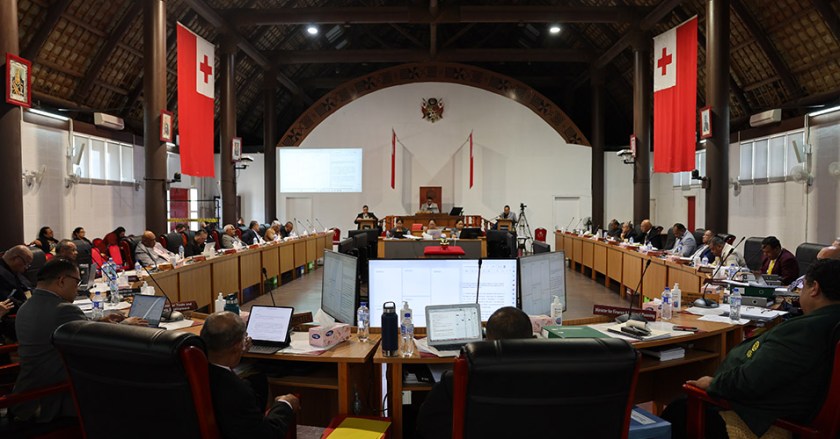
A dispute between Tonga’s King Tupou VI and Prime Minister Siaosi Sovaleni has been taking place over the last month, after a letter from the King to the PM’s office relating to the appointment of two ministerial positions was ignored. The letter, which outlined that the King had withdrawn consent for the appointment of Sovaleni to Minister for the Armed Forces, and the appointment of Minister ‘Utoikamanu to Minister for Foreign Affairs, was delivered early in February, and was taken as a sign of the King’s intention to fire PM Sovaleni.
However, the King cannot do this. Clause 51(1) of the Tongan Constitution states that “the executive authority of the Kingdom shall vest in the Cabinet, which shall be collectively responsible to the Legislative Assembly for the executive functions of the Government.”, which places executive authority over the government to the parliament and ministers, not the King directly.
Clause 51(3) states that “a Minister shall retain his position as Minister until –
(a) his appointment is revoked by the King on the recommendation of the Prime Minister or in accordance with clause 50B;
(b) he dies, resigns or is dismissed from office following impeachment under clause 75; or
(c) he becomes ineligible to hold the office in accordance with this Constitution or any other law”
As per the constitution, the King has no power to directly fire ministers without the prior assent of the Prime Minister. As the Prime Minister is one of the two ministers in question, it is thus not possible for the King to go through with withdrawing these appointments. The King could, however, dissolve Parliament and call new elections to replace Sovaleni and Sovaleni’s cabinet, as he did in 2017 to dismiss PM ‘Akilisi Pohiva.
Nobles within Tonga’s parliament have since begun to pressure PM Sovaleni into resigning from his Ministerial position, citing a “threat to peace”. The letter from the Nobles, sent on the 26th of February, read:
“There was a meeting of us the representatives of the Nobles to Parliament on 23 February 2024, and we confirm that the response by yourself and your Government, and that nothing was done with the [Privy Council Decision] 17/2024, it stirred concern and it sparked Va‘etu‘ua – concern about peace in the country.
“We, the Nobles, are the ‘aofivala, protective of His Majesty, therefore, we propose to you and your government to respect the decision of His Majesty. He has removed his trust, and is no longer in favour of [the PM’s] appointment as a Minister of His Majesty’s Army, and the same with Hon. Fekitamoeloa ‘Utoikamanu, the Minister for Foreign Affairs and [Minister of] Tourism.
“We advise you at this moment to resign from the position as the Minister for His Majesty’s Armed Forces, and the same with Hon. Fekitamoeloa ‘Utoikamanu to resign from her post as the Minister for Foreign Affairs and Tourism.”
Tonga has existed uneasily as a constitutional monarchy since the adoption of a new constitution in 2010, which signed away the King’s absolute executive power. With this dispute, however, the King may be angling to return to the pre-2010 status quo of absolutism, however untenable it may be. If the King goes through with firing PM Sovaleni and Minister ‘Utoikamanu, failing to honour the constitution, then he may very well cause a constitutional crisis along the lines of that which Whitlam faced in 1975.
While the PM is hardly a liberal reformer, he continues to stand his ground against the monarch’s browbeating, which may indicate a tendency within the Tongan state to separate from the monarchy. This crisis, amongst others, demonstrates the ongoing need to develop a political struggle in Tonga that opposes the monarchy and supports the establishment of a Democratic Republic, in which there are no seats for nobles or other landed aristocrats, led by an elected assembly.

 PARTISAN!
You must be logged in to post a comment.