The following report was written and delivered by Brunhilda Olding, and presented to the Fourth General Conference of Communist Unity, January 2026.
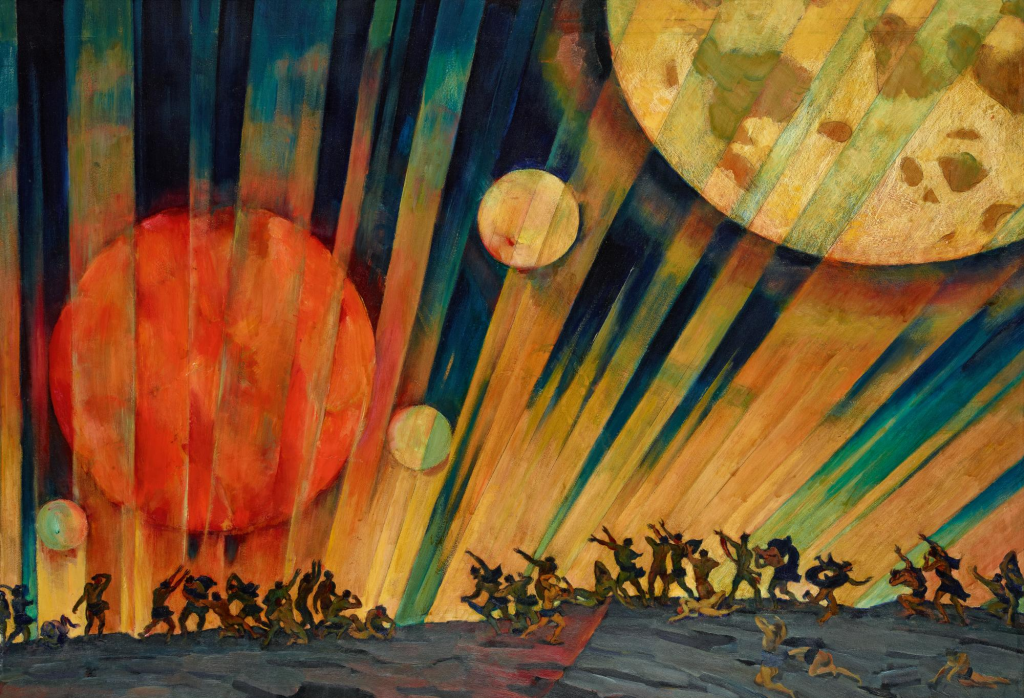
“To face reality squarely; not to seek the line of least resistance; to call things by their right names; to speak the truth to the masses—no matter how bitter it may be; not to fear obstacles; to be true in little things as in big ones; to base one’s program on the logic of the class struggle; to be bold when the hour for action arrives.”
The nature and timing of this conference allow for this report to take on the nature of a general analysis of the immediate political past, alongside the past year since the 2024 Congress, and the three years since the founding of the organisation. The quote I opened with in this report serves two purposes, the first is a nod to our new comrades formerly of the Spartacist League, the second is to impress upon every member here what it means to be a Communist.
The first half of the 2020s has been defined on an international scale by the crisis of the Post-Soviet World Order. The unipolar American world order has reached a period where the decay can no longer be papered over, and the ongoing decomposition and crisis of capital has reached a point where the pre-existing liberal world order has been faced with the end of its historic epoch. As communists to understand the world, and to advance the struggle for the world revolution we must first and foremost analyse and understand the world as it is.
This report will be divided into five parts, a general analysis of the world situation as a whole and the baseline analysis that the organisation has developed, a discussion on the aftermath and political impact and meanings on the Crisis in Western Asia that unfolded following the October 7th Attacks three years ago, an analysis of the two great poles of accumulation in world capital today of the United States, and China, an overview of general trends amongst the world socialist movement, and finally a discussion on the tasks of the Communist Unity going forward.
The General Situation
The current world situation cannot be called anything else but the terminal decomposition of the post-Soviet world order. The thirty-four years since the fall of the USSR have seen two generations born and raised under the looming dominance of the United States, a situation which has seen political, ecological, epidemical, and economic challenges to its fundamental pillars. Nonetheless to call the old order dead would be an overstatement, furthermore theorisations that we will return to previous stages of capitalist development are inaccurate and rest upon a fundamental misunderstanding of history. We are moving towards the development of new forms of imperialism, and it is vital that we operate off that understanding as opposed to trying to bend reality to fit into models of the past.
The capitalist system is moving further towards extensive structural weaknesses, speculative bubbles, overaccumulation of money-capital, radical underinvestment in industry, and an increasing predominance of both fictitious capital, and the wide numbers of society involved in socially useless, and indeed socially noxious labour must be understood as the defining features of this trend. The developing trends amongst imperialist states to protect their remaining industry emerges from the increasing understanding that the tenuous supply lines that the world economy rests on are no longer as stable as they once were.
The legacy of the Covid shock has taken the form of a general bourgeois manoeuvre back towards a particularly parasitic form of protectionism. The nature of the current world economy is defined by the extensive intermingling and generalisation of national capital. As each state whilst reliant on the globalised nature of the world tries to secure the national firm in the increasingly economically unstable global arena.
One of the most important economic developments in the period since our last conference is the development of the Artificial Intelligence/Limited Language Model industry as a major field of investment, and economic concentration. At the end of 2025 OpenAI was the most valuable private company to date valued at over $500 billion USD. Billions of dollars of investment have been poured into AI development across the globe. This trend must be understood as quite deeply related to the predominant role of Fictitious Capital within the economy and the decay of more classically productive forms of capitalist investment.
The proportion of fixed to living capital required for the development of a profitable manufacturing or more classically productive forms of capital has seen a general lowering in the rate of profit vindicating Marx’s analysis of the capitalist system. The neo-liberal economic shift has seen the creation of a massive amount of fictitious capital and the creation of vast swathes of socially useless, and indeed socially noxious labour.
The development of an increasingly growing layer of the proletariat defined by their precarious relation to wage labour, and classical forms of capitalist relations has seen the undermining of valorisation within capital.
For the sake of clarification the definition of valorisation we use within this report is “turning the production of goods and services needed for the reproduction of both the workers and the capitalist system into money capital that workers can use to live on (food, clothing, shelter, education and health care) and that capitalists can use to reproduce the system.”
Capital has created from this growing valorisation an incredibly extensive network of money capital, which has allowed for the move of more classically productive industries from the imperial core to the imperial periphery.
The world economy is increasing based upon deeply unsustainable levels of investment into AI. A furthermore in-depth study of the world economic trends is vitally needed if beyond the scope of this report document at the current moment.
Regional Trends
One of the most important political developments in Latin America since our last conference has been the quite solid death of the ‘pink tide’ as a political project. The kidnapping of Maduro, the defeat of Morales’ political project in Bolivia, the solidification of Milei in Argentina, and the victory of Kast in Chile all represent major political trends in the region, as imperialist aggression from the United States increases.
At the same time however, there has been a resurgence of the long-standing political project of anti-American, left nationalism across much of Latin America. The election of Gustavo Petro in Colombia and the mass outbreaks of support for Venezuela demonstrate that the anti-imperialist traditions of the American masses are still an extant movement.
The past few years have seen a series of major political developments across Africa which represent in turn potentially some of the single most important political developments in the world at the current moment. The defeat of the ANC in South Africa and the rise of the Government of National Unity represents one of the largest political shifts in the country since the fall of Apartheid. Decades of economic mismanagement, an unfinished transition into majority rule, and continuing imperialist domination sapped away at the fundamental base of the ANC as a governing project. Furthermore, the fundamental inability of the ANC to clarify its relationship with the imperialist powers has left them unable to navigate their way forward.
In West Africa the wave of attempted Bonapartist regimes under the banner of the Alliance of Sahel States has increasingly crumbled. The Islamist insurgencies have continued to advance, and the project of ‘multipolarity’, that the governments pay lip service to, has failed to pay off.
The Congo is increasingly reverting to an arena for naked imperialist and semi-imperialist confrontation. Rwanda’s interventions in the eastern regions of the country demonstrate a growing tendency within African politics towards more naked military forms of politics and intervention across state boundaries. This tendency is developing across East and Central Africa, as many of the long-running civil conflicts increasingly take on the nature of an inter-state political conflict. Ethiopia’s long-running ethnic conflicts are worsening, and the mass protests in Kenya demonstrate an increasingly unstable political order. One that is in part a response to Kenya’s growing role in the imperialist order as part of America’s middling allies. This has been most notable in their intervention into peacekeeping efforts in Haiti. William Ruto’s government has weathered several mass crises and continues to implement its program of pro-western austerity.
The defining questions on the European stage remain the war in Ukraine, and the question of the American alliance. Politically the sacred pact that had developed across the continent in support of the Ukraine war has seen the constant supply of arms, and supplies to the Armed Forces of Ukraine. Despite a brief period of military success throughout the end of 2022, and 2023 the Ukrainian war effort is increasingly on the backfoot. Whilst Russia has secured less than 5,000 sq km of Ukraine since 2023 the Russian strategic perspective of undermining the quality, morale, and economic backbone of the AFU. The greater resources and numbers available to the Russian state has allowed for them to continue their attritional strategy.
On the Russian side the nature of the ‘Special Military Operation’ has created a semi-mercenary caste of contractor soldiers drawn predominately from the Republics of Russia. Whilst Russia has dealt with the effects of the American/NATO sanctions more effectively than was expected, the reliance on oil has created an unstable political, economic, and military base. The unified nature of military, political, and economic struggle has seen the creation of a Bonapartist strategic orientation, increasingly taking on what Volodymyr Ischenko has described as a ‘War Keynesian’ economy. The growing modernisation of old Soviet stocks, and the increasing need for the development of new military stock has seen an expansion, and development of a new layer within the Russian economy. As of December 2024, monthly wage growth reached a 16-year high, and in November of 2025 Inflation reached a 3-year low. The economic situation in Russia remains weak, however. GDP growth in 2025 was only 0.6%, and projected trends for 2026 are moving towards a further period of slow growth. Nonetheless the economic nature of the war remains shifted in Russia’s favour.
The nature of the war has fundamentally shifted to one of attrition. With growing tension in Ukraine over conscription stemming from the post-Soviet demographic collapse, the war is increasingly one fought by fathers and grandfathers. The Ukrainian military capacity to endure remains reliant upon military and economic support from the NATO block. This support however has been consistently politically tied to concessions, and a de facto NATO command of the Ukrainian military’s strategy. The arguments over the deployment and use of the Storm Shadow missiles into Russian territory in 2024 demonstrate the massive leverage that the NATO block wields over Ukraine.
Our long-term analysis of the Ukraine war as an inter-imperialist conflict has only been further vindicated by the past four years of war. The political crisis in the war unleashed by the return of Trump and the political attempts to détente with Russia that emerged from it has shown that in terms of political content this is a war defined by the interest of the American ruling class in breaking the potential of a Moscow-Beijing alliance. At the same time across Europe the war has taken on the nature of a conflict for the further development and expansion of military industry and is one of the highest demonstrations of one of the key features of the current form of Imperialism via antagonistic co-operation. To quote the Kiel Institute from the viewpoint of the pro-war wing of the European bourgeoisie the withdrawal of American aid means that “Europe needs to ramp up the production of essential weapons and artillery ammunition quickly and broadly”, as well as “build alternative digital, satellite, and intelligence systems, including accelerated and expanded initiatives such as the satellite internet constellation IRIS”. The importance of the increasingly developing digital industry and military framework is strongly emphasised, an emphasis that must also be understood within the broader global AI industry and the mass investment directed into these fields.
Outside of the Ukraine war the European political framework that was a core pillar of the modern liberal project is increasingly under political stress as relations with the American state come under fire. Trump’s naked interest in the securing of Greenland, and the backing of insurgent right-populist parties is an open threat to the basic logic of the modern European political project. The myth of the EU rested upon the ability of the United States to maintain the liberal hegemony and to back the European states through both NATO, and ideological hegemony of liberalism. The prospect of the Euro-American split has emerged as a serious political potential, but as of the current moment very much only that.
One of the most important developments in Asia over the past five years has been the wave of uprisings, mass-protests, and political struggles composed of increasingly desperate sections of the proletariat. The political crises in Sri Lanka, Bangladesh, Indonesia, Pakistan, South Korea and elsewhere emerged from long-term political trends, most notably, the end of the China commodity boom and the post-2008 economic slowdown in the region has created vast layers of under and unemployed proletarians. As growing layers of desperate youth and workers come up against many of the increasingly politically incoherent strategies that these governments hold. The historic mission of national development has become a politically and economically impossible step forward.
One of the key trends to note is that across many of these political struggles is the predominant role that the youth and precariat have waged in the struggles. The mass protests in Indonesia last year partly emerged from the death of a 21-year-old delivery driver, revealing that the growing economic stagnation and degeneration into an unsustainable gig-economy amongst the youth is fuelling even greater levels of social anger.
Indonesia is vital for the Communist movement in Australia to understand. If Australia is the closest Ally of the United States in the region Indonesia must be understood as the ally that we are guarding against. As the largest economy in South-East Asia, holding a vital strategic location in world trade, and historically one of the greatest coups for America during the Cold War, Indonesia stands along Australia as one of the most important states in the region for Communists to orient towards. Yet even despite the economic importance it holds, Indonesia is a clear example of the long-term economic damage imperialism has done in the region. The country has the highest unemployment rate in South-East Asia at 4.85%. Many of the most productive industries in the country are declining, and the industries open to the youth are increasingly precarious, and the continuing project of austerity is only making things worse. The wannabe-Bonapartist Prabowo government has despite shoddily run attempts to improve life for the masses through free school lunch programs cut government spending and overseen an upswing in local government tax. The political scene remains stuck in the post-Reformasi stagnation that has defined the country for the past few decades. The deeply corrupt political parties trade the leadership of the country back and forth, the fundamental political touchstones of the country remain sacrosanct, and every few years a wave of mass protests breaks out advances and then ebbs. The political situation in the country remains defined by the looming threat of a return to the Bonapartism of the 20th century and a breakout of mass violence.
The most recent wave of protests represented a step forward with both economic and political demands by the socialist movement and the masses. The rallying call to dissolve the PRD or Indonesian parliament is an important escalation in the field of political demands. The fight for the Indonesian revolution is a three-fold one. It is a fight for democracy, for socialism, and for anti-imperialism.
On a broader scale the myriad of “Gen Z Revolutions” stems from the same fundamental economic impasse. The capital investment required for the development of a more productive economic arena is beyond the grasp of these states, and the imperialist powers have an active interest in the continuing stagnation of the region. As the American imperialist aggression continues the bedrock of Free Trade which defined the economic strategies of these states will become increasingly under threat, just as their political freedom will increasingly fall under the barrel of the gun, at the same time as the war in Myanmar drags on, and Sino-American tensions heighten the pressure on these countries will only grow. Yet the demands of the toiling masses will remain unanswered and indeed are unanswerable within the current bourgeois framework.
Finally political trends in the Pacific deserve a brief analysis. As the imperial backyard of the Australian state, it is one of the most important areas in the world for us to analyse, understand, and indeed seek to intervene in.
In Tonga the recent general election saw a solidification of the political dominance of the nobility and the crown. Prime Minister ‘Aisake Eke’s re-election ensures a continuation of the status quo even as said status quo brings social ruin to the country. The recent election saw a 47% turnout due to an ongoing fuel crisis, and the total defeat of the Democratic Party, which seemed committed to following the pathway of their American namesake. The fight in Tonga is as much a fight for democracy as it is for socialism.
Elsewhere across the region the defining political trend is the increasing militarisation of the region. Chinese investment in Vanuatu saw naked military threats from the Australian state reflecting the key strategic role that the region plays in the ANZAC-American strategy against China. By securing the Pacific the western block secures the ability to choke out Chinese trade and maintain their own supply lines. The political arena is very much one of manoeuvres designed to ensure that the Freedom of Navigation and military deployment across the Pacific that America relies on to maintain their imperial domination. Since the Obama years the Pacific has quite openly been understood as the primary arena for confrontation between the American and Chinese states.
We must understand the Pacific as more than simply an arena defined by imperialist competition but a region with its own class struggle, its own political trends, and its own movement for liberation. The recent teachers strike in Vanuatu is an important example of this.
The words of Marx when writing on the aftermath of the German Revolution of 1848 remain the baseline of our strategy in these struggles across the Imperial periphery. “But [the workers] themselves must contribute most to their final victory, by informing themselves of their own class interests, by taking up their independent political position as soon as possible, by not allowing themselves to be misled by the hypocritical phrases of the democratic petty bourgeoisie into doubting for one minute the necessity of an independently organised party of the proletariat. Their battle-cry must be: The Permanent Revolution.” The strategy of the Communist movement must be to fight to secure every opening, every potential advance forward to further operate, and struggle for the banner of socialism.
On a political level, we are moving into a period of reaction and instability. Since the 1990s the political framework has been defined by a generalised period of intellectual, political, and moral reaction and the general defeat of the Communist movement. The slow breakdown in American hegemony since 2008 has given birth to a generalised resurgence in the class struggle, and mass politics, as such it is vitally important to understand the process which we are moving towards politically. Internationally right-wing parties are on the ascent, democratic rights and freedoms are increasingly under legal attack, and many of the social and cultural gains of the post-Soviet era are being undermined. This process is emerging on an uneven scale, America represents this trend at its most politically developed, whereas Australia is broadly behind on this trend.
One of the key frames that this trend takes on is the ongoing resurgence of the ‘Trump’ wing of rightist populism often called Neo-Fascism. The victory of Meloni in Italy, the constant growth of Nigel Farage in the polls in the United Kingdom, the massive electoral gains of the AFD in Germany, and the National Rally in France, the collapse of the neo-Pink Tide in Latin America and the resurgence of Pauline Hanson as a political actor in Australia. These developments stem from the ongoing political crisis of the neoliberal framework, but do not seriously represent a political rupture with it.
The program that these groups run on represents a two-fold attempt to both strip the few remaining wires from the walls, as well as a mass refocusing on the development, and expansion of the state’s security apparatus. The politics of these groups in a historic irony of the unipolar world they rail against primarily stems from the United States. The role that CPAC plays in the international reactionary wave is one that needs to be seriously analysed. As it currently stands the “Trumpist” phenomenon is more politically coherent on an international scale than the communist movement has been for decades. At the same time however, these movements are fundamentally personalist ones, and ones that rest upon a skin-level adoption of American political trends, rhetoric, and ideas. Resting upon the image of a Bonapartist great leader, and the political leadership of the American Republican movement, the long-term continuity of these political projects is uncertain. The few exceptions to this rule most notably the German AFD are beginning to take on the form of Mass Parties, a development that represents the generalised shift back towards the transformation of politics into a force amongst the masses.
Despite organisational, personal, and political continuity between the historic Fascist movement and the current political wave often called ‘neo-fascism’, attempts to categorize these projects as Fascist is fundamentally inaccurate. The historic project of fascism has been completed, and the program of these groups rather than seeking to establish a corporate state, is one that operates off the basis of the mid-century corporatist project. Politically they seek to complete the post-2008 project of austerity, whilst reinforcing the imperialist project through the expansion and development of the state as an instrument of armed men and political suppression. Austerity continues to be the watchword of imperialist politics.
This growth has emerged partly from the pre-dominating political tendency within the workers movement of a semi class-based populism. One that has allowed for the manipulation of increasingly desperate sections of the proletariat into backing alien class forces that have secured political legitimacy from the incoherence of the traditional arenas of class politics and resistance. This however is not to write off the capacity of the proletariat to assert itself as its own class, with its own interests.
The Crisis in Western Asia
October 7th, 2023, touched off one of the greatest periods of political realignment of the 21st century. The crisis in Western Asia, and the mass international mobilisations around Palestine reflect the importance of the Palestinian fight for national liberation within the context of the decaying American world order, and the uncompleted nature of the Arab revolution.
The Al-Aqsa Flood must be recognised clearly on a strategic and political level as a gamble by Hamas that has failed. Whilst internationally Israel’s political legitimacy amongst the world population has cratered, a crucial example of this new weakness being the mass strikes in Italy to defend the Sumud Flotilla, the general struggle for the liberation of Palestine has over the past 27 months has suffered a concrete defeat. The Ceasefire of October 10th has seen an ongoing continuation of Israeli occupation of the majority of Gaza, ongoing shooting by Israeli forces, and the general crushing of armed Palestinian resistance.
The ceasefire has represented a general international demobilisation of Palestinian solidarity both internationally and in Australia. The importance of developing a serious analysis of the recent conflict and the task of Communists going forward cannot be overstated. But this crisis was broader than merely Palestine alone. The development of mass movements of the Arab masses based on Palestinian solidarity is an important step forward within the context of the strategic framework of the region. The burning task in the Arab World is the completion of the Arab revolution; a process stalled in various stages for over a century. The recent upsurges have run into the clear oppositional force of their own states, demonstrating that the myth of Arab unity on a state level is just that. The defeats of Nasser, and the Arab Spring loom large over the Arab world. These defeats must be studied as Engels said in Revolution and Counter-Revolution in Germany we must undertake the “very necessary piece of work: the study of the causes that necessitated both the late outbreak and its defeat; causes that are not to be sought for in the accidental efforts, talents, faults, errors, or treacheries of some of the leaders, but in the general social state and conditions of existence of each of the convulsed nations”. We must undertake this study to ensure that the next wave of struggle can go further. A new generation is rising a decade and a half after the end of the Arab Spring, and we must both hope, and struggle to ensure that they go further than those before.
The Israeli military intervention into Lebanon in late 2024, saw the death of Hassan Nasrallah, and the political if not military defeat of Hezbollah. These blows represented the beginning of the end for the ‘Axis of Resistance’. The defeat of the block promoted throughout the 2000s and 2010s whilst representing a major defeat for anti-imperialist struggles in the region, has further demonstrated that the only route to victory in the Arab revolution, and in the struggle for Palestinian freedom rests upon the development of a solid communist strategy.
The second great blow to the Axis of Resistance was the Fall of Assad and the establishment of the new Syrian government under Al-Sharaa. This development, rather than seeing a wave of freedom as some on the left crowd, has instead seen the establishment of a brutal regime dressed under the fig leaf of pseudo-liberal democracy. The massacres against the Alawites and the attempts to integrate the Syrian Democratic Forces in the North-East of the country, are tied in with a deepening integration with the American political sphere and the tacit acceptance of further Israeli occupation in southern Syria and the Golan Heights. The hopes of the Syrian masses that the fall of Assad would represent a new period of freedom have been brutally cooled in the blood of Alawite workers. The third and greatest blow to the Axis of Resistance was the incompetence of Iran during the ’12-day war’. Whilst the shelling of Israel was hailed as a great military blow, on the political and strategic fronts Iran suffered an unambiguous defeat. We neither praise, nor condemn this defeat but rather look at it strategically in the context of the struggle for the world revolution. The increasing crackdowns and attempts to consolidate internal control by the Mullahs must also be placed within the context of a worsening climate crisis in Iran, and the ongoing water shortage.
The Iranian state must be understood as one of the most advanced middling powers in Western Asia. The level of industrial development whilst partly influenced by the international sanctions regime also emerges from the political role they play as a de facto sub-imperialist power. As opposed to the neighbours of Saudi Arabia, Türkiye, and the United Arab Emirates however who take on sub-imperialist roles due to their position within the American political world order and fit many of the classical Leninist definitions. Iran should be placed into this rank of middling powers due to their military, economic, and political power as a state proper. The strong industrial, and economic base of the country, however, place it in a situation wherein the end of sanctions could well see the transition into a classically Leninist imperialism.
As revolutionaries we must look at the Iranian political scene with a sober analysis and understand that the current situation of the communist movement in the country does not place it in the position to lead a revolutionary upsurge. Nonetheless the growing tensions in the country mean that Communist Unity, strategy, and tactics may play a vital role.
The Question of American Hegemony
The defining political development since our last conference on an international scale was the end of the Biden Interregnum, and the re-election of Trump in the United States. The Biden Interregnum as a period was defined by the failure of the post-Soviet liberal order to seriously face the wave of challenges facing it, a growing tendency towards remilitarization, and the final clarification of American military, economic, and political strategy against the People’s Republic of China. Due to the political importance of an analysis of both the Interregnum as well as the return of Trump I will focus on these vital topics in turn.
The outbreak of the war in Ukraine, the post-Covid inflation and strike wave of 2022, alongside the mass struggles around Gaza, served as the defining arenas of socialist struggle during the Interregnum, and must serve as key learning points for the Communist movement going forward as the question of class struggle returns to the political and strategic agenda.
The period saw fundamentally much of what we would expect from the current state of the socialist movement. While major individual interventions and struggles were waged, some small victories won, and some sects earned themselves some levels of glory. Nonetheless, the general political situation has seen the Socialist movement remain relegated to the fringe outside of the Democratic Socialists of America.
Biden also oversaw the beginning of an attempt to slim down on America’s primary strategic weaknesses of supply lines. The funding pushed into the development of an American computer chip industry rested upon growing tensions with China, with concerns that continuing reliance upon Taiwan’s chip industry would prove a strategic threat in the event of any serious military conflict. This logic was continued out into foreign policy, the AUKUS deal, development of a proxy war in Ukraine, and the expansion of NATO which flowed from that represent both a continuum between the Interregnum and Trump 2 as well the beginning of the generalised political shift towards remilitarisation.
This militarist trend has continued under Trump 2. The role of Pete Hegeseth as the newly proclaimed ‘Secretary of War’ represents the vulgar attempts to resort to classic imperialist frameworks of militarism. The ‘Rules Based International Order’ no longer plays the role that the United States needs it to, and increasingly the Trump administration is moving towards dropping the pretences created by it. In the 2025 National Security Strategy document the government outlines their approach towards military questions quite succinctly “We want to recruit, train, equip, and field the world’s most powerful, lethal, and technologically advanced military.”
The open seizure of a Venezuelan oil tanker in December last year is the first major example of the newly emerging expand wing of the “Enlist & Expand” strategy outlined in the “The Trump Corollary to the Monroe Doctrine”. This political orientation rests upon a classically imperialist vision of the Western Hemisphere as an American domain, a perspective that rejects the antagonistic collaboration that has influenced the previous American imperial strategy and continues to define Imperialism across much of the world.
The National Security Strategy quite openly outlines the new strategic economic perspective both in Latin America, and on a broader international scale:
“Successfully protecting our Hemisphere also requires closer collaboration between the U.S. Government and the American private sector. All our embassies must be aware of major business opportunities in their country, especially major government contracts. Every U.S. Government official that interacts with these countries should understand that part of their job is to help American companies compete and succeed.
The U.S. Government will identify strategic acquisition and investment opportunities for American companies in the region and present these opportunities for assessment by every U.S. Government financing program, including but not limited to those within the Departments of State, War, and Energy; the Small Business Administration; the International Development Finance Corporation; the Export-Import Bank; and the Millennium Challenge Corporation. We should also partner with regional governments and businesses to build scalable and resilient energy infrastructure, invest in critical mineral access, and harden existing and future cyber communications networks that take full advantage of American encryption and security potential. The aforementioned U.S. Government entities should be used to finance some of the costs of purchasing U.S. goods abroad.
The United States must also resist and reverse measures such as targeted taxation, unfair regulation, and expropriation that disadvantage U.S. businesses. The terms of our agreements, especially with those countries that depend on us most and therefore over which we have the most leverage, must be sole-source contracts for our companies. At the same time, we should make every effort to push out foreign companies that build infrastructure in the region.”
The American economic and political vision for both Venezuela and Latin America as a whole, is a crucial example of the newly emerging forms of imperialist aggression and economic exploitation. The alliance with the PayPal Mafia that Trump 2’s key ideological and material backing has emerged from is demonstrated quite openly with the importance placed on the American technology industry, and the resources needed for their expansion and development as well as the growing demands for new markets amongst the industry.
The strategic vision being promoted for Latin America is one in which the economic, political, and military dominance America maintains in the Western Hemisphere is elevated to the point that there can be no conceivable challenges to this domination. The vision of this imperialist domination however is one that is based on the long-standing Neoliberal framework, and the economic backing of financialism that underpinned it. The Keynesian vision of imperialism and neo-colonialism rested upon the control of resources by the imperialist powers, and the ongoing military and political influence that the post-independence period created. The neoliberal vision of imperialism rested upon the continuation of the post-war Financial Order, and the wielding of austerity and the threat of economic blackmail to maintain their political domination of the world situation. The Argentine debt crisis, and the resulting ascension of Milei is a crucial example of the vision that was created across both the Americas and the broader framework.
The newly emerging American imperialist strategy is an outgrowth of this pre-existing domination of the world financial system. Resting upon the ability to control the economic, and financial situation of many of their global opponents. The barring of the Russian state from the SWIFT banking system by the Biden Administration must be understood as the first example of the developing antagonistic imperialist perspective the American state is wielding their economic and political dominance with. The ongoing blockade of Cuba, and the wielding of the ‘State Sponsor of Terrorism’ label falls within the old framework created during the Cold War and established as the dominant system during the breakdown of the classic corporatist model during the 1970s-90s.
The growing military threats against Venezuela rest both upon the desire for the strategic securing of the oil and resource reserves that Venezuela sits upon, with the crisis in West Asia demonstrating the fragility of reliance upon Saudi Oil; as well as the ideological and political vision of the American state, and wings of the Republican party to destroy what they consider to be a bastion of ‘socialism’ in the America’s as well as a soft ally of the Russian-Chinese economic-military block which the has been a consistent strategic target to destroy.
At the same time the American attempt to tone down military support to Ukraine, and the demands that other members of NATO ‘pay their fair share’ stems from a political hope to return to the glory days of American isolation, as well the culmination of the strategic perspective of the American state towards Russia following the outbreak of the Russo-Ukrainian war in 2022. The view of the American state since the Obama years has rested upon the logic of the primary strategic threat to the American World Order being the People’s Republic of China, and that a key strategic aim of the American state is breaking the potential Russian-Chinese alliance.
This view has had the vision of victory through either the military defeat of Russia or successfully buying Russia out through concessions via a potential peace deal. With the refusal of the American state to back Ukraine to the extent needed for an unambiguous military victory of the sort needed Trump is increasingly moving towards the hope of buying Russia off, even if his previous efforts to do so have proven somewhat lacklustre.
The National Security Strategy outlines a strategy based around the logic of “Peace Through Strength”. This orientation has been further developed through the expansion of the American armed forces. The announcement of the Trump class ‘battleships’ in December last year whilst in part an egotistical manoeuvre by Trump also demonstrates the growing political orientation within the American state towards a deeply vulgar militarism. As well as the desire to rebuild the political and economic block of manufacturing and resource capital through
Military Keynesianism.
Trump 2 must be understood in terms of the culmination of three counterrevolutions. The liberal triumphalism of the fall of the USSR sets the stage. The reaction to 2008 and the resurgence of class struggle it gave birth to was the base of his initial rise, and the failure of 2020 heralded his return.
Through this understanding the seeming incoherence and almost schizophrenic policy of Trump becomes easier to understand. The first year of his second presidency has seen both wild oscillations, and an irrational continuity. The initial wave of the DOGE cuts that the Musk-Trump block unleashed must be understood as part of a broader social project to attempt to return to a more classically productive form of capital. The ideological myth of reindustrialisation is based amongst a layer of finance and technology capital in an unsteady alliance with the strong extractive capital and dominating the American gentry.
The rationale of these purges is based on a warped understanding of the public and social sectors as socially unnecessary labour by wings of American capital. The broad coalition assembled around Trump demonstrates the tendency of capitalist development for the highest ranks of the bourgeois to become “nothing but the rebirth of the lumpenproletariat on the heights of bourgeois society.”
This farcical coalition having overcome the section of the Haute Bourgeoise, and state infrastructure rallied around Harris unleashes its confusion across America as a whole. The party of order seemingly takes on the crown of the party of anarchy, and the party of anarchy is thrust into the role of the party of order. Yet despite the fearmongering that has been unleashed against Trump he has yet to truly challenge the political order of the American state. Los Angeles, the Tariffs, DOGE, all exist within, and are constrained by the judicial dictatorship that the American constitution has created.
The constant deluge of offensives, overreaches, and occupations Trump has unleashed serve have reached a point of white noise, just as the opposition to him has transformed into an almost ritualised demonstration of democracy. The transformation of Charlie Kirk’s death from a rallying point into a macabre joke serves as a key example of the socially bankrupt nature of the American body politic.
Yet despite this proletarian resistance has endured. The Los Angeles riots represented in part the emerging shape of workers resistance and political development going forward, but this resistance must be understood as being warped by the historic racial composition of the American proletariat. The initial raid against a Home Depot demonstrates the generalised migrant-based nature of construction, cheap retail and other industries both in America and internationally. Trump’s program rests upon the further solidification of the lumpen-proletarian nature of this layer of the American proletariat. The resulting protests whilst drawing on a class nature defined themselves primarily through ethnic identification with the Latino layer of the American population. The protests saw most of their anger directed towards the most open form of the American state apparatus in the form of the LAPD and ICE agents. The wounds of the BLM struggle remain deep in the consciousness of the American working-class. The struggle against the police demonstrates in part the vital nature of the anti-state pillar of the proletarian movement. A pillar that emerges through struggle but can and must be pushed to the conclusion by the vanguard layer of the proletariat.
The question of if Trump can be categorized as a Fascist has remained a point of contentious debate across the left. Nonetheless, the initial understanding of him as a Bonapartist figure remains accurate. Whilst the militarisation of ICE has been suggested as the creation of the fascist Militia that defined historical Fascism, it more accurately has taken on the character of Louis Bonaparte’s Society of the 10th of December. The drastic lowering of recruitment standards, and the by now-infamous nature of the Department of Homeland Security’s public postings were designed to attract the dregs of the Trumpian coalition. Those most loyal to the program of butchery, isolation, and mediocracy. The nature of this force emerging from the state rather than organically from bourgeois society stems from the atomisation, and isolation that the neo-liberal program has unleashed. There no longer is a civil society to draw the ranks of reactions foot soldiers from, the state despite the after-effects of decades of austerity remains a totalising force through-which the lumpen, and petite-bourgeois elements of Trump’s coalition are rallied to his banner and armed under the protective shield of state violence.
Imperialism and China
As the second-most powerful state in the world economy and the only conceivable challenger to the American world order the People’s Republic of China is in many ways the decisive political force of our epoch. 2025 saw the completion of the 14th Five Year Plan, with the 15th set to be launched in March of this year. According to the South China Morning Post of the 250 targets set in the ending five-year plan 86% have been met or exceeded. China’s GDP has continued with fairly solid growth and is nearing the point wherein the next five-year plan has the potential to see China outstrip the American GDP if growth rates continue.
Of course, however this rests upon a rather large if. The 15th five-year plan is focusing upon the development of a Chinese tech and AI industry as the driving force of economic growth. This aim emerges from a long-term trend of investment focused on the development of a strong Chinese tech industry. Since 2012 “the ratio of R&D investment to GDP has risen from 1.91% to 2.64%”. This economic trend whilst existing before the mass development of AI and other industries as major arenas of international economic competition and indeed emerging from the development of digital industries throughout the initial years of the 21st century. The key role that Taiwan plays in the Microchip economy is one that ensures the PRC has a vested interest in the development of a strong tech industry.
This has seen the continual high funding and focus into these industries. The rapid development of Deepseek as a major player in the AI game stems from this long term-economic and funding focus. A focus that has allowed China to develop a large AI industry within the general framework of the Chinese state firm’s economic interest.
The political and economic strategy of China rests upon the continuing stability of the neo-liberal economic consensus. China in many ways remains the last true believer of the rules based international order. Now whilst this is a slightly cynical description of the Chinese strategy it must be understood as part of the conscious development of Chinese state policy. Even during the height of the Maoist revolutionary years China was a deeply mercenary state in terms of foreign policy and support to international revolutionary groups. This has evolved throughout the Deng and post-Deng years into a cynical political viewpoint that rests upon the maintaining of the trade networks that have ensured China’s stable economic growth and development. The state policy document of the PRC on Latin America and the Caribbean emphasised the importance of international co-operation under the framework of the classical neo-liberal vision of trade and political development. China as a political force is a deeply contradictory one, the class struggle within the country between the proletariat and the bourgeois-bureaucrat block, comes up against the broader struggle of the international bourgeois to destroy the remaining gains of the 1949 Chinese Revolution, and remove any potential capacity for the Chinese state to rival the United States as a world power. From this dual struggle China is forced onto the narrow path of seeking to maintain the neoliberal pattern of peaceful trade, and economic development in order to ensure that that the constant growth and development which they can use to buy off sections of the proletariat continues, and that international capital has more economic interest in China as a peaceful arena for investment than the potential profit from rebuilding the country.
This strategy is increasingly being demonstrated as a dead end, as the American state and capitalist class pushes towards deeper conflict with China as part of the historic tendency of capital for a drive to war in order to furnish further capitalist development. The ascension of Trump has set capitalist conflict into a new more combative and chaotic epoch.
General trends amongst the Socialist movement
In a reflection of the general political chaos that has defined the past half a decade, the world socialist movement has increasingly begun to break out of the political status that has defined it since the fall of the Soviet Union. Politically the current situation amongst the socialist movement is most analogous to the immediate period prior to the Zimmerwald Conference in the First World War. It is defined by political confusion, isolation, and deeply esoteric sectarian division. At the same time clarifying debates, regroupments, and splits are increasingly being carried out.
The past six years have seen extensive shake ups of the world socialist movement. In 2019 the Committee for a Workers International claimed to be the largest Trotskyist International in the world, descending from the Granite wing of British Trotskyism. At time of writing the CWI has suffered a series of devastating splits and is currently seemingly limping towards its final death. At the same time groups such as the Morenoite Movimiento Socialista de los Trabajadores (MST) have seen a political swing towards international regroupment. With the International Socialist League that they spearhead emerging onto the scene as a political force.
The high-water mark of this trend has been the three Meeting of Internationalist Forces held since the Invasion of Ukraine. Whilst broadly politically limited to the Trotskyist movement, alongside representation of the Anarchist and Left Communist trends of world communism at these events, and primarily politically limited to the European socialist movement it is important to emphasize that these meetings have resulted in a series of solid political engagement on an international level between the varying trends of the world socialist movement.
The principle of political regroupment is increasingly, at least verbally on the order of the day, to use the example of a motion passed by the Permanent Revolution – Current for the Fourth International at their recent conference which argues that “we maintain that the construction of revolutionary workers’ parties and the establishment of an international of social revolution […], will not be the product of the evolutionary development of our organisations or our international tendency, but rather the result of the fusion of the left wings of revolutionary Marxist organisations and sectors of the workers’ and youth vanguard”.
Whilst notional political orientation towards regroupment is developing it is important to understand that the political forces that historically have strangled regroupment or clarification efforts still exist. One trend that must be fiercely combatted is paper-thin regroupment based on diplomatically ignoring the differences that do exist and refusing to seriously engage politically with the differences that do exist.
It is also worth noting the increasing political popularity of open unabashed Communism and revolutionary identification amongst the youth. This has seen both the growth and development of traditional Marxist-Leninist parties, and a series of political crises within them. Furthermore, sections of the Trotskyist movement have moved back towards open identification with Communism. Most notably amongst these is the Revolutionary Communist International formerly known as the International Marxist Tendency. As identification with the label of Communist develops the political framework and legacy of the term will also evolve in increasingly complex ways. This trend is one we must pay attention to and further analyse as a key part of our political tasks.
Finally, it is worth discussing the evolution of dissident Marxism and the emerging schools of thought outside of the traditional division between Trotskyism and Marxism-Leninism. The 2020s have seen a period of both political flourishing for the Communist Left, with groups such as the Internationalist Communist Tendency, International Communist Current, and the myriads of International Communist Parties both expanding, and increasingly discussing questions of political regroupment within the tendency. This growth must be understood as the result of the political evolution throughout the 2000s and 2010s of the Communist Left, which met their height with the Endnotes collective. This general revitalization however has led to a political dead-end, and in turn seen the development of a new strain of Marxism.
The emergence of the ‘Partyist’ tendency over the past six years has been a major political development within Marxism and the socialist movement. While predominantly emerging within the Anglosphere and the Imperial Core this trend outside of the British Isles, is a new one, and one that is increasingly rallying many pre-existing wings of ‘Dissident Marxism’. It is also worth addressing the general political trends within the socialist movement towards the world situation and political tendency. The two defining trends are either an unrealistic official optimism, or a self-fulfilling defeatist view.
The Tasks of the Communist Unity
The fundamental task of the Communist Unity remains unchanged. On an international level however, it is important to place our perspective within the framework of both the political trends in world socialism, and the tendency we exist within, as well as the nature of the class struggle within our region.
The period since our past conference has seen an increasing engagement with the ‘Partyist’ movement internationally. Going forward the Central Committee considers it a task of vital political importance to further develop these ties and expand our pre-existing relationships. The furthering of relations with the international Partyist movement is a task that we consider to be a crucial area for further development as part of the solidification of our perspectives and strategy on an international level.
We also consider it vital that the Communist Unity seeks to engage to the maximal extent possible in international regroupment, and discussion. Whilst we make no commitments the growing relevance and number of these events is a positive sign that we as an organisation should seek to intervene into. The growing tendency towards communist regroupment and political debate internationally is a deeply important process which we consider vital to further develop. The fundamental political task of our epoch is the clarification and regroupment of the communist movement around a revolutionary international program.
Our task in pushing for that struggle however cannot simply be limited to the European and American stages. Australia sits in a unique place in the world economy and socialist movement. As the American guard dog in the South Pacific alongside New Zealand, ANZAC-Imperialism must be understood as the primary threat to the development of any serious revolutionary or progressive movement in the region. As such the vital task of Communists in Australia and Aotearoa is the development of a revolutionary perspective oriented towards the South Pacific and South-East Asia. The primary international tasks of the Communist Unity going forward rest upon the development of a serious Pacific oriented Communist movement both in Australia and internationally.

 PARTISAN!
You must be logged in to post a comment.