Max J responds to an article written by Socialist Alternative’s Ben Hillier, putting forward what a communist alternative to the capitalist economy could look like, contrasting it with the vision put forward by Hillier in his article for Red Flag.
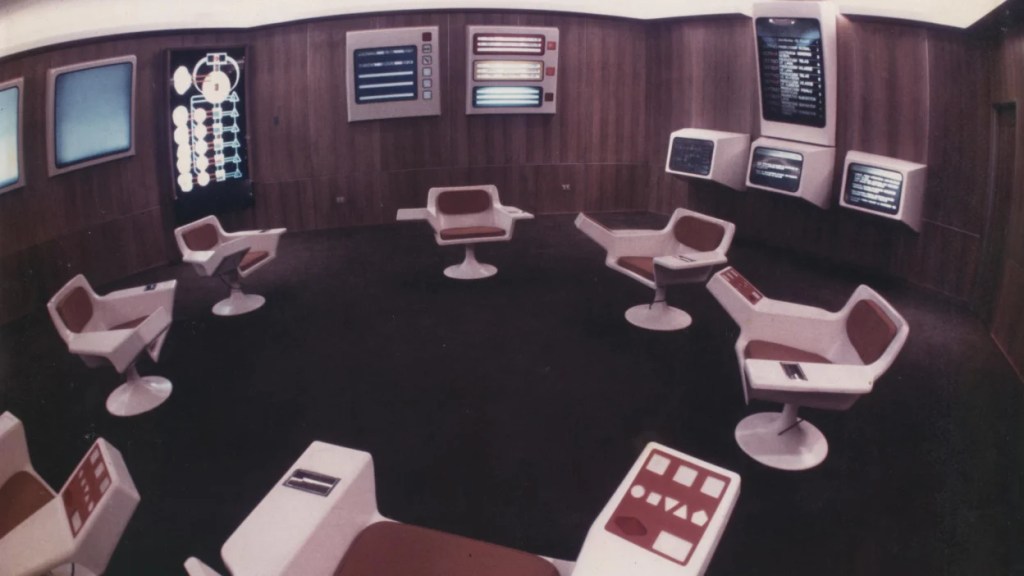
Ben Hillier of Socialist Alternative wrote an interesting article in January that flew under the radar for most of us. Titled “The socialist alternative to the capitalist economy”, it is one of the latest entries in their “Introduction to Socialism” series. Hillier’s article represents a rare attempt to give some kind of outline to what Socialist Alternative think a socialist society would look like. For that, it’s a good try. Unfortunately, it demonstrates the overall poor theorisation that Socialist Alternative has about the kind of society they ostensibly want to create.
Wall Street
Hillier writes: “Yet a socialist economy would likely retain the machinery of Wall Street, albeit for refashioned ends…”
Hillier’s analogy about Wall Street and the marvellous machinery of capitalism is quite strange. He doesn’t seem to understand how Wall Street actually works. What most people imagine when they think of “Wall Street” (in reality, a complex stock market system) is the open floor of the stock exchange. However, the majority of “Wall Street” are investment bankers, not stock brokers or investors. Investment banking is an advisory service provided to corporations (not individual traders) that supports corporations with things like mergers, acquisitions, corporate lending, and institutional lending. All this to say, the real purpose of Wall Street is to ensure that capital is freely flowing between all sectors of the private economy. It is a byzantine system that is hard to imagine operating for a socialist economy – an economy aiming to abolish profit and capital entirely.

Hillier continues: “Every day, the Australian Securities Exchange [ASX] in Sydney executes more than two million trades. The system is remarkably efficient in pairing buyers and sellers of a diverse array of financial instruments. By and large, this is just wealthy people making themselves wealthier by buying and selling claims to the ownership of companies and other things. They, or their brokers, simply get online, look at what’s available to purchase, and trade away…”
The ASX is one of the top twenty stock exchanges in the world, with a market capitalisation of upwards of AUD$1.6T. This is contrasted with New York’s US$44T. These stock exchanges work about the same way Hillier describes. They are organised marketplaces where stock traders buy and sell, mainly, stocks and securities. These are shares, or portions of ownership, of publicly listed corporations. Traders buy stocks as a way to invest in firms, in order to either sell these stocks for a profit at a later date, or make a return on their investment through dividends, a portion of company profits paid to shareholders, being those who own stocks/equity.
When we take Hillier’s example of the ASX, it remains difficult to imagine how this marvellous machinery can be used for economic information sharing in a planned economy (not that Hillier necessarily discusses economic planning at all!). One has to imagine what the purpose of the People’s ASX is, other than to have a “communist” stock exchange like in Shanghai. Hillier doesn’t quite explain how a socialist economy would function; there is some lip service paid to workplaces and the general populace using some kind of ASX-style system to transmit information, though it’s unclear what happens outside of this. Hillier writes: “A socialist economy would get rid of most of this waste almost overnight by starting with simple questions that the whole population can respond to: ‘First, what do we all need? Second, what do we want? Third, how many resources do we have? Fourth, what are our priorities’”. On paper, this explains “how” a socialist economy would work, but it would be like if I explained to you what a bird was by describing a few characteristics; i.e, that it flies, has feathers, lays eggs.
Hillier’s explanation, and ASX metaphor, relies on the notion that the working class by its nature can take control of the capitalist economy, and turn it into some kind of rational, socialist economy. That is to say, without extensive caveats, he describes a ‘market socialist’ system where workers control their workplaces and manage the market following the “four priorities”, though he wouldn’t use that phrase. It’s not a given that if you put the working class in control of capitalist firms, that they would run them more rationally, or more morally, or less capitalistically. In fact, if you put workers in charge of a capitalist economy, they will most likely just run a capitalist economy. The great “market socialist” experiments of Tito, Gorbachev and Deng are enlightening on this fact. But this would require an acknowledgement that the working class is not an unalloyed font of worldly wisdom; it is prone to retreating into sectional interests and acting in total opposition to their collective interests as a class. That is to say, the working class is perfectly capable of thrashing themselves better than the capitalists can, and not because they’ve fallen prey to some bourgeois conspiracy to draw them away from the revolutionary road.
Economic planning in real life
Economic planning and planning systems have existed for round about a century in one form of another. It is therefore confusing that Hillier’s analogy relies on Wall Street, a thoroughly capitalist institution, though it does make sense considering that the greatest historical example of economic planning, the Soviet Union’s GOSPLAN, was associated with the complicated and messy history of Stalinism. So Hillier can’t point to GOSPLAN or even the proposed OGAS system as examples of economic planning, and embryonic models for a future socialist economy.

GOSPLAN was a state planning commission within the USSR that operated the planned economy for around seventy years, from 1921 to 1991. Its role was to produce and oversee economic plans, through correspondence with a system of managers across various industries and firms. Broadly speaking, using information received from constituent industries and firms, GOSPLAN would produce economic goals which were then distributed to managers. These were the “five year plans” during which the USSR undertook industrialisation, and later recovery after the second world war (though in tragic irony, GOSPLAN from Stalin onwards functioned less like a planning commission and more like a quota generator).
The model is a bit simple. GOSPLAN would receive a mandate from the USSR’s government – “do this or that, please”. Based on information it received from the constituent economic units, like mines and factories, it would devise a plan to achieve whatever it was the government asked them to do, for example, making machine guns. This would require accounting for various inputs and outputs at various levels of the economy. For example, to make fifty machine guns, you need to know how much iron ore is being mined, how much steel is being produced, etc. But to make steel, you need coal, so you need to know how much coal is being mined, so on. It’s complex. This system was known as “material balance planning”. It was pen and paper planning at its finest (not quite literally, though). In material balance planning, inputs and outputs of things like raw materials, electricity, etc would be measured in natural units – kWh, tons, so on – and this would be used to determine economic outcomes, like the production of machine guns.
For much of its history, GOSPLAN did not function using an advanced system of computer screens with coloured numbers on them. It required the analogue transfer of economic information from the exterior to the centre. Of course, there are relatively advanced computers now, so there wouldn’t need to be pen and paper planning. But suffice it to say, it is impressive that the Soviet bureaucracy managed to plan an economy using this system, for a good bit of the 20th century.
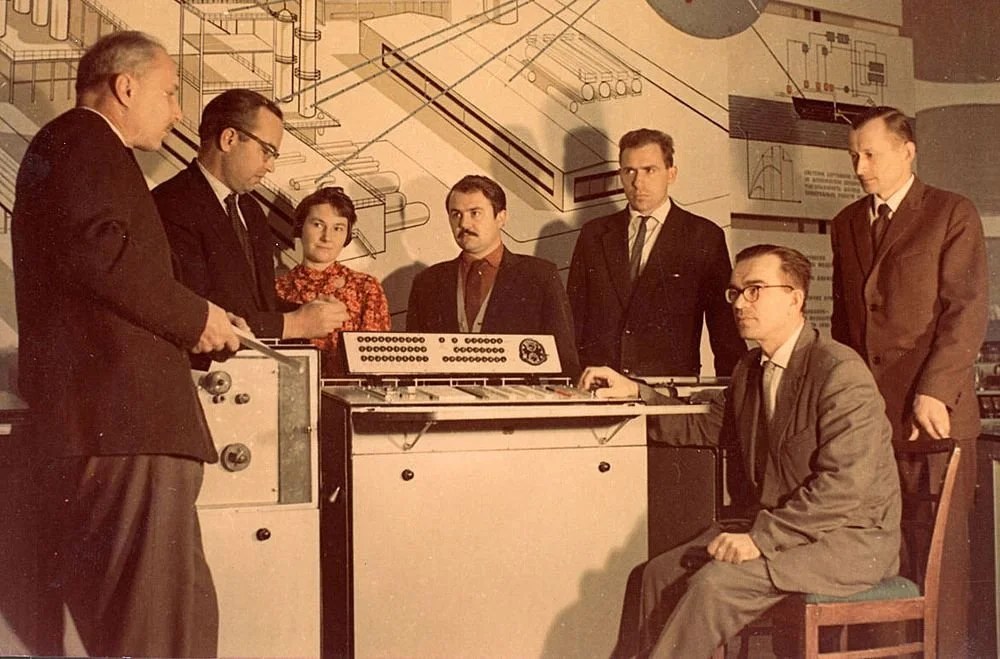
OGAS was an attempt to create a “Soviet Internet”, for the purpose of wide range information distribution. This would make the dreaded pen and paper method of material balance planning obsolete, replacing it with a digital system which would track inputs and allow planners to determine economic outputs. This system was devised and championed by Soviet Cyberneticists, mainly, V. M. Glushkov. OGAS was structured like a nervous system: there was a central brain, connected to a wide network of computers and datacenters. The “brain” was a data centre in Moscow. Every industrial and economic unit, like a factory or a mine, had its own computer centre which would transmit information to this brain. It would function using a nationwide network of those computers and data centres, connected to regional networks, connected to the national network. It was very ambitious. Even the CIA was a little unnerved by Glushkov’s cybernetic genius. However, the ambitious project was killed by the Soviet bureaucracy’s love of tanks, jet planes, machine guns, and rockets.
For a less Soviet system of economic planning, there is Project Cybersyn, which was a prototype for a planning system devised by liberal socialist and management cyberneticist Stafford Beer, for the Chilean government under Pres. Salvador Allende. Beer had travelled to Chile in 1971 at the behest of the Instituto Technologico de Chile (Chilean Institute of Technology), as Allende had charged parts of the Chilean government with implementing widespread nationalisation. As a pioneering management cyberneticist, and leading theorist on scientific management, Beer was the natural choice for the developer of a system that would achieve this.
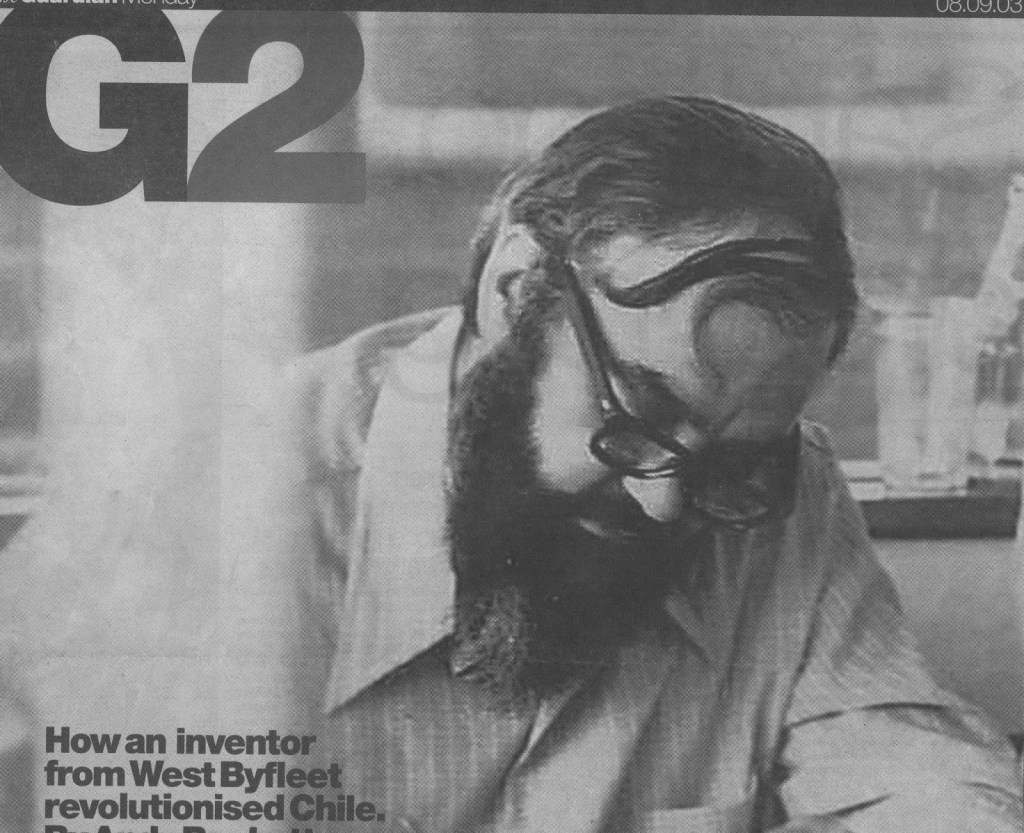
Cybersyn was a system that aimed to maximise autonomy, without sacrificing efficiency. Parts were centralised and decentralised as was necessary for the system to function. Beer prioritised synergy; in cybernetics, synergy is the efficiency provided from multiple constituent units working together as part of a whole. Under the Cybersyn system, firms would provide economic information (inputs and outputs, etc) in real-time to the operations room, where planners would use this information to adjust economic output. This system empowered workers as the main drivers of economic planning, and the planners in the operations room were less managers in the traditional, hierarchical sense and functioned more like an oversight committee. While the operations room could shift economic priorities and determine higher level functions, it was up to the constituent parts, the workers themselves, to determine what was happening at the ground level. Unlike OGAS, a prototype version of Cybersyn was developed, primarily to deal with the truck owner strike in the early 70s. This prototype was run mainly off telex machines, which were like fax machines. They had managed to briefly run a section of the economy using glorified printers. Of course, Cybersyn was shot to pieces alongside Allende in Pinochet’s 1973 coup.
Communism vs Socialism
Hillier positively quotes the Lancashire Co-operator: “The workman is the source of all wealth…”. Workers are not the source of all wealth. On the contrary, as Marx writes, nature is as much of a source of wealth as labour is, and value is realised through bringing labour and nature together. Though it is true that all the food is grown and produced by workers, the cloth is made by workers, and so is steel, roads, cars, etc, it doesn’t mean that all wealth therefore comes from their labour. Neither is it true that all profit comes from labour. It is also not true capitalists and owners “don’t work”. While billionaires seemingly spend most of their time hanging out on yachts or with Jeffrey Epstein, they actually spend most of their time doing some kind of work. Using Jeffrey Bezos as an example, while he makes an exorbitant amount of money (mostly fictional) through his ownership of Amazon and other assets, he is spending the majority of his time in very boring corporate meetings or on phone calls. Billionaires do “work” – but maybe not the “productive” work that makes the dollars. Figures like Bezos and Musk don’t continue owning multi billion dollar, international corporations by sitting around doing nothing all day.
Ben Hillier uses disturbing facts about world poverty to sell you on the idea that poverty is a distribution problem. If only this was the case. The belief that poverty is a distribution issue often leads to the belief that billionaires like Bezos and Elon Musk have the power to “end” poverty by using just a fraction of their money. Keeping aside the fact that the “wealth” of billionaires is for the most part totally fictional, even if Jeffrey Bezos gave up $1B dollars, it’s difficult to imagine that starving African children could be saved with that money. This is a distributivist form of socialism which has more in common with liberal reformism or Catholicism than it does Marx and Engels. It is a very Mr Beast-esque solution to poverty, that we can solve the problem through spending money effectively (a sticking point of the “effective altruists”). It would be much more beneficial to take into common ownership the assets of these billionaires and their corporations: the trains, railways, warehouses, factories, planes, so on. But poverty under capitalism is not simply a distribution problem. It is a problem of supply, a problem caused by the ongoing existence of private property.
A communist alternative to the capitalist economy, and to the “Socialist” Alternative, would look a lot different than Hillier’s explanation. For one, it would be far less sexy. It’s less interesting to talk about raw material inputs, how much junk you can fit into a freight train, and computer systems than it is to simply say that billionaires are sociopaths (it is in poor taste to use ASPD as shorthand for “evil person syndrome”) or that we simply nationalise everything/turn everything into a cooperative. It requires a concrete analysis of how the economy works, which is a serious undertaking.
If a communist workers party took power tomorrow in Australia, it would quickly inherit a capitalist economy. There would be a period of transition – not to socialism, but a transition toward a socialised economy. In practice, it would be state capitalism. The state, being a democratic workers republic, would supplant the capitalists and place much of the economy in the hands of the working class – through nationalisations, socialisations, and a general redistribution. Major monopolies, including in retail and utilities, would be nationalised. They would fall into the ownership of state-run firms which would manage these utilities and industries for public benefit. Small to medium enterprises would mostly be socialised, or distributed to local workers in the form of cooperatives. If the workers republic controls the ‘commanding heights’ of the economy, then really, it doesn’t matter if chip shops and hot dog stands are still owned by the semi-parasitic petty bourgeois, which they most likely would be for decades after.
Systems like OGAS and Cybersyn provide an embryonic model for how we could potentially operate a planned economy. Demarcation could be as such: for every industry, there are regional industrial hubs, made up of corporations which would be administrative divisions, made up of workplaces, with workers in them. Let’s imagine a nationalised Colesworths. Colesworths as an entity is composed of regional departments (for example, in NSW), these regional departments are made up of various workplaces (in the case of Colesworths, supermarkets) which themselves have constituent departments made up of a certain number of workers. Under this model, each supermarket has some kind of computer system in place. The purpose of this system is to signal to higher levels logistics and distribution concerns; how much product is used each day, thus how much product needs to be sent in on a daily, weekly, and monthly basis. A lot of this information is already tracked and used in this current, capitalist system.
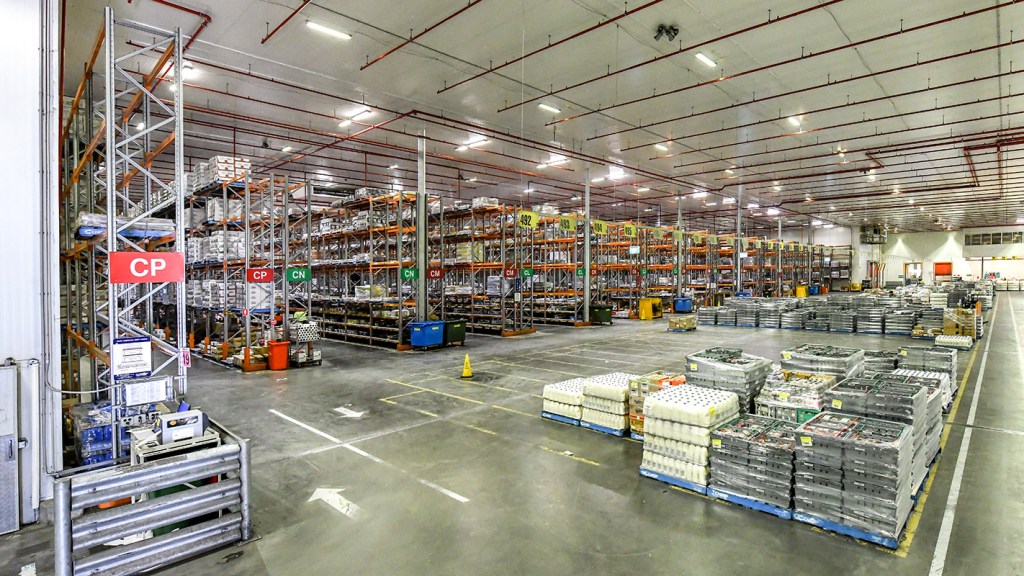
Supermarkets send information to regional hubs, which send them to the national level. This national level, real-time information would be available to a planning commission, which uses this information to provide guidance and oversight to entire industries, as well as helping to coordinate different industries together, thus producing synergy. This model is democratic, in that workers are empowered to directly participate in the operations of their workplace and the economy at large, as well as allowing autonomy while not sacrificing efficiency or creating dysfunction. In contrast to Hillier’s assertions, the communist form of economic planning would be rational, since it would allow for genuine scientific planning: using real-time information provided by all layers of industry, planners will be able to effectively determine what areas need improvement, what areas are doing well, what areas are doing badly, and why.
Hillier’s further assumption that “a socialist economy, being run by the majority in the interests of all, would not allow our planet to be trashed so that a few of us could live better than the rest”, falls flat on its head when we look at the historical movement. While the USSR made leaps and bounds in economic planning, it also drained the Aral Sea to use the water for cotton production in Central Asia. Not very rational, not all that good at preventing the planet from being trashed. But the wholesale rejection of the USSR by Hillier and co. is of course an excuse for not having to deal with complicated questions such as these.
Overall, Hillier wrote an interesting article which says a lot more than it may seem on the surface, though much of what it really says is more implication than outright stated. If you were just to read Hillier’s article, you’d know that socialism is rational, it’s for the benefit of the majority, it maybe repurposes some of the marvelous machinery of capitalism, but you wouldn’t know how any of it would actually work. This reflects a general lack of understanding from the Cliffite camp. Marxism is supposed to be scientific socialism, thus we are meant to make a scientific argument for our politics. But Red Flag writers like Hillier are all socialism, without the science.


 PARTISAN!
You must be logged in to post a comment.