Originally presented at Marxism Fringe in 2025, Brunhilda Olding presents a revised history of the Partyist Tradition. The following is part two of a two-part transcript.
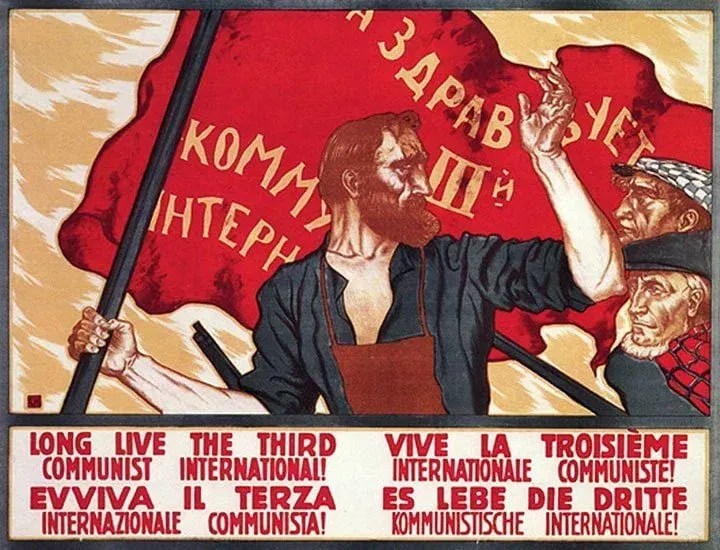
“The Communist Party of Great Britain is not dead. Our Party founded in 1920 has parted company with those elements who attempted to hijack the party, who dragged its banner through the mud. Those has-beens have now finally admitted that they never had anything to do with communist politics. The Party is not over – the Party is alive, Kicking and growing under new leadership – the Provisional Central Committee.”[1]
The new Provisional Central Committee would stand four candidates in the 1992 General Election. Stan Kelsey in Bethnal Green and Stepney, who won 156 votes, Tam Dean Burn in Glasgow Central, winning 106 votes, Mark Fischer in the Rhondda, winning 245 votes, and Anne Murphy in Brent East, where she won 96 votes. Ken Livingstone, Labour’s incumbent MP running against Murphy, called the party a bunch of MI5 Agents.
The election itself wasn’t particularly important, but the relaunch of The Daily Worker for the election was. Whilst The Daily Worker wouldn’t last long as a project, it marked a significant shift from The Leninist’s overtures to party orthodoxy. The new newspaper that emerged from this struggle was The Weekly Worker, which continues to this day.
The ‘90s, more broadly, marked the beginning of ideological solidification; the 1994 publication of Jack Conrad’s article “Party, Non-Ideology, and Faction” was the first indication of Partyism’s core political tenets. Although later works expanded on the ideas put forward in the text, the text solidified the core political thesis that is upheld.
“The Communist Party is in other words the highest form of working-class organisation – for which there is no substitute.”[2]
The publication of Party, Non-Ideology, and Faction was partly a result of ongoing inter-organisational talks with many of the small sects scattered across Britain in the ‘90s. This included both the myriad ex-NCP sects swimming around and the charming detritus of the world Trotskyist movement.
The greatest success was with the Open Polemic group, which, from 1995-1996, secured a column in the Weekly Worker and had internal factional representation within the CPGB. Open Polemic ended up withdrawing from engagement and went on to found the CPGB-ML, a deeply deranged cult that seems firmly committed to representing the worst parts of the Communist movement. Whilst attempts at Communist reconciliation may have failed in the sense that there were no mergers, many of these groups dissolved because, fundamentally, they could not claim to be for a Communist party or for communist unity when they had actively opposed it.
The turn of the Millennium across the Western left saw a wave of broad left parties. In the UK, the most prominent was the Socialist Alliance project, which inspired the birth of Alliance down here in Australia, as well as Arthur Scargill’s Socialist Labour Party.
Alliance emerged in response to Blair’s rise within the Labour Party, his dropping of the infamous Clause IV, and the success of the Scottish Socialist Party, which pushed for broad left unity. The first movement towards this Alliance was in London, where the CPGB was de facto centrally located. Their intervention into these projects was influential; the Weekly Worker became the unofficial paper of the socialist left in the UK, but fundamentally, they were fighting for very different aims compared to the other groups involved in these projects.
All of Conrad’s contemporaries were simply fighting for a new Labour party, a party committed to operating within the framework of capital. This simply functioned to create pools of recruits for the various sects rather to establish a genuine communist party. The fundamentals of Partyism clashed with this style of politics; a tactic the left has long employed through its various front groups. These limited, sub-reformist projects serve merely to secure measly amounts of votes. They are little more than a constant, desperate attempt to split Labour and the union movement with more radical yet still acceptable rhetoric. The struggle for a new mass communist party was fundamentally counterposed to this tactic.
Socialist Alliance collapsed when the Socialist Party in England and Wales – or as the Weekly Worker names them SPEW – withdrew due to complaints about one member one vote, the Socialist Workers Party would go on to found RESPECT with George Galloway which would collapse within a few years, and the broad trend that swept the west of ‘broad left parties’ met their sordid end.
On an ideological level, the more important effect of this period is the publication of Lars Lih’s Lenin Rediscovered, which, whilst not communist, aligns with the Partyist perspective of a revolutionary multi-faction fighting within the party against Liquidationists. This history of the pre-split Russian Social Democratic Labour Party sketched a largely overlooked account of its engagement with the political landscape of its time; it existed within a world dominated by the ‘Pope of Marxism’, Karl Kautsky. Looking back over the past century of the failure of the Communist movement, the CPGB increasingly sought a new philosophical engagement with what Leninism, Communism, and even Social Democracy entailed. From this engagement with the early works of Marxism and the experience of the failures of the Broad Left, the dialectic of history continued.
These lessons, reflections, and political evolutions culminated in Mike MacNair’s 2008 book,Revolutionary Strategy. Which, in a very slow process, transformed Partyism into an international tendency.
Across the Atlantic
Now, probably the single largest development in the history of Partyism is the popularity of MacNair’s Revolutionary Strategy outside the UK. Whilst technically Australia is the second country to attempt to establish a Partyist group, Partyism as a fully developed method of thought emerged in the Netherlands, Poland, and the United States. In the Netherlands, the Communist Platform first appeared in 2014, four years before the first article by Cosmonaut, and began to wage a fight within the ex-Maoist Socialist Party.
Communist Platform was particularly influential within the Socialist Party’s youth wing Rood. But broadly had some small influence within the party’s left wing. Representing, as they did, a revolutionary wing within the party fighting for the democratisation of the Labour Party and the formation of a genuinely socialist party in the Netherlands.
In 2020, the leadership of the Socialist Party began a witch-hunt against members of the Communist Platform, claiming that they wanted to start a violent civil war. This witch hunt culminated in 2021, when Rood was, for all intents and purposes, expelled by the Socialist Party. This would form the basis for a new political project, De Socialisten, which earlier this year changed its name to the Revolutionary Socialist Party.
My sources for the Polish group Akcja Socjalistyczna (Socialist Action) are, sadly, limited to a single English-language article. Nonetheless, they warrant discussion, and in the future, we can provide a more thorough account of their history and their connection to the broader movement.
AS emerged as a group of comrades within the Polish party Razem, which for all intents and purposes could be understood as an attempt at a Polish SYRIZA, or Podemos. A European left-populist party which whilst posing with radical language liquidates itself into the stable confines of bourgeois politics, and liberalism. The hard left, as one might expect in Poland, was fairly pathetic, leaving the founding cadre of AS alienated, and disappointed with the state of the political situation. So, they elected to found their own organisation.
AS has made significant strides, primarily through its strong focus on education and agitation, reflecting a broader trend within the international movement. Partyist comrades tend to be incredibly well-read and theoretically educated, and their orgs continue that education. Rather than lying on the dogmatic reading lists handed down by sect leadership, a culture of active polemic and discourse with sects requires a series of engagements with theory promoted and upheld by the broader communist movement. A vitally important tradition, which could arguably best be demonstrated by the vanguard of American Partyism: Cosmonaut.
Now American partyism is a very distinct beast to the rest of the world, I would argue. The Marxist Unity Group is by far the most successful group of this tradition; it is the largest, it has sizable political influence within the Democratic Socialists of America, which is, for better or for worse, the largest socialist group in the United States, and Cosmonaut magazine is by far the Partyist publication with the most reach and philosophical impact. After all, it was throughCosmonaut that most of the left first engaged with Partyism. The cultural role that the United States plays in the world system means that the American left has disproportionate weight in the political, cultural, and theoretical self-understanding of the English-speaking and non-English-speaking left.
The first Cosmonaut article is from September 2018 and addresses the central question of our tendency: why have a political program? Initially, Cosmonaut was a magazine for discussion, debate, and the general presentation of democratic republican and partyist perspectives. The first serious political intervention of what would become the Marxist Unity Group was at the 2021 National DSA convention. Their politics of fighting for an independent DSA, programmatic unity, and leveraging of a pre-existing audience through a politically respected medium enabled them to gain significant political influence.
This led to the formation of the Marxist Unity Group as a formal caucus within the DSA. They advocated for the DSA to become the mass party, and in many ways, it became the new political centre of the democratic republican trend, increasingly focusing on the American Constitution as the primary enemy of the American workers’ movement. Focusing on its anti-democratic nature and the need for a workers’ republic, MUG became an increasingly politically coherent and powerful caucus within the DSA. Most notably, their New York section has launched a monthly local socialist newspaper, which is a significant step toward the mass party we wish to build and the mass cultural hegemony we want to win.
Partyism in Australia
This part of the talk by far feels the most personal, because inevitably when talking about the organisation that I am a member of my perspective will be remarkably skewed, as well as the sources I have access to will be slightly different to those trying to research the org from the outside looking in. But to be brief Australian Partyism has had two starts.
The first was the short-lived Communist Party Advocates group founded by members of the CPGB group who returned to Australia.
Founded on the 10th of March 1996, the Communist Party Advocates had their first and, as far as I am aware, only congress in Wollongong with delegates from Wollongong, Melbourne, Sydney and Perth attending. The organisation, in a key member’s own words, ‘didn’t do much’ with its only major action seemingly being the establishment of the ‘Maritime Defence Committee’ before the Waterfront Dispute back in the 1990s. Other than that, the group seemed to dissolve quickly. So not too much I can say about it at the current moment, although I am in talks with an ex-member to look over the surviving resources.
The second edition of Australian Partyism and the so-far more successful and influential attempt is the Revolutionary Communist Organisation. This should be a remarkably unsurprising point for those who have engaged with us before, and the people here in general. The core founding cadre of the RCO emerged from Socialist Alliance and, more specifically, Resistance, their now liquidated youth wing.
The first project formed after their split was unite, a Brisbane-based group that lasted four years, from 2016 to 2020. unite would collapse into two separate groups, the Marxists within it forming a reading group that would evolve into the RCO, and the Anarchists forming Anarchist-Communists Meanjin, who are currently involved in the formation of a national-level Anarchist Communist Federation.
The RCO was initially formed due to a misreading of the world situation and the perceived view that a revolutionary upswing was on the verge of sweeping the world. The most obvious example of that is in the name chosen, and in the title of our first paper Direct Action. This infantile, radical revolutionary postering would be rapidly outstripped by the political development of the organisation proper.
The RCO would grow in 2022 with a collection of younger members of Socialist Alliance at the University of Newcastle, who would join due to dissatisfaction with how they viewed Alliance as tailing the Greens. Alliance would subsequently expel these members, with many joining the RCO not long after. Alongside this, a group of high school students in Melbourne would interact with the Brisbane core of the organisation, be persuaded by the positions put forward, and formed the Collective of Leninist Youth.
The RCO held its first congress on the 14th-15th of January 2023 in Brisbane and would merge these three sections into one fighting organisation. In 2023 and the first half of 2024, further ideological consolidation, political refinement, and internal and external engagement would occur. This culminated in our second congress on the 6th-7th of July 2024, at which we changed the name of our newspaper to Partisan and formally committed to reconstituting the Communist Party in Australia.
Partyism Elsewhere
Now, over the last few months, two new Partyist groups have emerged in Europe. Due to time constraints, I haven’t had much chance to engage with them or their history, so take thisas a brief introduction to their existence and the tasks they have undertaken. In Germany, we have Licht und Luft or Light and Air. This group, from what I can see, is primarily a newspaper and a few comrades within Die Linke drafting up their analysis and perspectives. They also seem to be engaging with a few comrades in France, which is a promising sight. The Kommunistische Partei Deutschlands was once a shining example of the Comintern, and reforging it is a vital task.
In Ireland, Horizon Magazine has emerged from a few comrades within the People Before Profit – Solidarity electoral alliance. PBPS is a grouping dominated by the Irish franchise of the Cliffite International Socialist Tendency, whose local Australian franchise is Solidarity, and until recently, the Irish section of the International Socialist Alternative, no relation to Socialist Alternative here.
Hopefully in a couple of years we’ll have some more meat on the bone to talk about regarding these groups. But one thing I feel like bearing in mind is there is no ‘Oil-Slick International’ co-ordinating the founding of these groups. These are all independent comrades engaging with analysis and perspectives and seeking to apply them to their own struggle; and what could be more Communist than that.
[1] “CPGB Lives!”, The Leninist No. 113, December 4th, 1991.
[2] Jack Conrad, “Party, Non-Ideology, and Faction”, The Weekly Worker, 15/12/1994.


 PARTISAN!
You must be logged in to post a comment.