Fox Luces reports on the founding conference of the West Australian Socialists, the WA branch of the federal The Socialists.
Day One
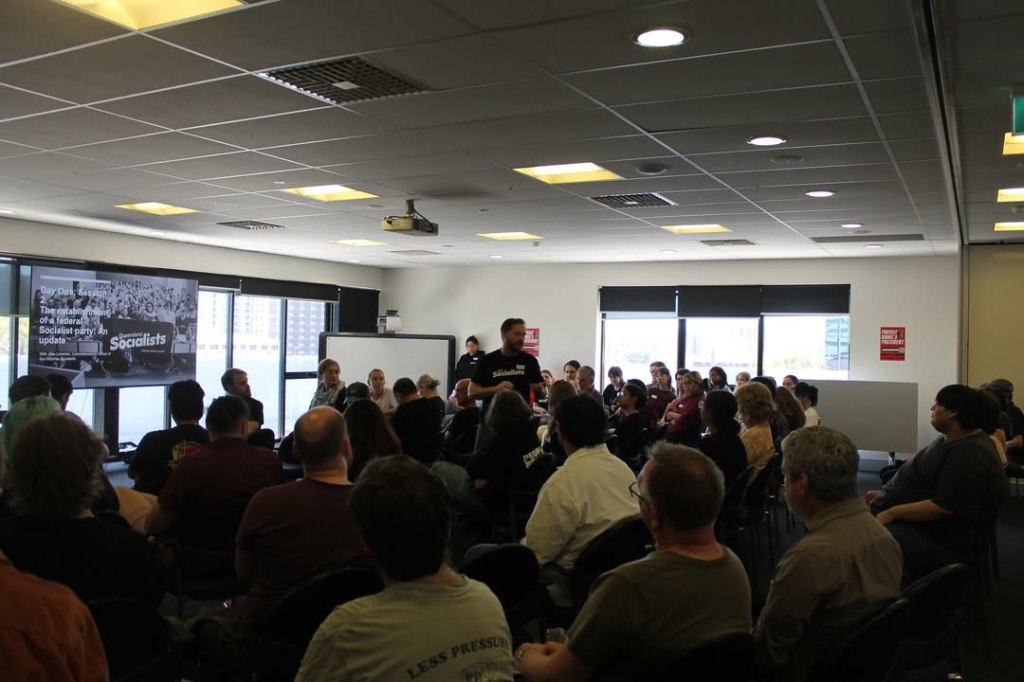
There was a decidedly hopeful air in the conference room of the Community and Public Sector Union (CPSU) last weekend, as it slowly filled with a hundred or so committed socialists, eager to build a party in this heartland of Australian biodiversity and mining capital.
A few observations immediately presented themselves. First, the breadth of character in the room. The range of age, experience, and background (not to mention fashion) was stunning, including a self-avowed – if bashful – ex-conservative, an older woman who had braved the considerable trek from Margaret River, social workers, solicitors, nurses, unionists, and a flood of young people eager to make up in enthusiasm what they lacked in experience.
Proceedings initiated with an opening address from interim secretary, distinguished scholar and seasoned Socialist Alternative organiser Vashti Fox. Fox’s speech began by mirroring the energy in the room, but sobered quickly as she inserted a necessary recollection of the times, offering “unwavering solidarity” with the Indigenous people of Australia, condemnation of the ongoing atrocities in Palestine, shock at the scenes of ICE brutality in Minnesota, tempered with awe over the organised resistance in that same state. Mention was made of the authoritarian net tightening over New South Wales, as the Palestine solidarity movement prepared to protest the invitation of Israeli President and inarguable war criminal Isaac Herzog around the country. Noting the encouraging mobilisation of the Australian pro-Palestine movement (the most protests of any country bar Yemen), and highlighting the Italian general strikes as an example, the potential of this critical moment was brought to the fore.
Things took a turn for the concrete as Fox reviewed the state of Australian capitalism. With 1/8th of Australians still living in poverty, and a reported 73% of Australians directly affected by the housing crisis in some form, everyone was reminded of the colossal task at hand. Fox put it well, enjoining: “We want to build a party of rebellion, that believes in the strength and dignity of the workers and the poor.”
After the membership portal briefly crashed while everyone tried logging on simultaneously, the standing orders and conference agenda were voted on and accepted unanimously. Following this, Victorian Socialists’ campaign director Jess Lenehan rose to deliver her slated address on the state of the newly minted federal socialist party. Lenehan was quick to acknowledge that the launching of a national party on the Victorian model was a gamble, with many social media commentators dismissing the party as a uniquely “Melbourne Thing”. However, with a white-hot and growing federal membership of six thousand, as well as the encouraging Perth council election results, Lenehan affirmed that the gamble had paid off. Official registration of the party was also rapidly closing in: a live report chirped from behind a clipboard at the back of the room revealed that 438 out of the necessary 500 members had already completed electoral registration in WA.
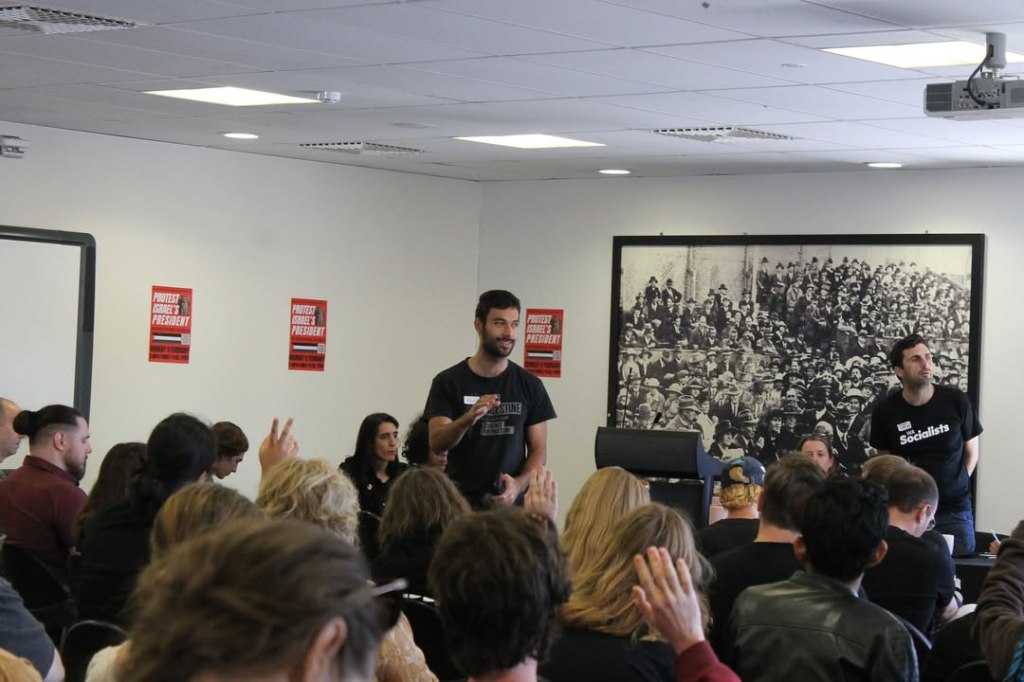
Lenehan’s speech turned to strategy, which began by stating that “the existing crop of politicians just have no answers” to the actually existing issues facing Australian society, a point which was dramatically strengthened as Lenehan recalled a poll finding that only 1% of Australians had a great deal of trust in existing political parties. “I think that’s basically a margin of error” was her comment, as the room broke out in chuckles. Then came the important question: “Where does that frustration go?”. A decidedly chilling answer entered the discussion as Lenehan recalled discovering white nationalist propaganda in letterboxes around the state while door-knocking, leaflets playing on anxieties caused by the buckling economy in order to scapegoat migrants. Lenehan brought up Hilary Clinton’s disastrous 2016 line of “America’s already great” as the perfect example of how not to stand up to the far right, a highly relevant question in the context of an insurgent One Nation led by Pauline Hanson.
“We don’t want to bullshit people, we want it to be real,” Fox concluded, “We want to see working people raising a socialist banner in their opposition to the status quo.” And on this resolution, the floor was opened for general discussion. Members enthusiastically agreed that it was indeed the right time to form a socialist party in WA, with one member reporting that the growth of the new socialist party was outpacing the growth the Greens had seen at the comparable moment in their development.
After a short break, it came time to vote on the concrete motions that would define the body of the new party. The first motion regarded the adoption of the constitution. Despite no amendments being proposed, it was read in full by activist Graham Hansen, and carried unanimously. More general discussion was proposed, and many of the same themes were echoed. Members of Socialist Alternative who had been active in the council campaigns of October 2025 were eager to take a victory lap over the encouraging results they had seen, with some candidates receiving as high as 20% of the vote, despite belonging to a party that did not yet officially exist. One member relayed how the campaign had so unsettled a Liberal party affiliated council candidate that they were quoted telling talk-back radio that “We need to keep politics out of local councils”.
Jubilation in discussions of the elections was such that a motion from the floor to adjourn for lunch, the scheduled time for which had long since passed, was brutally voted down. Things finally wound down with a final address from Vashti Fox, in which she posited that workers were already aware of class antagonisms and only needed an organ to martial against their oppression.
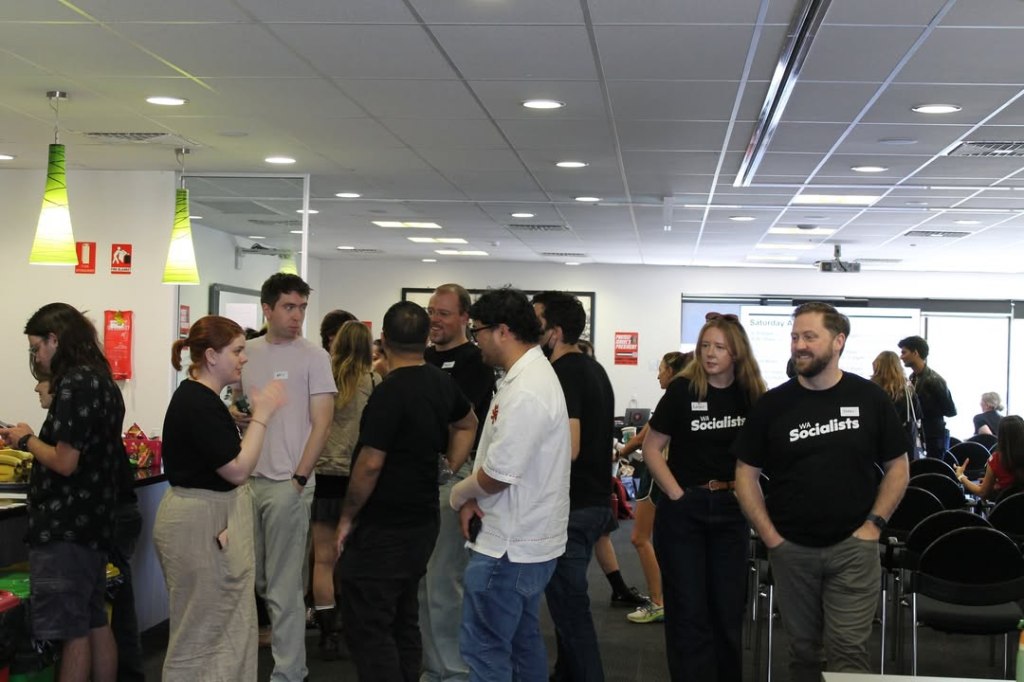
After lunch, various substantive motions were put to the members. The first (motion two) proposed condemning the Cook Labor government, for endangering ancient Indigenous rock art, folding to any and all demands of the mining sector, and failing to deliver any significant cost-of-living relief despite recording massive surpluses year on year. No objections or amendments came against this, but again it was moved to general discussion. A worker from the childcare sector rose to speak of his harrowing experiences working with children who had been put through the Banksia Hill youth detention centre. “Some of the things those kids have told me… that place shouldn’t fucking exist!” he said impassioned, and received rapturous applause. The motion was carried unanimously.
Next came a motion against the oppression of WA’s Indigenous communities, which was carried in a similar manner, many members expressing their shock and dismay over the recent bombing attempt carried out on an invasion day rally in Perth. Then came two motions on housing, with one in support of housing for all, and another against land banking, both unanimously carried despite the latter becoming hung up on a debate regarding the word “progressive” and its relation to property tax policy. Motion six established the position of the party on healthcare as a fundamental human right; motion seven affirmed the party’s support for women’s liberation.
Motion eight (WA Socialists for a Militant Workers’ Movement) would see the most controversy of all, as delegates from the Communist Caucus (CC) proposed amendments calling for a break from the Labor Party. The hostile response from Socialist Alternative aligned members to the amendment was twofold; arguing that the goal of an independent union movement was both unrealistic (“Fifty billion steps into the future”, said one SAlt member) and misguided, arguing instead that the corruption and class collaborationist approach of union leadership was the true problem. Had the debate continued, it is likely that the Communist Caucus would have agreed with this latter sentiment, as there is no contradiction in simultaneously arguing for reduced class-collaboration and a break from Labor, but SAlt used their numerical majority to force the amendment to an immediate vote, where it failed. The motion itself was unanimously carried.
What followed were three motions on war and migration: one against the crackdown on the pro-Palestinian movement, one against AUKUS and the militarisation of WA, and one on defending migrants, entitled “Migrants are welcome, racists are not.” On this latter motion, members stressed that while migrants do benefit economies, as socialists, our support for migrants is a humanist principle rather than a fiscal one. All three were carried unanimously.
Day Two
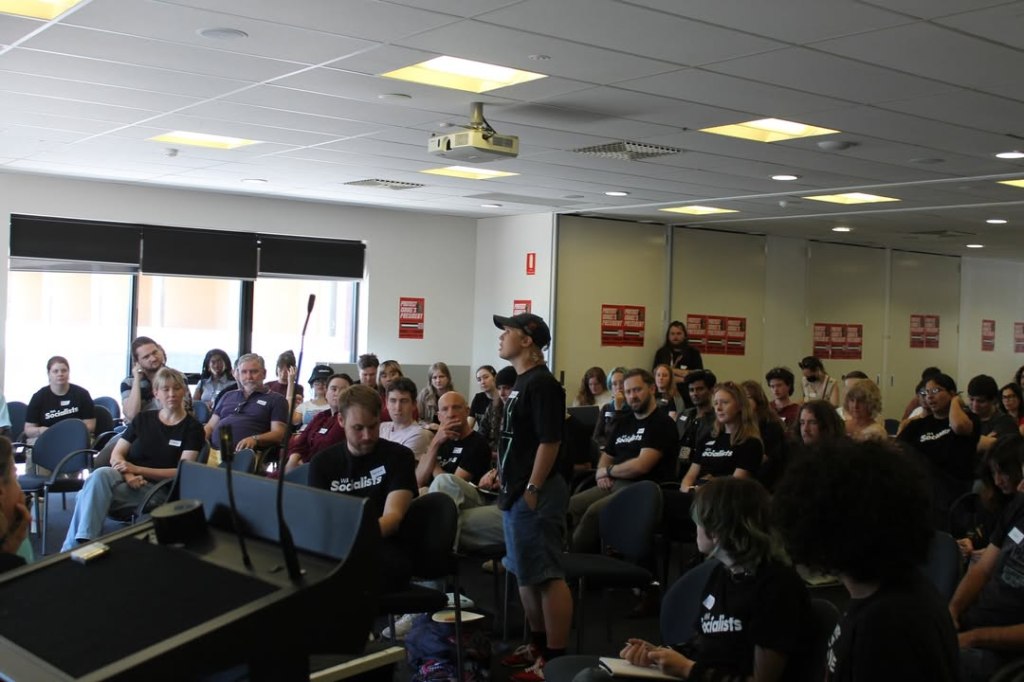
The second day of the conference began by tackling the latter half of the proposed motions. Motion one, “Solidarity With Palestine”, prompted a wide ranging discussion. Speakers bitterly condemned Australian complicity in the recent genocide, noting Australian government contracts with Israeli weapons company Elbit systems, as well as the export of crucial parts for F-35 fighter jets responsible for dropping bombs on the people of Gaza. Further condemnation was heaped on the decision of PM Anthony Albanese and Deputy Penny Wong to invite Israel’s president, Isaac Herzog, to Australia. Despite this, an experienced voice in Nick Everett emphasised the sheer achievement that the pro-Palestine movement was, counting it among the most exciting social movements he had seen in his long career as an activist. The motion was unanimously carried.
Motion two, “Solidarity With the Rebellion in Iran” was an important one in the context of carving out the Socialist Party’s niche in the international left. WA Socialists member Lewis gave a speech praising the protest movement in Iran as a genuine peoples’ uprising, while condemning the United States and Israel for attempting to wrest imperial control of the situation. In general discussion, members spoke of the broad student and workers coalition that had joined the originally petty-bourgeois protest movement, and quickly repudiated the “geopolitical checkers” approach which places Iran as a bulwark against Western imperialism. With the motion carried unanimously, the importance of international solidarity was cemented as a core principle of the party.
Two motions on outward facing strategy followed: motion three, ‘Social and Community Events’ was passed without trouble, but motion four, proposing a ‘Community Voter Research Group’ received immediate scepticism from the membership. The debate that followed featured several strong speeches against adoption, with speakers pointing to the contradiction between principled socialist politics and the kind of blatantly electoral compromises that would have to be made for such a research group to have an effect. Speakers for became more and more unenthusiastic, and the motion eventually failed by a wide margin; the first and only to do so of the conference.
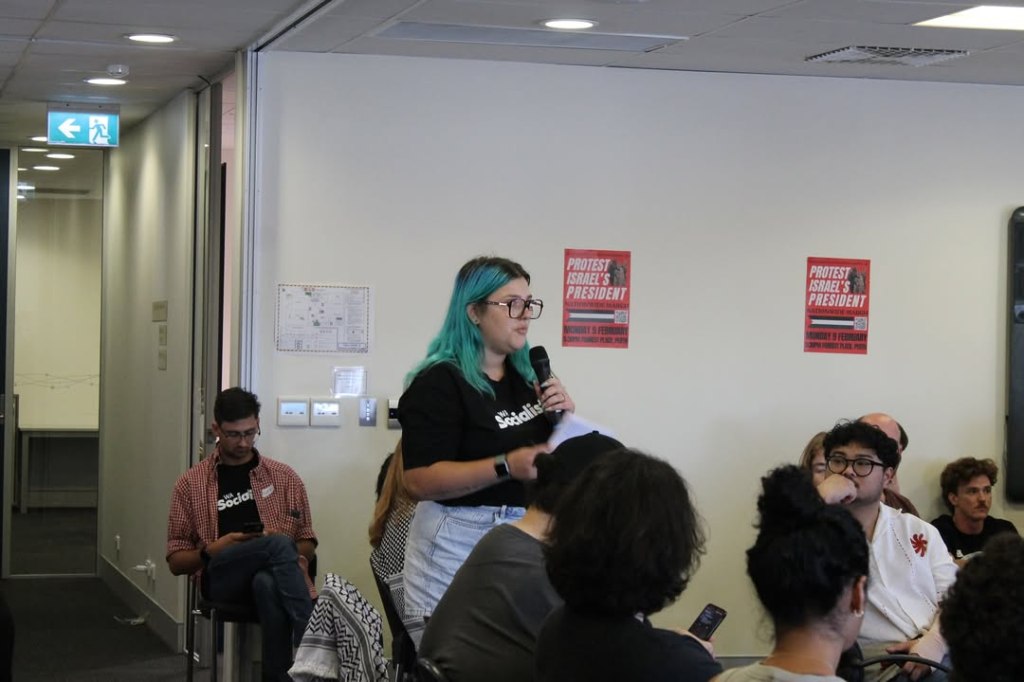
Motion five, the last of the conference, saw the CC propose the establishment of a Socialist Workers’ Caucus within WA Socialists. CC member Will spoke of the unfortunate link between unionism and Labor, lamenting that “the only way to become actively involved in the trade union movement has been to join the Labor party,” and pointed to the modest successes seen in independent militant trade union organising through the Socialist Workers Caucus in Victoria. In general discussion, members condemned the rampant class collaborationist and small target strategy dominating union leadership, and pointed to the many possibilities for a different kind of rank-and-file unionism opening up within the workers’ movement.
With the SWC motion carried, the time came for elections to the party’s governance offices and executive positions. All interim administrative officers were reelected unopposed, leaving thirteen executive council positions. The question of whether the seven-member communist caucus would be able to penetrate the SAlt endorsed ticket was settled quickly in the affirmative, with solicitor and committed communist Caleb Gardner elected comfortably in the last round of voting runoffs.
Reflections
It would take an incredibly uncharitable view to call the inaugural conference of WA Socialists anything but a success. The unity, drive, hope and commitment in the room was palpable. The question, of course, is how best to preserve those important characteristics while expanding enough to provide an equally palpable challenge to capital, and how to consistently take the best approach to provide a home for class struggle. This ongoing theoretical and practical fight will be doomed if opportunism and timid electoralism take root.

 PARTISAN!
You must be logged in to post a comment.