Dave Eden explains how inflation impacts cost of living, compounding an already widespread crisis. Originally published in With Sober Senses.
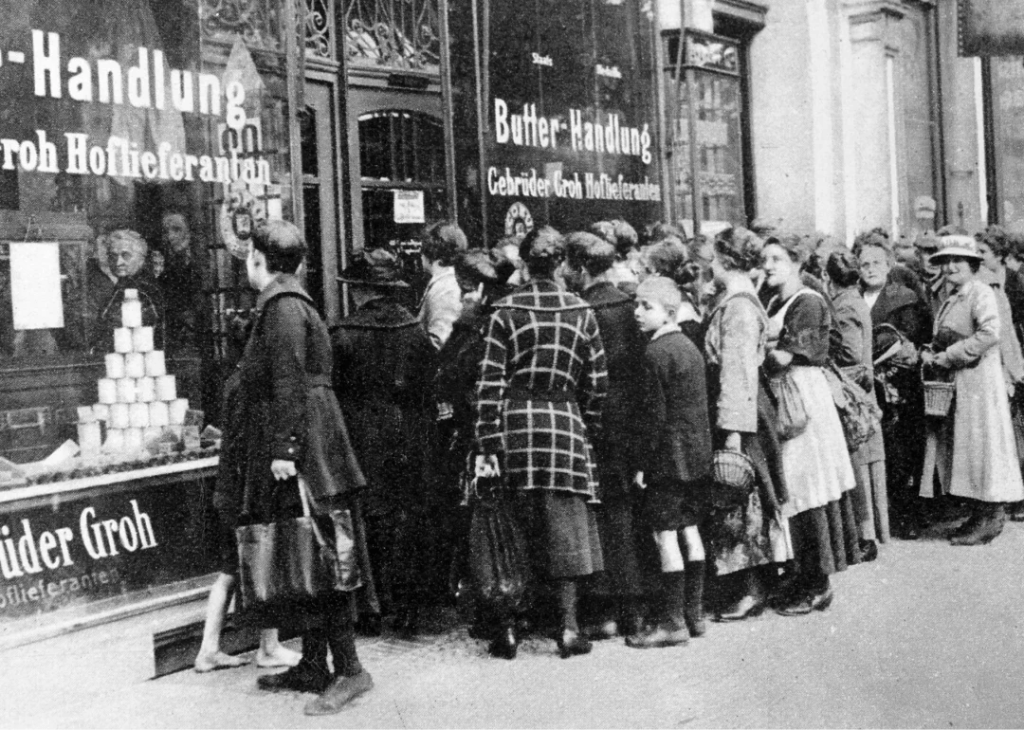
On February 3rd the Reserve Bank of Australia raised interest rates in response to inflation. Over the Christmas period everywhere I went there was a common conversation: the high cost of living. Whilst inflation growth has reduced since the heights of a few years ago, and there has been modest wage growth, the discrepancy between wages and prices remain1. In response to inflation the Reserve Bank has generally been pushing interest rates higher since the 2022.
We are thus stuck in a situation where our wages are worth less and we are spending more servicing our debts. This is especially the situation in relation to housing – the prices of houses continuing to grow higher than general inflation and at the same time with interest rates being higher it costs more on a pay packet to pay packet basis to service the mortgages that are necessary to buy these houses2. With rental growth also outstripping wage growth, and with those on welfare left in the cold, there is no surprise that we live amongst a rising homelessness crisis that is eviscerating peoples’ lives3.
We live caught in a noose of money. In a global capitalist economy money is the reason that drives the huge machinery of production, and it is the glue that binds together billions of people through the market; but it also seems to be malfunctioning and that we don’t have enough of it. Despite money washing across the world, created as a digital entity from nothing as credit, there is an insufficient amount of it in our lives, keeping us trapped in situations as we are sinking. ‘Money is the slavemaster’s whip that drives us to work in the morning or in the night and forces us to work faster’(Holloway, 2022, p. 91).
For those of us who want a radically different kind of life for the people of the earth, explaining the operation of money in general and inflation specifically is important. The Left in Australia has failed to do either. And there is a desperate need to do so. Increasingly the popular explanation for inflation is racist paranoia about immigration. This explanation would say that prices are rising because population growth forces demand higher than supply and this is the cause of prices rises. It’s an asinine answer that reactivates the deep ideological structures of White Australia, where both the Right and the Left in Australia have seen border control as the way to insulate Australian society from the extremes of the market economy. All the problems of the global economy are projected onto the phantasm of the migrant and non-White labourer4.
How, then, can we understand inflation? What is causing this malfunction?
Firstly, we need to accept that inflation is a global problem. Whilst Australia’s rate is marginally higher than comparable counties it is consistent with a global story – the sharp spike after COVID in inflation, then reducing significantly, but still leaving a gap between prices and wages that leaves the multitude of the world poorer5.
The causes of this are global as well. We can say that since the 1970s, there has been a general tendency for capital to invest more and more in finance rather than economic production. Confronting declining profitability and overcapacity capital fled into speculation6. Despite the mass industrialisation of places like China there has been a relative decline in productive capacity overall and leading to a global deindustrialisation7. There is a real stagnation in supply relative to the growth of the economy and the population.
Added to this we can also argue that since the end of the Second World War there has a generally tendency of companies to attempt to increase profits through the increase in prices. Companies of course have limited capacity to do this within the market, but the general expansion of credit gave the capitalist system some power. Since the 1970s we have seen a continual cycle of expansions of credit, financial bubbles that expand and then pop, then states bailing out the financial systems that keep this all going8. And we can understand the tendency of companies to try to raise prices being again an action of trying to offset a general problem of declining profitability – something the age of credit allowed them to do9. Credit works to offset wages for labour, and for capital financial speculation and price rises offset low profitability.
20078 saw the Global Financial Crisis where this exploded; the response of the state was securing the financial system by pumping cheap money into the markets whilst imposing austerity on the people. The decade following this was generally lacklustre growth and increasing social inequality. Australia escaped the worst of this due to being so deeply plugged into Chinese growth.
It is the above long-term tendencies that are then thrown in chaos due to the COVID shock. This shock had two elements. Firstly, the global lockdowns jammed the interrelated global supply chains, exposing the global weakness in industrial capacity and led to real drops in supply, whilst the attempts of the state to stop the economy collapsing through various forms of stimulus then spiked demand. This is what set off the inflation crisis, though the basis was decades in the making.
We should add to this the dynamics of financialisation especially in housing. Here money is lent to buy an asset on the basis that it will appreciate in price. Contra the economic textbooks which say that rising prices may lead to either a) a drop in demand or b) an increase in supply, and both to a lowering of prices, financialisation means rising asset prices are accompanied with rising demand – especially with money being cheap10. We are now in the strange mutation of financialisation: increasing house prices, but interest rates are going up. Such a situation vastly increasing the wealth of asset owners, strangling those trying to buy, and leaving the poor immiserated.
The worst of inflation seems over – and we are left in its wake. There doesn’t appear to be any easy or cheap political solutions. Capitalism continues to limp on through profits sourced in financial speculation whilst the so-called real economy stagnates and declines. There is no tendency to an increase in supply. This sees a situation of increased conflicts between states, Trump’s tariff policy and recolonisation in process of South America and the Russian invasion of Ukraine and resulting quagmire being the most obvious. But such conflicts aren’t reducible to Donald’s or Vladimir’s ideologies or psychologies. They are structural11.
What does this mean for us? It is entirely possible that the combination of broad economic slowdown and restrictive monetary policy may continue to put downward pressure on inflation – but that won’t close the already present gap between wages and prices. (And whilst a real economic downturn might cure inflation it ‘results would be worse.)
We should refuse to pay for this set of malfunctions. The argument that wage increases are only justifiable in relation to productivity increases, that is we must work even harder to get back a little bit of the ground we have lost, or that social services need to be cut, must be refused. A complete refusal of the drive towards war is necessary to stop us all going into the meat grinder. But the stock arguments from the Left to either Tax Billionaires or have the state legislate prices, is I think unlikely to work to address our lowered standards of living. The problem isn’t a simply a lack of tax revenue nor companies cheating us at the cash register. It’s a long-term set of tendencies which have at their basis the crisis of profitability12. What I think we may need to face is wherever we live, we face a global problem, and a system which perhaps no longer has the capacity to provide meaningful reforms. The need for a non-capitalist mode of social life is not then a future goal but a present necessity to address our daily lived reality. The fact that we don’t really know what a viable alternative to capitalism looks like or how to really get there doesn’t absolve us of the need for both.
- Grudnoff, M. (2025), Peetz, D. (2025).
↩︎ - Australian Institute of Health and Welfare. (2025). ↩︎
- For the statistics behind these claims see Reserve Bank of Australia. (2025). ↩︎
- McQueen, H. (1986). A New Britannia (Revised ed.). Penguin Books.
For the best explanation of how ideological fantasies of the outsider work to cover over the structural contradictions of capitalism see ‘Between Symbolic Fiction and Fantasmatic Spectre: Toward a Lacanian Theory of Ideology’ in Žižek, S. (2006) Interrogating the Real. ↩︎ - International Monetary Fund (2026). ↩︎
- Lapavitsas, C. (2013). Profiting without Producing: How Finance Exploits Us All. Verso. ↩︎
- See Benanav, A. (2020). Automation and The Future of Work. Verso. , Lapavitsas, C., & EReNSEP Writing Collective. (2023). The State of Capitalism. Verso ↩︎
- Durand, C. (2017). Fictitious Capital (D. Broder, Trans.). Verso. ↩︎
- Mattick, P. (2023). The Return of Inflation: Money and Capital in the 21st Century. Reaktion Books.
↩︎ - Marazzi, C. (2011). The violence of financial capitalism (K. Lebedeva & J. F. McGimsey, Trans.). Semiotexte. , Marazzi, C. (2015). Money and Financial Capital. Theory, culture & society, 32(7-8), 39-50. ↩︎
- Merchant, J. (2024). Endgame. Reaktion Books. ↩︎
- It’s important to understand this structural tendency of capitalism, which paradoxically arises out of capitalism’s becoming more productive as the size of investment in technology grows is also a product of struggle, of capital’s attempt to control and dominate labour and labour’s refusal see Holloway, J. (2022). Hope in Hopeless Times. Pluto Press. ↩︎
 PARTISAN!
You must be logged in to post a comment.