Anthony Furia and Christina Veselovskiy report on Communist Unity’s Fourth General Conference, summarising and critiquing the perspectives of all those involved, both major and minor.
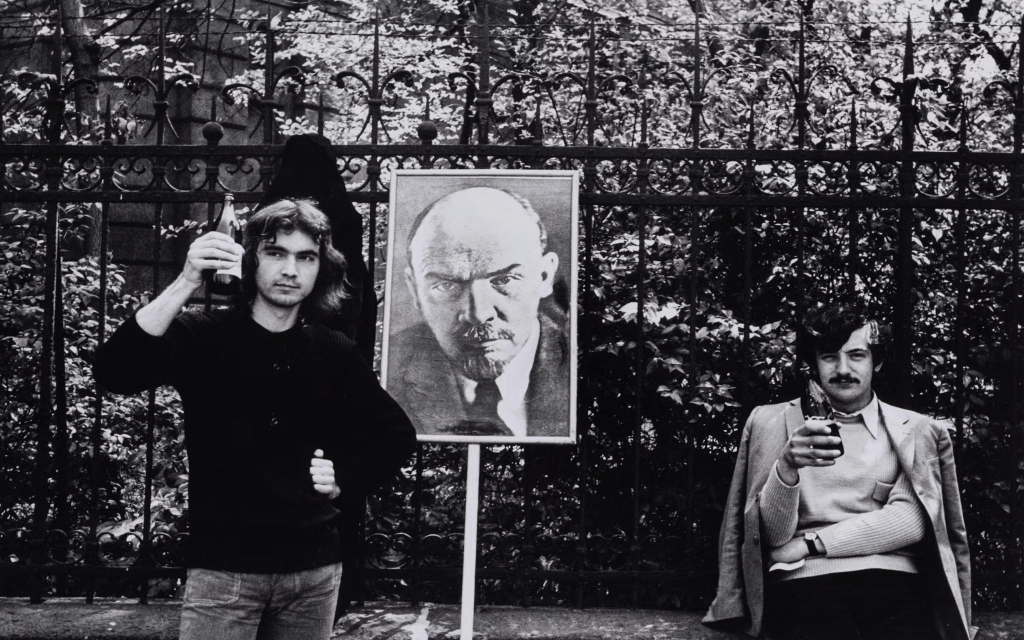
The Revolutionary Communist Organisation (RCO) held its 4th General Conference over the weekend of January 17th to 18th. Over two eight hour sessions, the organisation debated key political and social questions, as well as held organisational debates. The result of such organisational debates is the name change: the RCO will now be known as Communist Unity, with an official name change rolling over in the future.
Alongside these debates, the organisation presented general theses on the international situation and Australia’s place in it, alongside the nature of fascism and Bonapartism. The organisation also debated stances on the Labor Party, the nascent Socialist Party (The Socialists), and the strategic orientation towards them.
The conference hosted members from across the country, many from Melbourne, Brisbane, Sydney, and Newcastle, along with Perth. Sixteen delegates (voters) were elected, an increase of five since the conference held in July 2025. The diversity of attendees reflected the diversity of the organisation’s growing membership.
The 4th Conference concluded with the election of a new central committee, made up of six members. Of these six, three are from Melbourne, two are from Brisbane, and one is from Canberra. This incoming central committee broadly represents the general politics of the organisation, with one committee member from the Spartacist Tendency (formerly the Spartacist League of Australia). Three of the six elected central committee members have been re-elected, having served on the previous central committee.
The debates held within the organisation reflected the diversity of views held by its membership. Until “The Mountain” (an “orthodox faction”) was announced publicly, factional lines outside of the Spartacist Tendency were unclear. Moreover, proposals regarding the status of party and program were often submitted as strategic or tactical theses, or vice versa.
Given technical issues, a number of inexperienced chairs (one of whom was spilled and replaced), and the simple fact that most attendees had not interacted in person prior to conference, procedural hierarchies occasionally disintegrated. Many comrades opted to caucus in real time, interrupting the flow of the conference.
The main divides expressed at this conference were between the Partyists, the “mainstream” politics of the RCO, and Actionists. While there is no hard “left” or “right” faction within the organisation, it’s clear that “The Mountain”, a newly formed Partyist faction, broadly represents the “centre”.
Actionism and Its Discontents
Actionism can be seen as a primary symptom of the challenge of interfacing communist politics within a fractured workers’ movement.
The actionist’s motto is surmisable in Marx’s warning to Wilhelm Bracke, that “every step of the real movement is more important than a dozen programs.” It places the aspirations of the communist movement in the subsistence struggles of today and drowns alleged “abstracts” in a sea of undefined terms inherited from long-dead traditions.
Both syndicalist and workerist tendencies within historical communist parties played their part in pushing actionism beyond the individualistic impulses and petty-bourgeois romanticism of its 19th-century origins.
In today’s highly atomised society, however, with incomes and technical knowledge ever-increasingly stratified both inside and outside the factory, actionism represents the last hope of salvaging the “general intellect” from the proletariat and providing it with enough space to stand on two feet once again.
Its goal is to eradicate the present foundations of ruling-class hegemony, but it does so with a flattened, oversimplified understanding of how political hegemony works. Actionism in 2026 is the voluntarism of the helpless amongst the working class, and the events of conference highlight the many contradictions within this tendency, in both higher and lesser forms.
Higher-Stage Actionism, a Guide to Reaction
This higher stage was on display during the motions and amendments proposed by members of the Spartacist Tendency. This “Spartacist” current demands a resolute break with liberal internationalism and the politics of Australia’s post-accords civil society. Hardly objectionable if taken by itself, the Spartacists’ error is mistaking this aspirational norm for our entire basis of unity.
For their part, the Spartacists consistently centred the crisis of liberalism and US imperialism throughout each session. Yet immediately, we must clarify some things:
Do all forces across the current political spectrum not argue that a political break from neoliberalism is necessary, including said liberals themselves?
Does the rise of anti-political demagogues and Bonapartist administrations not prove that such demands for a break are easily recuperable?
Are the many legal, legislative, financial, and bureaucratic embattlements faced by these regimes not proof of a strange resilience in neoliberal capitalism? That, despite red herrings like the war on academic departments, actual elites prove readily capable of ejecting any position they so choose and recuperating its critique from the right? Is the crisis of state capacity not entirely the function of throttling investment and working-class bargaining power to protect the basic reproduction of the ruling class, rather than proof of liberal incompetence?
If so (and indeed these are so), how shall our program of negation emerge, as the Spartacists insist, from the “real” and “tangible” spectacles glimpsed on 24-hour news, discussed and pamphleteered ad nauseam around the water cooler, without being supplemented by a patient and rigorous study of the dynamics of debt-concealed immiseration and declining profit rates visible since the 1970s?
If abstracts are the enemy of the worker, how can they amplify their voice beyond their union and their sect if they already observe and condemn, on moral grounds, those instances of naked imperialism each night spent in front of the television, or on their smartphone?
If struggles are always concrete, have the past decades of failed protest movements not proven that the Spartacists’ day-to-day anti-imperialist politics are the illusion of agency shared by all participants in the spectacle, as moral inertia carries them from one headline to the next?
Without a program, the political outlook of the proletariat is narrow indeed, and the “Guide to Action” the Spartacists mentioned mainly serves as a Guide to Reaction. The goal of the communist is not just to address symptoms immediately visible on the skin, but to palpate the flows of blood and viscera underneath, uniting hand and mind in reference to logical experience and a diagnostician’s training.
Programmatic and Strategic analysis involves necessary abstractions because capitalist production itself deals in abstracts. The methodological nationalism of the Spartacists conceals the basic reproduction of the international ruling class under a deluge of summons to the barricades.
The Spartacists are by no means political amnesiacs, yet even they forget the ease with which anti-imperialist politics adopts an ineffectual voluntarist hope in core states, and aids projects of class collaboration in the periphery.
In the span of 100 years, liberalism has evacuated itself of all ideological content other than the doctrine of atomised individualism. Its vacuousness is the source of its resilience, and thus its negation can never be a purely local affair, appealing to no program beyond the immediate concerns of the workers. The Spartacists kindle their revolutionary fire using the same oxygen as the petty-bourgeois classes.
A program that invokes the acephalous mass of workers to justify its own correctness, asserting a priori socialist norms and immediate interests as one and the same, risks shrinking the horizon of struggle to boundaries no less narrow than those of all the other interests of reaction.
Lower-stage Actionism and Rhetorical Errors
A minor but no less visible form of actionism emerged during conference, which helps clarify the role of conferences in the communist movement more broadly. In particular, several comrades showed a tendency to separate their rhetoric from the underlying motions being discussed.
Given that Communist Unity still shows tactical and organisational flaws commensurate with its pre-party status, and that, as mentioned before, internal culture is currently transitioning from cliquish, sectarian groups towards organised factions, it is predictable that these minor forms of actionist thinking will also slide their way into debates.
In particular, comrade Revmira (now a member of the Central Committee) frequently turned procedural motions – such as establishing international liaison groups, the Partisan Defence Committee, and adjusting conference’s delegate system – into a pledge of fidelity to abstract ideals.
Comrade Revmira’s tendency to advocate for uncontroversial measures with inflammatory, Manichean rhetoric risks misleading younger and less experienced cadres about the principles and tactics the organisation stands for. Given that many of these motions were either unanimous or contained only friendly amendments, this activity risks creating an impression of unanimous support for the exaggerated emotional commitments that actionist-minded comrades may identify with, thereby influencing the tactical decisions they will make in the future.
While conference speeches require a form of adversarial discourse and rhetorical commitments that diverge from the content of the proposal, as human language inevitably demands, what kinds of normative commitments comrades invest in their words matter when seeking conference’s consent.
Too often, comrades embody the inverse of Gramsci’s famous aphorism in that they are optimists of the intellect and pessimists of the will. Optimists of the intellect, for they believe they embody correct politics in reference to transhistoric ideals; they too often admit in their empty definitions of sober and scientific analysis that their understanding involves deterministic premises, that the goal of communism involves a Calvinistic degree of inevitability. Likewise, the pessimism of the will asserts itself in what goes unsaid by their rhetoric; that in our immediate context, no unity can be achieved without constant and undying faith in shibboleths – without them, without the passions, a dream can and will be deferred.
That our immediate political context is one of spectacles does not mean we must create counter-spectacles and inject them into our program and strategy. The sin of actionism is believing that tactics, when infused with the right declarations, can be elevated to the level of strategy and be embraced as the basis for unity. When addressing from the bully pulpit, we ask that comrades apply their calls for sober analysis with the consistency it deserves.
The Meaning of the Spartacists
The Spartacists represent a critical step forward for organised factionalism within Communist Unity. The first faction to concretise itself in distinction to the dominant ‘Mountain’ centre of an orthodox partyist persuasion, the Spartacist Tendency epitomises an actionist politics in factional command, to a greater level of political sophistication than those unrefined unreconstructed actionist elements that tend to be brought in from recruitment amongst the sects and social movements (both dominated by a politics of the moral imperative – that ‘something must be done’).
This is because the Spartacist Tendency, at their rhetorical best, poses the question of action in relation to the question of unity – the question of the struggle for the communist party. For their most theoretically clear members, the reasoning behind their immediatist, ‘bread and butter’ program is straightforwardly that shared practical struggle (currently, for the tendency ‘practical struggle’ is often elided to mean simply ‘union organising’) is a prerequisite for unity amongst communist forces. This is an idea that, in abstract, is not opposed by Mountain forces. That struggle is critical to furthering unity amongst communist forces, and thus the struggle for a mass party generally, is accepted across most elements of the organisation. It is in the question of priority, and what this struggle should look like in the present world-historic moment, that the Mountain and Spartacist Tendency find one another at odds. Endorsing motions such as the ‘proletarianisation’ motion relies upon either an implicit theoretical acceptance of the Spartacist Tendency’s of the current political, organisational juncture (described above) or the adoption of a similar perspective in opposition to that presented by Mountain forces.
Here, the question is tactical: is now the time, both in terms of membership and the political situation, to enact a turn to industry? Could we really gain significance from such a turn? Would it concretely advance struggles for unity? Mountain forces generally opposed the perspective presented by the Spartacist Tendency that responded to these questions in the affirmative.
The vote on the motion to ‘proletarianise Communist Unity’ (only very narrowly defeated), which argued for a goal of 50% blue- and pink-collar work membership, highlighted potential for cooperation between both factions, and the extent to which the question was tactical. The problem many in the Mountain have with the tactics immediately posed by the Spartacist Tendency is not with the tactics in abstract, but rather with their fetishisation to the level of strategy (and thereby their displacement of real political strategy) and their assertion that these are in fact the right tactics for our particular subjective and objective juncture. However, into the future, as circumstances shift and the organisation grows, drives to ‘proletarianise’ the organisation and similar shifts in focus to union organising and work may be accepted by the Mountain, albeit on partyist terms – that is, as tactics within a broad strategic road to power.
Partyism: Some Notes
Communist Unity’s ‘partyist’ tradition suffers from several theoretical and conceptual difficulties due to the immanent political, organisational situation it finds itself in. As the oldest and dominant trend within the organisation over three successive general conferences, a core partyist conception has defined Communist Unity itself.
As the organisation grows, this conception, due to its own principled commitment to democratic openness, programmatic unity, and factional rights, faces consistent challenges from differing perspectives on the tasks of the organisation in the current moment, and the strategy that should be pursued in order to achieve ‘partyist’ aims (the forging of a mass communist party, through, in some form or another, the existing socialist movement).
The problem, then, becomes separating a narrower theoretical perspective of what ‘partyism’ involves, held by those in Communist Unity who pioneered such an identity for the organisation, from the broad embrace of a notional ‘partyism’ by virtually all oppositional elements within the organisation itself. This, furthermore, is not a clear-cut separation of one dominant trend against all others. There is a diverse stratification across the organisation’s layers, which is likely to continue to develop as we grow. That is, layers and members endorse or refute different elements of the central ‘partyist’ conception to differing degrees. One could, for example, oppose a minimum-maximum style program but endorse a strategy of going ‘through’ the left to reforge the communist party, and vice versa.
This process of separation, spurred on by the creation of the Spartacist Tendency as a formal opposition to a generally hegemonic central trend, has forced partyism (in fact, has allowed partyism) within Communist Unity to face and present itself in clearer, public terms. In doing so, it has begun to undergo the shift from ‘clique’ in the sense of informal social networks of politically influential comrades who organise to present a particular strategy and way forward for the organisation, to ‘faction’ – a political body organised on public, expressed political terms, presenting a view for the future of the organisation which can now be more effectively contextualised through the presence of opposition and alternative perspectives.
Currently, an ‘orthodox’ partyism – The Mountain – remains the central expression of such political organisation. It aligns itself with a minimum maximum program, an emphasis on organisational democracy and theoretical education, and the importance of a revolutionary strategy of patience – in opposition to actionist shortcuts and tactical posturing. How this develops into the future, and along what lines it may fracture, coalesce, and fracture again as the organisation grows, remains to be seen.
Concluding Thoughts
Those guilty of actionism, those who elevate tactics to the level of strategy and programme, should in future understand their errors.
Incidents such as these are instructive for the organisation moving forward, and further dialogue on many Spartacist proposals, such as the 50% proletarian motion, is encouraged.
Non-mountain currents within partyism are emerging, but too often proceed on actionist assumptions.
As the cliques and sects become factions, tactical struggles shall ultimately prove their mettle. Having conquered a programme for today, a Leninist considers the programme of the future, shaped by the struggles of tomorrow, and does not balk at tactical interventions.
Conference, which proceeds on the basis of democratic centralism, should not confuse the agreed-on motions with unwieldy and actionist rhetoric.
Communist Unity does not seek dogmatists, but rather those capable of penetrating analysis and who are able to reason with the null hypotheses of their own beliefs.
We don’t fear to lay out our errors. Our external enemies can find reason for joy in this, but they’ll be sorry. Once an error is recognised, it’s already halfway to being repaired.
Communist Unity, by the clarity of its debates and decisions, will certainly demonstrate this at the next Conference in 2027.


 PARTISAN!
You must be logged in to post a comment.