Owen Hsi speaks to Ryan, a key organiser of the Trade Unionists for All (TUFA) group based in Perth, WA.
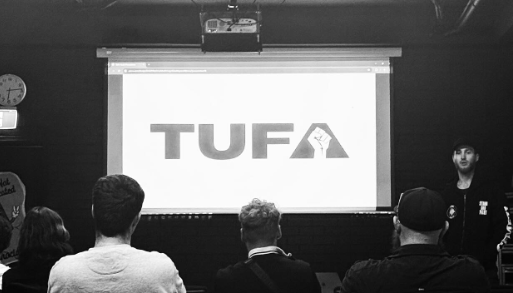
Trade Unionists for All (TUFA) is a new initiative that was launched after an inaugural meeting at the Boorloo activist centre in Perth, WA. This inaugural meeting took place on October 22nd, and was attended by fourteen workers from different political and trade union backgrounds. The aim of the meeting was to form an independent rank-and-file coalition. TUFA is aimed at unionists aged 35 and under, intending to reinvigorate militant trade unionism. They describe themselves as “an independent coalition of like-minded individuals seeking to empower one another for all” with the ethos that “every worker is an organiser.” The structure and objectives of TUFA are not yet public, with monthly branch meetings planned to take place from January 2026.
Ryan, a key organiser of TUFA in WA, spoke with Partisan.
What is your background, and your motivations in forming TUFA?
“I am currently a builder’s labourer, rank & file trade unionist, and founding contributor to the Hard Hat Bulletin. More importantly, I am a son, brother, husband, and father of three, who sees the benefits a strong trade union movement can have for the society in which I live, that my children will someday inherit.”
How did you think the TUFA launch went? What encouraging signs have you seen from the launch, is there much ‘buy in’ from trade unionists in Perth?
“The TUFA launch went to plan. Despite just relocating to Perth from Brisbane and deliberately not publicly promoting the event, the small yet diverse crowd was enough for what I needed. Since then, the buy-in locally has been sustainably growing, which is ideal. ABS data from 2024 had WA listed with the worst trade union membership rates in the country, something many here realise requires a deep cultural change to turn around.”
What is the distinction between TUFA and TUFA youth? Why have you focused mostly on unionists under 35?
“The distinction between TUFA & TUFA Youth is that the former is the broader collective and the latter is the youth caucus within it. We have gone with the age bracket of 35 and under because this is what we had in the QLD/NT branch of the CFMEU, and what we at the Hard Hat Bulletin have predominantly encouraged other trade unions and their branches to implement in their respective youth caucuses. Personally, I would like to see this restriction dropped down to 30 years. The QLD/NT branch of the ETU, another source of inspiration for TUFA given its rank & file-lead youth crews based on local government area, has an age limit of 32. In my opinion, an aim of these youth crews is to teach these young workers how to organise on site, which includes skills like recruitment, so by the time they reach the cut-off age, they can easily slip into an official role within their respective trade union.”
What is next for TUFA? What are your short, medium, and long term goals for the group?
“On December 3rd, we will be revealing the finalised constitution for all to see. Come January 2026, we will commence the monthly meetings. Our most basic goal is to at the very least bring young trade unionists from various industries in their respective localities together, to encourage localised organising, whilst at the same time facilitating a broader network for them to assist each other in their endeavours. My personal goal in all of this, is to see it become an international operation by the time I am too old to be a part of TUFA Youth, which is 2027.”
Why do you think trade union membership has declined over the previous decades?
“Trade union membership has declined across the board in Australia, and by extension the western world since the 1970s for a number of reasons. We could talk endlessly about policy and theory, but the reality comes down to the trade union movement failing to instil class consciousness in the youth through language and praxis they can relate to in their respective generations.”
Do you think there is a place for trade unionists to campaign on social issues outside of bread and butter issues like pay and conditions? For instance, there has been some criticism from a segment of the union movement for the decision to become involved in the Palestinian solidarity movement. How would you respond to that?
“In short, yes, I myself joined the trade union movement immediately after seeing the CFMEU’s response to what was happening in Gaza. It is true that peace is union business, but in saying that, I feel many on the Left have a romanticised view of previous successful trade union campaigns on social issues. If we look back at the historic efforts of Jack Mundey and the NSW branch of the BLF, one only has to speak to enough of the construction workers from this era to realise that maybe they didn’t all necessarily have the class consciousness one would assume. They mostly followed the communist leadership of the time because they gave them many wins on the wages and conditions front.”

 PARTISAN!
You must be logged in to post a comment.