In a statement published by the Spartacist League of Australia, O. Dziga argues that if the Indonesian working class is to succeed, it must be led by an authentically socialist vanguard.
“In the Global South, where there is no fat to cut, an offensive by the U.S. will have devastating consequences that will likely provoke massive social explosions. In many countries, all it takes is a spark for massive explosions to erupt. The question is: will these be directed against the imperialists or will workers turn the guns against each other? This all depends on the question of leadership.”
—Editorial, Spartacist, No. 70, May 2025
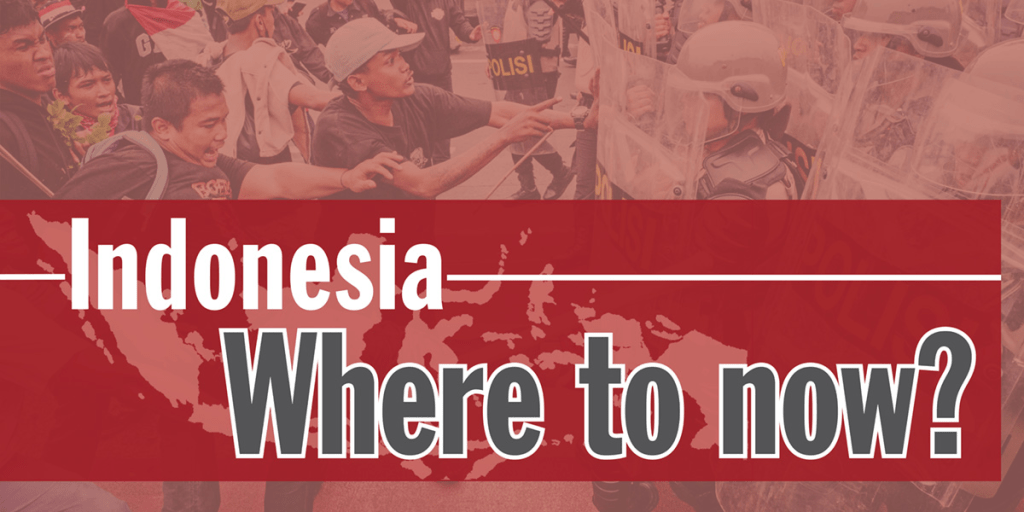
The wave of large and militant protests by Indonesian youth, which began late August, is among the most significant in Indonesia since 1998, revealing a deep accumulation of anger and political and economic grievance among broad layers of the Indonesian masses. The Indonesian national bourgeoisie finds itself in an increasingly dire impasse, as a declining US imperialism turns the screws on the neocolonial world. The workers’ movement and the left are at such an impasse, too. With demonstrations trapped in a cycle of ebb and escalation, the union movement disoriented, and the organised left still programmatically and organisationally impotent.
It is not just “solidarity” or “greater coordination” that Indonesian social movements desperately need, but revolutionary leadership: a program and path towards victory against imperialism. It must be made clear to the progressive layers of the masses that in the absence of such a leadership, social explosions can only remain a platform for conflict and contestation among different factions of elite and imperialist interest—contributing ultimately to a spiral of reaction.
The trajectory of Indonesian politics is uncertain. Conditions for the masses are worsening and the relative political stability of the last twenty years shows real signs of cracking apart. The elite unity which today holds is under increasing threat of collapse as the global situation decomposes, yet all alternatives are underdeveloped. This offers real opportunities for the left and the workers movement, but also even greater dangers. Imperialist pressures could easily turn this powder keg of a situation into an explosive spiral of reaction. In the current lull in political struggle it is more urgent than ever that the Indonesian left take seriously the tasks of programmatic and organisational rearmament.
Outlines for a Program
The following five points are presented as a basis for political discussion, debate, and consolidation. This report makes no claim to have the answers to the myriad political questions facing socialists and the workers movement in Indonesia. Clarifying programmatic principles is, however, the only basis on which to rebuild a fighting vanguard.
1. For United Defence Against State Repression.
Recent demonstrations resulted in the most significant period of state repression in Indonesia since 1998, with every tool short of a formal declaration of martial law deployed. Thousands were arrested in this crackdown, hundreds detained for extended periods, and many remain imprisoned awaiting trial. This includes both those caught up in the anarchist “Black Scare” (or accused of “anarchic acts” at protests) as well as numerous others facing charges of “incitement,” often simply for social media posts. Many face years in prison, including some prominent liberal activists and NGO figures. There is an urgent need for socialists to take the lead in mobilising a united campaign in defence of all those caught up in this wave of repression. This struggle must be directly linked with the defence of Papuan activists, who have also faced a wave of arrests and escalated military violence in recent months.
2. Towards 100% Merdeka
The anti-imperialist struggle is the democratic struggle. Inequality, corruption, the dire conditions of the Indonesian masses, the predatory and Bonapartist nature of the Indonesian elite—all are ultimately the product of imperialist subjugation and neo-colonial oppression. In the face of a rising Bonapartism, advancing the democratic struggle demands a break with the politics of liberal Reformasi. Tied to the imperialists and this ideological remnant of US hegemony, the left will never break the hold of the national bourgeoisie on the masses. Marxists must demonstrate to the masses that only our program offers real direction in the struggle against imperialism. Cancel the imperialist debts, expel the imperialist agencies, tear up the capitulatory deals, refuse military cooperation in the war drive against China, complete the tasks of national liberation and 100% Merdeka.
Despite nationalist posturing, the elite have a doomed strategy which cannot defend the country from the imperialist death grip. Prabowo is desperate to maintain the balance between US imperialism and “multipolarity.” But when the hammer comes down he can only sell out in economic negotiations (and beg Trump for an audience with his son). Moves towards greater military coordination with US imperialism—including offers by the state shipbuilder to turn the archipelago into a repair and refuelling platform for the US war machine—promise only greater disaster. When the national bourgeoisie does move against the imperialists, in their own selfish way (as in the past decade of “resource nationalism”), Marxists must fight for the working class to push this forward, far beyond their carefully prepared limits.
3. Against Gradualist Developmentalism.
With the conditions of workers, peasants, and the petty bourgeoisie in decline, the masses continue to yearn for real solutions to the problems of national development. Today’s economic woes reveal that, in reality (despite decades of investment and nominal infrastructural development), the national bourgeoisie and their representatives have enriched themselves at the expense of genuine national development for the masses. This is the direct result of their inability to combat imperialist subjugation. Marxists must demonstrate why the national bourgeoisie cannot fight imperialism or truly develop the country, and why these tasks are one and the same. Development under the imperialist boot will never be sufficient. Only a revolutionary alliance of the working class of Southeast Asia with workers of the imperialist centres and the Chinese workers’ state offers true allies in the struggle for national development.
4. Defend National Minorities! For the Right to Self-Determination! Papua Merdeka!
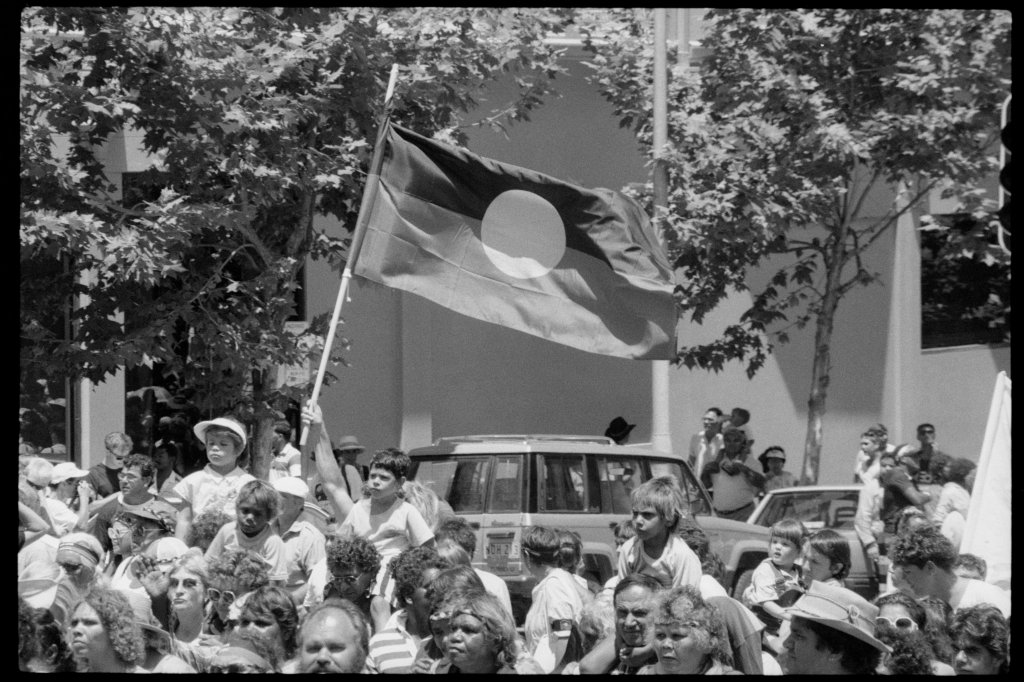
As crises worsen, it is more urgent than ever that the defence of national minorities and the right to self-determination is made central to socialist agitation. History shows that every period of political and economic crisis in Indonesia leads directly to an explosion of the national question. The 1990s saw communal violence across the country (in the major cities, most brutally against the ethnically Chinese) and acute struggles for self-determination in Timor, Aceh, and Papua. There have not been major instances of communal violence in recent years, but the danger remains latent. Likewise, the national question is subdued in most of the archipelago by post-Reformasi “decentralisation.” Still, its re-ignition is not out of the question in the event of a potential splintering of elite unity. In Papua, brutal repression of the national movement continues to escalate in scale and violence. As the bodies of fighters and civilians pile up, and jails are filled with political prisoners, the West Papuan national-liberation movement finds itself at an impasse to which it has no solution.
Only a revolutionary alliance of oppressed nationalities and ethnicities with the Indonesian working class offers a real path to emancipation. Yet for most workers, approaching these taboo issues tends to provoke deep hostility—seen as nothing short of an attack on the nation and its sovereignty. The workers’ movement will not be won to the fight for West Papuan liberation through appeals to liberal concern over human rights. Neither are abstract appeals to class solidarity alone sufficient to build unity across national and communal boundaries. What must be demonstrated in struggle (and patient explanation) is the common interest of the peoples of the archipelago in the struggle against imperialist subjugation. This is the only basis on which the special interest of the Indonesian working class in the liberation of oppressed minorities can be concretely revealed.
5. The Workers Movement Must Lead the Way.
The conciliatory and liberal-idealist politics of the presently dominant “leaders” of Indonesian social movements are a dead end. For the struggle to advance, the workers’ movement must become its leading force, carrying behind it the rural peasant masses and radical layers of the petty bourgeoisie. But the present leadership of the workers’ movement, “yellow” and “red” alike, are not up to this task—committed to a strategy of pro-government class collaboration or seeped in petty-bourgeois liberalism. Building a revolutionary leadership of the class will require engaging with the workers’ movement to advance a genuinely anti-imperialist program counterposed to the existing misleadership. Only behind a revolutionary workers’ movement can the masses’ anger be directed productively, and only with the militant youth behind it can the workers’ movement advance.
Engaging with and fighting to consolidate the splintered Indonesian left behind united-front actions and, ultimately, a revolutionary program is the first practical step towards advancing this struggle.


 PARTISAN!
You must be logged in to post a comment.