The debate around unity between Socialist Alliance and The Socialists continues. John Blackford writes that since Socialist Alliance and The Socialists have near identical politics, there are no legitimate arguments against unity between them.
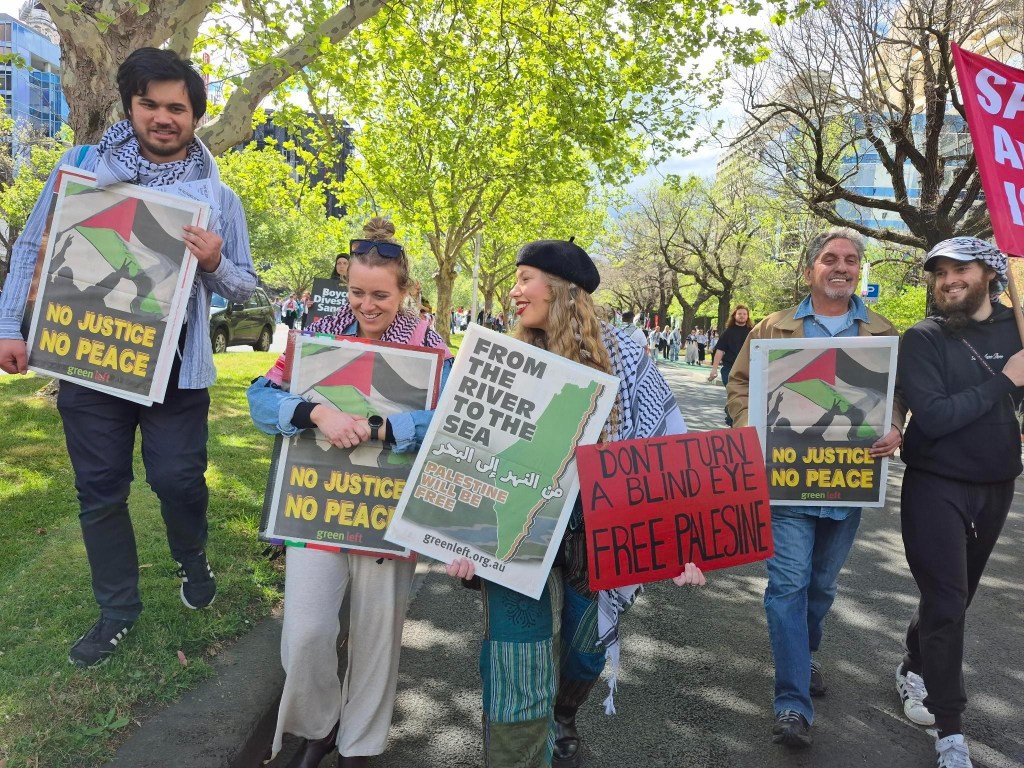
In a statement posted on the 12th of November, 2025, the Victorian Socialists executive announced that efforts to take the electoral party nationwide had come up against a significant obstacle. The application to rename the federally registered party Victorian Socialists to “Socialist Party” lodged with the Australian Electoral Commission, in the wake of the VS conference in June, has been provisionally rejected due to its resemblance to the name of Socialist Alliance. According to the AEC, the party’s new proposed name could both be “reasonably confused” with that of Alliance, and implies a connection between the Socialist Party and Socialist Alliance which in actuality does not exist. Likewise, in New South Wales, the only jurisdiction where Alliance remains registered on the state level, the NSW Electoral Commission rejected the application of the Socialist Party under the name “New South Wales Socialist Party” on similar grounds, forcing the party to register under a modified name.
The rejection of these applications has re-ignited discussion over whether Socialist Alliance can justify remaining a separate electoral party to VS. If Alliance were to cease to be a registered political party, the obstacles to registration under VS’s preferred names would disappear, both nationally and in New South Wales. More broadly however, it has brought into focus the question of why Alliance, which is functionally identical to VS in program, politics, and strategy, does not simply liquidate itself into VS, a party which has achieved more in seven years than Alliance has in twenty-five. Indeed, in their statement, the VS executive reiterated calls for organisational unity with Alliance, on the basis of “full freedom for internal groups to pursue their own arguments and strategies.”
Socialist Alliance, meanwhile, has been reluctant to budge on the point of unity. In an internal bulletin sent to Alliance members, the party’s national co-convenor stated that, while Alliance “want[s] to see electoral unity as a process towards left regroupment,” the “constant calls for unity” from VS “are not designed to do this or to build trust.” Additionally, according to Alliance, “there had been no formal process put forward to us, nor a process for addressing the original reasons why we left Victorian Socialists in 2020 and a way forward.” While not shutting the door completely on unity, the bulletin, in combination with a renewed Victorian membership drive intended to register Alliance in time for the 2026 state election, indicates that Alliance remains aloof to substantive unity with VS.
This is a disappointing development. Alliance’s initial withdrawal from VS was a qualitative setback for the socialist movement in Australia, and it has not been vindicated with time. Alliance justified leaving VS on the grounds that Socialist Alternative was using its majority in the party to block it from developing a political life outside of elections, and to “restrict the democratic participation of independents in the Victorian Socialists.” Five years later however, we find that VS has managed to develop a life outside of elections, contrary to Alliance’s diagnosis. VS has branches, commits to non-electoral campaigns, and maintains a de-facto cadre membership. Socialist Unity, a caucus which took up the same aims which Alliance supposedly left VS over (ie. development of an organisational life outside of elections) folded having achieved most of its goals. These structures and developments are obviously immature and imperfect, but their growth shows that Alliance’s prognosis that VS was not worth working within to reform and improve was erroneous at best.
It is clear however that the more fundamental point at play is the control Socialist Alternative holds over VS. In their internal bulletin, Alliance states that “our experience in Victorian Socialists for two years was that undelegated conferences were used to outvote all minority proposals that did not comply with Socialist Alternative’s views.” Alliance additionally accuses SAlt of branch stacking, saying that while SAlt are “a minority in their electoral fronts,” the undelegated conferences of VS franchises are “easily stacked.” Alliance therefore characterises SAlt as a minoritarian bureaucracy undemocratically imposing its line on VS.
The fiction that the vast paper membership renders SAlt a minority within their front party is useful to both Alliance and the SAlt-aligned leadership of VS. The former uses it to characterise VS as an undemocratic organisation, given the obvious leading role SAlt plays in it. The latter, including figures such as Jordan Van Den Lamb, use it to distance VS from the generally disliked brand of Socialist Alternative. In either case, the notion is farcical. Whether we like it or not, a large majority of active VS members, who attend VS branch meetings and are engaged in internal VS politics, are either members of Socialist Alternative, or are aligned with Socialist Alternative on most questions relevant to VS. The fact is that SAlt are a majority in VS, and Alliance left because they disliked the decisions that the democratic majority in VS made. Alliance’s proposals, sound as they were, were voted down by the majority in the party. The sound and principled decision would have been to remain to continue fighting for them, as many in VS did. The sectarian route taken by Alliance, however, was to use this as a pretext to exit.
When evaluating whether Alliance should rejoin VS, there are only two questions which we need to answer; is there any justification for Alliance to continue to be separate to VS, and does it advance or hinder the socialist movement for Alliance to continue to be separate to VS? Any right for Alliance to continue a separate existence must be predicated on an affirmative answer to these questions. With regards to the first, we have already established that Alliance’s stated reasons for leaving were either always dubious or have been proven wrong with time, but what other justifications can we conceive of?
Perhaps Alliance might have a right to exist separately if it had a substantially different or more advanced program than VS. If Alliance’s politics broke with state-loyalism and VS’s didn’t, then you might make the case that Alliance is justified in remaining independent. However, Alliance is no less reformist than VS is. Its publication routinely takes state loyalist positions on conflicts such as the War in Ukraine, and its platform is no less a left-populist hodgepodge than VS’s is. Indeed, in terms of politics, beyond the meaningless shibboleth of “eco-socialism” which Alliance continues to flog, both parties are fundamentally identical. But what about strategy and tactics? Sure, the RCO regards splits as only being justifiable programmatically, but that is a far from universal view. Even tactically however, Alliance is not meaningfully distinct from VS; both parties devote considerable effort to elections, while still undertaking important activities outside of them.
So, given the fact that we have two parties that, in every relevant political sense are identical, we must pose the question; does it advance the socialist movement for there to be two politically identical parties on the ballot, or does it hinder us? We are not the swamp in claiming that organisations have a “right to exist” separate to their obligations to the wider socialist movement. If Alliance has any “right to exist,” it must be predicated on Alliance advancing the movement. Instead, the reality is the opposite. In dividing our forces without a sound political justification, Alliance’s continued existence, not only as a separate electoral party but also as a separate organisation, has become objectively reactionary. It is the tool by which Alliance’s leadership has maintained its power and influence, through control of Alliance’s considerable assets, such as its electoral registration and the old Democratic Socialist Party property portfolio, by far the largest of any sect. Alliance’s leadership stands to lose much if not all of this influence in the event of liquidation into VS. This is the reason why Alliance has remained independent in spite of its identical politics.
It has become clear that Alliance must rejoin VS. It should immediately dissolve its electoral registrations or hand them over to VS, and give a list of its members to be admitted to VS en masse. It should then immediately enter into negotiations regarding a full and complete organisational merger between VS and itself, stating openly the conditions that would be required for such a merger to take place. VS should similarly outline its red lines, and accept any conditions put forward by Alliance which advance the democracy of VS (such as for delegated conferences), while rejecting any which give guaranteed powers or privileges to any organisation or bureaucratic clique. VS’s open letter to Alliance calling for unity is a positive development in this respect, though the terms offered to Alliance are too generous by half, proposing to allow Alliance to keep an independent electoral registration from VS. Even still, it is good that the positions of one side are, in principle, being aired publicly.
Discussions surrounding unity must be made public. There can be no secret talks between the two parties which keep their respective memberships in the dark about the actual political stakes at play. In negotiations, the assets of either party, such as Alliance’s electoral registrations, must not be used for horse trading or to obtain constitutional or policy concessions. The aim of any such unity process must be a singular democratic party, able to make use of the combined assets of VS and Alliance in the manner of the choosing of the democratic majority of the combined party. Only this would represent the “left regroupment” and “single party on a democratic basis” which Alliance and VS respectively claim to strive for.



 PARTISAN!
You must be logged in to post a comment.