Communists have a frosty relationship with queer social movements in Australia, rubbing up against the liberalism of NGOs and not-for-profits. But some of this frostiness, Luca Fraillon writes, comes down to communists not understanding what queer oppression is materially.
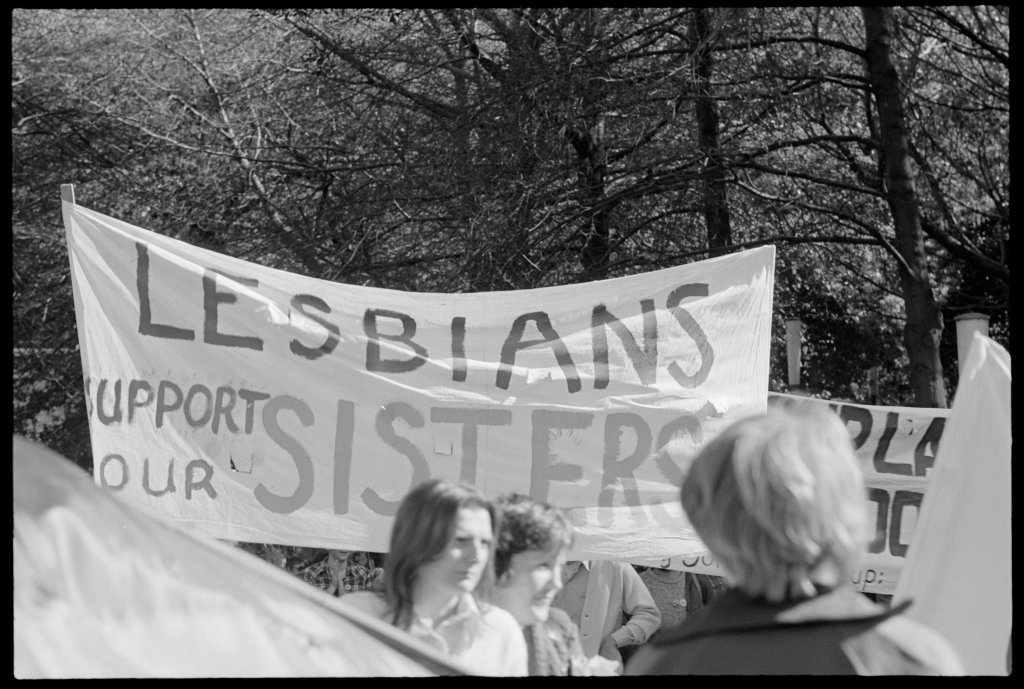
Queer liberation is a prescient issue for communist organisations in Australia. Most, bar a few reactionary groupings, support the struggle of queer workers. However, very few are able to articulate why. Many will assert that homophobia and transphobia, along with a whole list of chauvinisms, are simply attempts by the capitalist class to divide the proletariat. This, of course, implies some grand conspiracy, by which ‘global elites’ sit around a long table, cackling as they decide which minority to next scapegoat in order to prevent socialist revolution.
It is no wonder many queer organisations disavow themselves of Marxism and socialism. This is inevitable when the socialist left is claiming that their struggle is a ploy of the ruling class, and that they must ‘overcome division’ in order to reach a class consciousness that remains curiously straight, white, and male. Even more condescendingly, they are told that their discrimination will immediately cease in a socialist society, the battle for queer acceptance won as a byproduct of working-class revolution. How, why? Do such organisations think that any vestiges of reactionary moral conservatism disappear as soon as the means of production are seized? Or perhaps it is once the commodity form is abolished that so too are gender norms, or further still that within the revolutionary fervour every worker forgets their prejudices, links in arms with their queer siblings, and they all sing kumbaya. These misconceptions come from a fundamental confusion of the position of queer workers in Australia today, and only by analysing and fully understanding this position can we effectively and correctly link queer liberation with the communist cause.
Queer workers in Australia suffer on two fronts – they are both discriminated against, and oppressed. These two words are often used interchangeably, and it would be understandable to consider them as synonyms. However, this conflation is a fundamental mistake made in most analyses of queer struggle. Discrimination of queer Australians is rampant. They are twice as likely to face it in the workplace, and nearly 1 in 2 choose to hide their identity in social settings. 25% of Australian workers said that they could never see themselves as an ally of the queer community. These are all forms of interpersonal discrimination that plague queer workers, and the result is a dramatic increase in mental health issues, insecurity, and fear within the community. The tendency of many socialists at this point is to react that “capitalism is to blame!”. This is a disingenuous and untrue response. The church, which has been around for significantly longer than capitalism as an economic system, plays a large role, as do a variety of cultural and social norms that exist somewhat independently of the capitalist mode of production. Discrimination, chauvinism, and prejudice will not be vanquished with capitalism, and most queer people know this.
So what, then, is oppression? Oppression, as opposed to discrimination, is systemic. It cannot exist as simply a relationship between two people, but rather exists as a function of society. Fundamental to capitalism is the nuclear family. Engels traced its relation to private property in The Origin of the Family, Private Property & the State, and though his anthropological research is well outdated, what remains cogent is that the family reproduces labour. Where the worker produces capital, the family produces and maintains the worker. As a result, capitalism requires the nuclear family to reproduce its own conditions of existence, and people that exist outside of that model will be at a systemic, not only interpersonal, disadvantage. Queer workers find themselves excluded from the nuclear family, and thus face oppression under the capitalist mode of production.
Discrimination and oppression are obviously linked. For the nuclear family to be an effective social norm, it must rely on the creation and demonisation of an ‘other’ that exists in opposition to what it stands for – that is, queer people. This is why much of the conservative discourse around queer liberation centres on debates around children, innocence, and purity. These are the core cultural tenets associated with the family unit. An attack on the nuclear family is seen as being an attack on everything it represents, and thus the existence of queer people is a direct threat. However, while chauvinism may have systemic roots, it is not a feature of any one economic system. The abolition of capitalism is a necessary condition to eliminate the oppression of queer workers, but it is not sufficient in eliminating discrimination against them.
What way forward is there for communists to intervene in queer struggle? There must be an intervention, for otherwise queer rights movements will simply be absorbed into liberal progressivism, addressing some aspects of discrimination but never fundamentally challenging structures of oppression. It is this link between the systemic subjugation of queer people and the dominant system of production that must be made clear by communists; we must abandon the idealist line that anti-queer sentiment is simply a tool to divide the working class, and undertake a genuine materialist analysis of both discrimination and oppression for queer workers today. To do otherwise would be to reject dialectical materialism in favour of vulgar class analysis, and it is a tactic that will ultimately lead to the loss of queer workers to the communist cause. We must acknowledge that discrimination must be fought under any system of production, but carefully elucidate the ways that oppression can only be fought through the system of production. We must unite under the banner of queer liberation, and fight genuinely for such liberation until our dying breath.


 PARTISAN!
You must be logged in to post a comment.