Mila Volkova writes on the RCO and party-building.
In the recent letter from the Revolutionary Communist Organisation (RCO) central committee to Red Ant, we wrote:
“With every split in the movement, we become even weaker. As long as we are competing with one another, we are even less than the sum of our parts.
But we are not surprised by these events. This is the inevitable result of the narrow “sect” form of socialist organising, wherein an organisation founds itself on strict adherence to a certain set of theoretical principles, rather than a practical political program.”
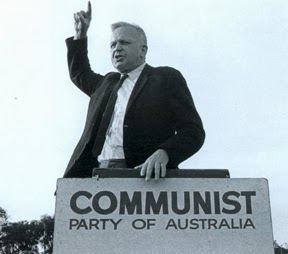
The question of how to rebuild a party looms over Australian socialists. Since the 90s, we have been without a mass communist party and for that we have suffered. We must connect the disparate socialist movement in an organisation that can reproduce the struggle over generations. The top priority of the socialist movement in Australia must be the refoundation of a meaningfully united communist party.
Without this, we have no chance of taking power and making universal human liberation a fact rather than an abstract legal principle. We must prepare workers to overcome the accelerating crisis of climate change, financial crashes, and the latest wave of nationalist, racist, and misogynistic reactionary hatred.
For thirty years, numerous strategies have been deployed and all have failed, yet wannabe party-builders re-deploy them again and again. A critical re-evaluation of party building strategies is in order.
The Waiters, The Builders, and the Entryists
There are three dominant party-building strategies in Australia. Most are familiar with the first, which can be referred to as “The Waiters”, epitomised by Socialist Alternative. This strategy artificially divides working-class consciousness into “spontaneity” and “theory”, assuming that most workers are only capable of the former, and that a mass party simply cannot be built until the revolutionary moment is already upon us.
History has clearly shown that successful revolutions, such as the Russian Revolution of 1917, require decades of political education from the vanguard upon the remaining sub-conscious workers, not that revolt alone suddenly made workers revolutionary. This narrative assumes that close theoretical unity and clarity is critical for socialists to lead a working-class revolution, but this is historically untrue.
The Bolsheviks remained a deeply factional party during the revolution. The banning of internal factions occurred after 1917 and was a symptom, and accelerator, of the revolution’s degeneration. This needs to be acknowledged as a mistake rather than something to emulate. The endpoint of this strategy is not a strategy at all, but the recruitment-opportunism that Socialist Alternative is famous for.
The second strategy is less understood but just as common. The “Builders”, including Solidarity, the Freedom Socialist Party, and the Anarchist groups, attempt to lay the groundwork for a party (or some derivative of it) by rebuilding the basis of one, a mass workers movement. While this strategy is more practical, it suffers from the same artificial divide between spontaneity and theoretical education described above.
In practice, the Builders conceal their revolutionary politics, assuming that trade union militancy will naturally lead to revolutionary consciousness. They aim to build broad-based rank-and-file factions within unions rather than explicitly socialist caucuses alongside other groups. The result of this strategy is a constant cycle of build-burnout, where socialists practically submit themselves to the needs of trade union bureaucrats. These factions are open about their politics and thus win over more workers. Only political education and a party can sustain long-term organisation of the working-class.
Both these strategies hold to a theory of revolution that overemphasises the spontaneous action of the working class at the expense of deliberate organisation and political education. They believe it is bureaucratic to set out an explicit program ahead of time and openly build support for it, because this diminishes the opportunity for the organic expression of consciousness. It is up to them to disseminate the correct line only at the moment of the revolution, and it is through having the correct line that one’s group is taken from sect to revolutionary mass party. Therefore, it is necessary to tightly control membership of the organisation to ensure the purity of this line until the time comes.
The mistakes of these two strategies can be summed up as “economism”, the tendency to emphasise workers organising over economic conditions rather than for working class political power.
This is not to say we can summon up revolution out of thin air if we were to read hard enough. Rather, that socialists can only succeed where they combine politics with economic struggle. We must aim to rebuild working class institutions, but openly as communists, and with a secondary aim towards recruitment and political education. A proper socialist doesn’t consider these separate at all.
The third strategy is that of “the Entryists”, who aim to join either the Greens or Labor parties en-masse, win leadership, and transform them into socialist parties. The strongest example of this strategy is the Socialist Alliance. It is true that Labor’s base is in the working-class, while the Greens base is in the renting middle-class, but both are reformist parties.
In practice, this means that attempts to pull them to revolutionary politics are always met with undemocratic purges and road-blocking from the reformist wing of the party, no matter how democratic it may seem on paper. In the first place, it is difficult to build a revolutionary bloc when one is also tied to building, and recruiting into, a rotting capitalist-aligned clique. Confused and unsuccessful agitation, propaganda, and recruitment efforts are the result.
This creates a tendency to opportunistically adopt reformist politics, or abandon the political independence of workers in favour of cross-class alliance-making, which Socialist Alliance is a perfect example of. Indeed, the Marxist Unity Group within the Democratic Socialists of America is struggling with this tendency.
What is clear is that success requires the organised efforts of the entire socialist movement. Disorganised, divided, at one another’s throats, we constantly undermine and embarrass ourselves. It is the nature of workers to unite and fight for political power. Against the three rebuilding strategies outlined above, the RCO advocates for an entirely different approach.
The RCO’s Strategy
Rather than founding itself on strict agreement with a theoretical dogma, RCO membership is conditional on acceptance of a written-out program. This program is an attempt to concretely set out how the Australian working class should achieve political power. However, this program is the product of a lively internal democracy and yearly rewrites, it isn’t rigid or passed down to the membership from bureaucratic leaders. While members accept unity of action in working to implement this program, they are free to form internal factions and criticise it.
The RCO believes that this kind of unity, “programmatic unity”, is the only workable strategy for uniting the socialist movement in Australia.
Because the RCO does not see itself in competition with other socialists, but working with them in a concerted movement, it is able to prioritise rebuilding a party. This is opposed to the common sect behaviour of dis-unity in action, pursuing total victory of one’s own sect above all others, to the detriment of the movement as a whole. The RCO’s strategy is entirely focused on modelling a picture of sustainable unity to other socialists and building connections with them to show off its success.
Comparing the RCO strategy to the others, we see a turn towards robust political education. The aim is that by recruiting from the pool of socialists not already in an organisation and developing them into hardened, independent, and critical thinking comrades, we can raise our profile among the disparate socialist movement and win it over to our programmatic-style politics.
This requires constant dialogue with the sects, which is achieved through the Partisan (an attempt to “model” what a good multi-tendency newspaper should look like), attending their events, working with them in the social movements, and building common electoral fronts.
This strategy is intended to produce a series of “unity congresses”, which aim to fuse with other partyist socialist groups as they emerge. The RCO does not consider these congresses to be a refoundation of the party, but as part of this strategy to gradually win over the movement. Rather, the proper refoundation of a communist party is a completely different event that unites the entire existing socialist movement and, ideally, dissolves all other organisations, including them as internal factions of a programmatically unified party with one-member-one-vote.
This strategy is on the right path. The RCO has experienced decent growth since its formation in 2022 without compromising on its principle of “quality over quantity”. RCO comrades are known for their dedication and theoretical development. We have demonstrated our meaningful dedication to joint work by working closely alongside Socialist Alternative in the University of Queensland Gaza Solidarity Encampment, and we have strong relations with them in Brisbane as a result.
More work needs to be done to build connections with other groups in Melbourne, but we are demonstrating our eagerness to do so. Through our past work alongside other socialists in the university Palestine encampments and ongoing work building a partyist caucus in Victorian Socialists, we are laying the groundwork. The RCO is punching well above its weight, considering the high profile of its political orientation among other socialists despite its seventy some members.
Not an Alliance, not a Coalition, a Party
Currently, the RCO’s strategy is dismissed completely by the other sects and accused of being “just another” attempt at broad left unity. A common comparison is made between the RCO and Socialist Alliance, but this is a mistake. There are significant differences between the RCO and Socialist Alliance.
Although Socialist Alliance had a program, this was not the basis for unity, and membership was conditional on the vague self-declaration of being a socialist. Because Socialist Alliance structured itself as an electoral front for multiple sects where affiliated groups had special rights within the coalition, there was no coherent political principle on which unity could be constructed.
Socialist Alliance collapsed because being a socialist is not a matter of self-identification, theoretical principles, or vague aesthetics. To be a socialist is to be proactively committed to a revolutionary political program for working class rule and the transition to communism.
When the Democratic Socialist Party (the instigators of Socialist Alliance) dissolved into it and attempted to transform it into a true socialist party rather than a loose coalition, the other groups left, leaving us with the organisation we see today.
Without unity to this political program, or a form of it, there was no coherent basis for membership. The only possible basis for unity between the factions of the Socialist Alliance was an opportunistic alignment of interests, but convenience isn’t a stable bedrock from which to build unity. Without commitment to a concrete common goal, Socialist Alliance was unable to build a genuinely unified socialist party. The consequence was a reformist program and a largely reformist membership.
The Anti-Sectarian Sect
The RCO is a characteristically different organisation from Socialist Alliance, with a characteristically different strategy. We understand that we must work tirelessly to win the socialist movement over to our vision for unity. We do so backed with the knowledge that history has shown, time and time again, that this is the only successful strategy for building a socialist party.
But the RCO remains a sect, even if it is an anti-sectarian one. The RCO must do even more to engage the wider socialist movement by building common organising committees on issues like the environment, feminism, indigenous liberation, etc. We must demonstrate just how serious we are about programmatic unity by modelling how a principled minority should behave, and how successful an organisational model programmatic unity is.
It is not inevitable that we convince the movement of our politics. Yet we know that there are no shortcuts, and there can be no cashing in of opportunism in the rebuilding of the party or the mass workers movement. This is the only way forward. We are patient.



 PARTISAN!
You must be logged in to post a comment.