Brunhilda Olding discusses the life and work of Australian Council Communist writer J.A. Dawson.

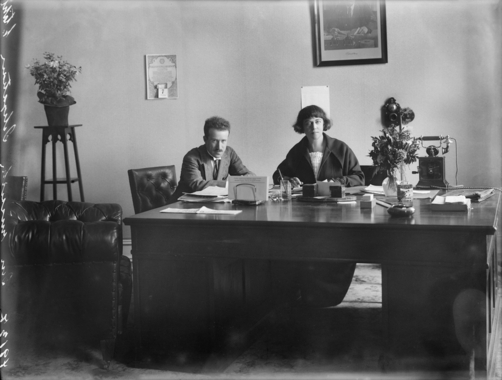
James Arthur ‘Jim’ Dawson to those who know of him is often a vague footnote in the history of both the Australian Communist movement, and the Council Communist strain of thought. A small newspaper editor in the Melbourne socialist milieu in the 1940’s neither he nor his newspaper Southern Advocate for Workers’ Councils never really broke out into the mass movement of the proletariat. Yet his unrelenting desire to keep on fighting to find the revolutionary truth burns bright amidst the current decline of the class struggle. Never content to simply endure the truth handed down from high be it from the leadership of the Comintern, the Fourth International, or the Socialist Party of Australia, Dawson fought to find what he considered the true path towards socialism. One rooted first and foremost in the self-emancipation of the working class.
His ideological evolution cannot be discussed without first talking about the two tendencies that he drew closest with during his organized years. Both of which are on the left of the Communist movement. The first of the Socialist Party of Great Britian, could be described in several ways, including Ultra-left reformism, Orthodox Marxism, and perhaps most accurately Impossibilism. The second trend, which he moved too after disgust from the focus of the Socialist Party of Australia on elections was the revolutionary tradition of Council Communism.
The line of the SPGB, and the World Socialist Movement they spawned reflects a fundamentally optimistic analysis of the role of capitalist parliament and superstructure. Relying on the belief that the election of the party to majority in parliament would allow for the revolution to unfold. Prior to October the SPGB was seen as perhaps the premier Marxist party in Britian, if a haughty one that alienated many. Then came October 1917, and the raising of the Red Flag over the Winter Palace. The SPGB’s rejection of the new Soviet state as either socialist, a dictatorship of the proletariat or a worker’s state, left them out in the cold whilst the new International rose from the fires of the Eurasian revolutionary wave. The brutal class struggle that engulfed Western Europe, and the British Isles swept the
While the SPGB’s vital and well-developed critiques of the Soviet Union appealed to Jim Dawson, their obstinate refusal to push towards any genuinely revolutionary action alienated him. The tiny Australian groupuscule which took on the lofty name of the Socialist Party of Australia were unable to nominate any candidates to the parliament that they loved so much. As such they advocated for their followers to simply write socialism across their ballots. This aura of lecturing to the working class from the lofty soapboxes that they dragged out to Melbourne’s streets would doom the SPA to irrelevance. A party lecturing to the proletariat that all they needed to do was vote already existed. It bore the name of the Australian Labor Party. Dawson would fully split from the SPA in the 1945 Victorian state election, wherein he expressed critical support for a comrade running under the banner of the CPA. The adamant refusal of the SPA to support this comrade served as a final break for Dawson from the relic of their party, and once more he looked for a road leading towards the self-emancipation of the working class.
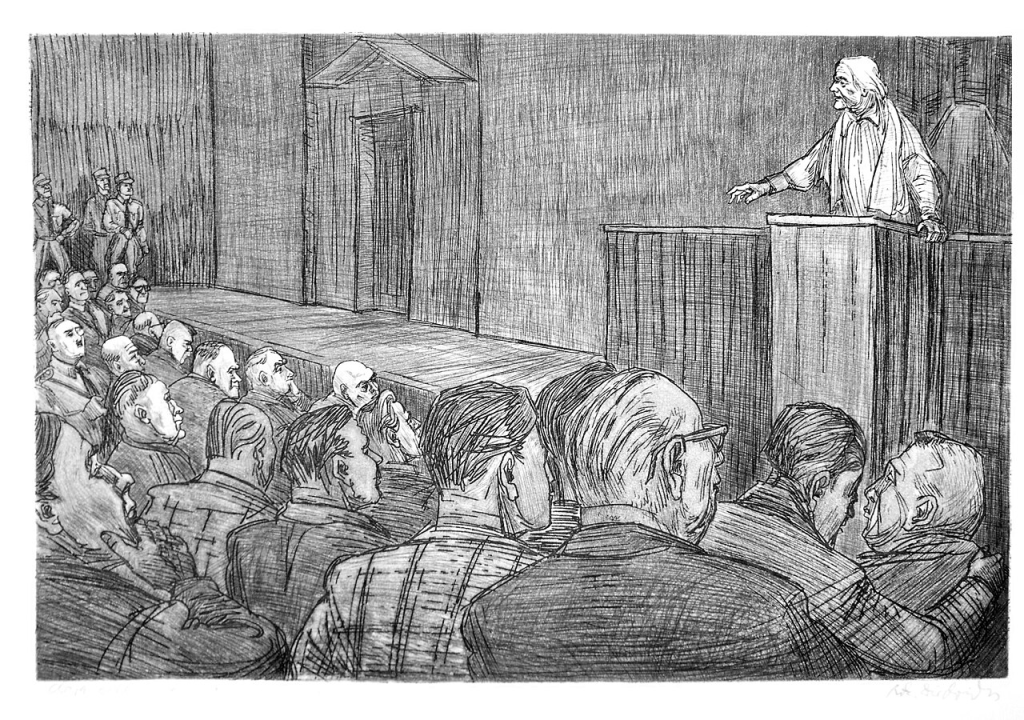
This is what would point him towards the second major tradition of his life, and the reason that he is remembered today. Council Communism, emerged in the fires of the German revolution as the legacy of the Spartakusaufstand loomed large in the new Weimar Republic a new tradition emerged from the Left of the newly formed KPD, and the Dutch SPD. This tradition much like the SPGB’s World Socialist Movement foresaw the degeneration of the Russian Revolution and would unleash much criticism upon it. Yet unlike the SPGB rejected pacifism and the parliamentary road to socialism. The only way to save not only the German Revolution, but the Russian, and indeed European revolution rested upon the establishment of a Council Republic in Germany. The KAPD (Kommunistische Arbeiterpartei Deutschlands or Communist Workers Party in/of Germany) would emerge as the vanguard of this tradition for a few years before falling to infighting, and the jackbooted thugs of the NSDAP. Yet it’s legacy would loom large over a few key thinkers. Most notably Anton Pannekoek, and Paul Mattick. It is these two men who would prove crucial to Dawson’s conversion to Council Communism.1
Following Dawson leaving the SPA his newspaper would temporally return to the IWW support of his early years. Which resulted to him publishing one of Paul Mattick’s many pieces on political economy. This in turn would inspire a series of letters with Anton Pannekoek which would win Dawson over to Council Communism. While the remaining history of the newly renamed Southern Advocate for Workers’ Councils is beyond the remit of this essay2, its brief history is vital as the last English language Council Communist publication until the 1960’s.
Yet the more important legacy of Jim Dawson is not in his paper, though it is a vital record for tracing the evolution of the Communist Left. No, it is in his refusal to simply sit down and by lectured too. Dawson was the clearest example of that great spirit of the proletariat pushing forwards towards their own liberation. He did not simply listen to the decrees of Detroit, London, Moscow, or the rump Fourth International. He kept the burning flame of critical revolutionary Marxism alive in Australia because he refused to simply kneel to the dictates of those who proclaimed themselves to be the vanguard.
That is his greatest legacy, that is his truest revolutionary legacy. Communists cannot become stagnated clinging to the dead and withered shibboleths of theory. Communism is the real movement to abolish the present state of things, and the real movement lives and breathes. It evolves, yet that does not mean we should fall into the trap that the modernizers lie out for us. Communists must be schooled in class struggle, must be schooled in revolutionary necessity, and schooled in the historic duty that lies before us. They must be willing to question everything, as the old saying goes the greatest strength of Marxism is that it is true.
 PARTISAN!
You must be logged in to post a comment.