Anthony Furia discusses the necessity of disciplined internationalism, and critiques its Left and Right sectarian variants.
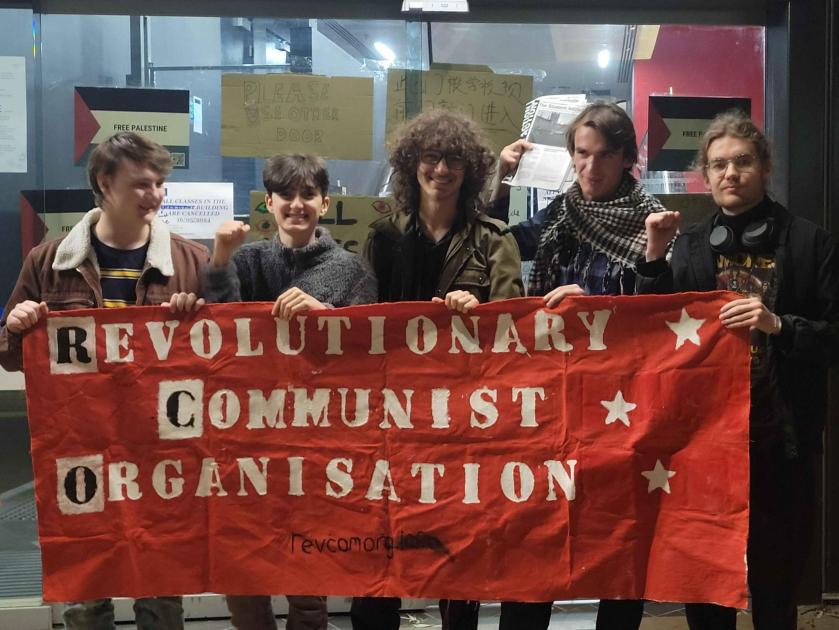
Within this article, I hope to provide a brief overview of the flaws and logical leaps of a certain trend within Australian socialist grouplets – a sectarian internationalism.
However, Left internationalism is best understood in relation to its opposite – the thing it so often defines itself entirely against – Right opportunist internationalism. As such, we will begin with an extremely basic overview of the latter, before launching into an exploration of the former.
In its most basic form, Right internationalism pledges itself to “Actually Existing Socialism”, “socialist experiments”, and a “critical” support for certain state actors seen as anti-imperialist under a tricontinentalist framework. These states can range from Russia, Syria, and Iran to Venezuela and Cuba, and anywhere in between. For rightists in first world countries, “support” mostly means the writing of lengthy pamphlets and discussion groups attended by a ratio of one spotty university student to every three over 70 year old “anti-imperialists”. Although this may appear similar to “Stalinism” (whatever that may mean), it goes far beyond standard Stalinist sects. Those of a confessionally Trotskyist variety are also often guilty of perpetuating a right internationalism, although their focus and reasoning may differ somewhat.
Support for x or y country, whether it is phrased in terms of defending the gains of a previous revolution, defending an “existing socialism”, or actively supporting a state against the ultra-imperialist West (such as siding with Russia in their endless war against Ukraine, or defending the Syrian regime from overthrowal), is, ultimately, a tactical tool. It distinguishes groups, sects, and individuals from others they otherwise have an exceeding amount in common with, and cements an artificial line across which work simply cannot be done, and merging is an impossibility. A right internationalist cannot cooperate, in the long term, with what it deems (sometimes rightfully!) as social imperialist sects. They cannot organise within the same group, or fight under the same name. To them, this is a line that, were it to be crossed, would be a betrayal of their principles of the international proletariat.
Defined by their explicit opposition to this right internationalist trend are the left internationalists. No less free of opportunist sin, those belonging to such a trend do half of the work of right internationalists for them! In condemning anyone who wavers in their condemnation of an extensive list of states (from China to Iran), left opportunists enforce the line drawn by right opportunists – simply from the other side. By decrying right opportunists, or anyone who disagrees with their specific tactical decisions in relation to each state, as “scabbing on the international working class” (a ridiculous notion used either by those who have never even seen a job application, let alone a picket line, or those so thoroughly mired in trade union consciousness they’re unable to think of an alternative), left opportunists thus justify their own isolation from the broader movement. Why, how could one possibly work with such scabs, such low lifes, such traitors of internationalism and the international revolution? Unfortunately for left internationalists, two issues lie at the heart of this tidy little explanation of the necessary basis of unity.
The first is, very simply, that we must work with supposed “scabs”. In both workplace struggles and within the socialist movement, one will no doubt encounter countless opportunists of endless varieties. We cannot purify ourselves of such elements through enforcing a strict theoretical unity. We must, by necessity, work with and cooperate with such elements – defeating them through argument, debate, and, in the case of both a strike or any periodic upheaval, through the test of direct struggle, practical action. In engaging openly with these ideas we perceive as opportunist, or betraying internationalism, we defeat them within our organisations and campaigns – whilst cooperating with them towards our ultimate aims.
The second is directly correlated to these ultimate aims. In all frankness, under any serious investigation, the catastrophised “betrayal” of those who differ in their analysis of certain states is simply not that serious. It is far from the worst form of opportunism possible, and far from anything that would bar, on any practical level, the existence of both left and right internationalism within the same organisation. Ultimately, our primary task, our primary duty to the international working class (the defeat of the enemy at home), is something both such factions thoroughly agree with. Indeed, for the most part they largely agree on their analysis of the road to the victory of the proletariat and the defeat of our national bourgeoisie. When, in practice, the question of “support” to x or y country is such a superficially theoretical one, it rarely even matters in the actual, substantial tactical sense. And, when it does, such as in the case of protests over the Syrian civil war, it is the responsibility of the organisation – containing both these left and right internationalists – to debate, criticise, and formulate a response in line with their strategic orientation (in our case, the refoundation of the communist party).
Thus this internationalism – the internationalism of the “left” – is a superficial internationalism. It is a sectarian internationalism, providing the perfect cover to disavow, rebuke, and expel those who disagree with what is ultimately a singular ideological point with tactical, not strategic, implications. Communists have long understood that the greatest enemy is at home. This is the absolutely fundamental strategic point for those in the “first world” – first and foremost, our duty to the international is the defeat of Australian capital. The question of whether or not states ranging from China to Cuba are capitalist, are “murderous dictatorships”, does not concern our immediate strategic priority. It does not inform it. To rebuke otherwise revolutionary Marxists for their specific theoretical belief with regards to even a single state actor is needless, futile, and stupidly sectarian.
Of course, as I hope I have made clear, the answer isn’t, as some may expect, critical support for these state actors. Rather it is the appropriate placing of these tactical questions where they belong – under a broader, strategic programmatic unity. Do we support Cuba against a hypothetical US invasion? Certainly! Do we believe currently that it is a dictatorship of the proletariat? I do not, but it is a debate for The Partisan, for internal organisational discussion, not an all-encompassing, exclusionary point of unity.
Ultimately, we are revolutionaries, we are communists, we are internationalists. We know our primary duty to the international working class, and by unifying in our pursuit of it, we do far more for the international working class than a thousand panels on supporting the Cuban revolution, or a million pamphlets denouncing the murderous tyranny of the People’s Republic of China. These debates are important, but they are debates that should be strengthening a mass democratic culture – not ones that act as the definitive points of exclusive difference between organisations. The more we march towards a mass party, the sooner our obligations to the international working class can be realised.


 PARTISAN!
You must be logged in to post a comment.