Sylvia Ruhl discusses Trump’s recent decision to choose Ohio Congressman J.D. Vance as his running mate.
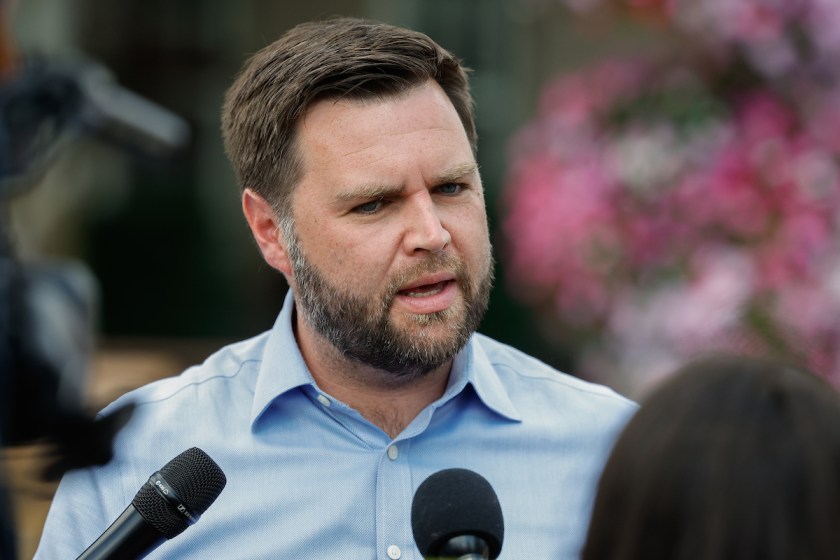
Earlier this month, Donald Trump announced his pick for Vice-President in the coming election. J. D. Vance, native of Middletown, Ohio, was chosen. Vance came to prominence in U.S. political discourse with the 2016 publication of his life memoir, Hillbilly Elegy: A Memoir of a Family and Culture in Crisis. A recollection of his upbringing, the book details the dysfunctional environment of his rural white working-class family and community in rural Appalachia. It also acts as a prescription for his personal views on the causes of entrenched poverty, namely the tired Darwinist trope of culturally sanctioned helplessness, as well as an acknowledgement of the economic backwardness of the hill country. Released as the 2016 election was in full swing, his book was held up in both liberal and conservative circles as an explanation for Trump’s high level of support among rural, white layers of America’s working-class. The success of this publication shot Vance to national prominence, which he rode, with substantial help, to election in the U.S. Senate in 2022.
After finishing high school, Vance had a stint in the Marine Corps during which he was sent to Iraq for six months in late 2005 as a combat correspondent. He then studied at Ohio State University, before undertaking postgraduate studies at Yale Law School. Vance’s move into conservative elite circles began during his Ivy-League studies, during which he worked for GOP state senator Bob Schuler. During this time Vance heard venture capitalist Peter Thiel give a speech during which he insinuated that “smart people” should be working in the tech industry rather than studying at elite institutions. Vance then emailed Thiel and was invited to visit to visit his home in California. After two years of practising law, Vance left for San Francisco in 2016 to become a technology industry venture capitalist. During his time in Silicon Valley Vance worked as a principal at Thiel’s firm, Mithril Capital, eventually even becoming COO of Thiel’s “family office”. Thiel would quickly become one of his most vital supporters and ideological influences, even being the stated cause of his conversion to Catholicism in 2019.
Thiel and Vance are both friends and influenced by blogger, former programmer, Curtis Yarvin; founder of a young bourgeoisie intellectual movement known as neoreactionism, or Dark Enlightenment. His works describe U.S. democracy as being a “failed experiment”, and that a technocratic, absolute monarchy headed by a “startup guy” (sic) and supported by an aristocracy formed from former tech and business bosses is needed in its place. The goal of this is to take control of society away from networks he describes as “Cathedrals”, consisting of media, academia, and government institutions. These institutions would be removed through a program referred to by Yarvin as “RAGE”: Retire All Government Employees. The order proposed by Yarvin, would supposedly transcend class and unite the U.S. under one C.E.O. (Yarvin has used this term for this head-of-state). Thiel agrees with the neoreactionary views of his friend, once writing “I no longer believe that freedom and democracy are compatible”. Vance himself has also echoed Yarvin’s signature idea of “RAGE” when asked by a podcast host about removing liberals from government institutions by responding: “…. we need like a de-Baathification program, a de-woke-ification program”.
Vance has been falsely portrayed by some as a “pro-worker” economic populist. He is indeed out of line on current GOP policy with regards to trade unions. Opposed to the current model of workplace bargaining, he has supported proposals put forward by groups such as American Compass calling for workers’ councils and sectoral bargaining. Of course, Vance is, as a reactionary member of the bourgeoisie, no friend of the workers’ movement. In keeping with the GOP line, however, he has continuously declined to support the Protecting the Right to Organise Act (PRO Act), a proposed federal law that in its current form will legalise labour unions encouraging solidarity strikes. It will also outlaw bosses from holding mandatory meetings to discourage employees from union organising. Taking together Vance’s positions on the matter of labour, it is clear that he holds a view of aiming to bring the ascendant union movement in the U.S. to heel by binding workers to stronghanded agreements reached by said unrepresentative “workers’ councils”.
These proposals are anti-democratic and class collaborationist proposal precisely because they seek to rob workers of their ability to represent themselves through collective bargaining by designating state-approved official workers’ representatives. This is a vital aspect of fascism’s class collaborationist attempts to neuter independent workers’ organising and political participation and is simply a mirror of earlier institutions such as the Nazi Party’s German Labour Front which replaced outlawed independent trade unions, and fascist Italy’s state-run “trade unions”.
Vance’s initial run in the Republican primary for the Ohio U.S. Senate race gained attention for the unusual amount of support received by Peter Thiel. $15 million in total donations were made by Thiel to a super PAC (Political Action Committee, a tax-exempt pool of funds that donates to political campaigns) that supported Vance’s run, the largest total amount of funds ever given to boost a single Senate candidate. Vance went on to win the primary and then the Senate race. Later, in 2024 Vance would run to be endorsed by Trump (who, in 2016 Vance referred to as “America’s Hitler”. Vance later apologised) as his vice-presidential pick. Vance’s run for Trump’s VP pick received substantial backing from rightist Silicon Valley billionaires including Elon Musk and David Sacks, with their support declared within hours of Vance officially announcing his run. The news of Trump selected Vance was therefore predictably, warmly welcomed by figures such as Musk, as well as the many followers of (mostly online) neoreactionary ideology. A newly formed pro-Trump America PAC backed by tech bosses in Musk’s social circle is likely to receive support from Musk himself, as revealed in the New York Times. The Super PAC will act as a conduit for funds that could propel the Trump-Vance ticket to victory in November, a win as well for the vociferously right-wing bosses of Silicon Valley.

 PARTISAN!
You must be logged in to post a comment.