Sylvia Ruhl discusses the history of Christian Malanga, the activist behind the recent coup attempt in the Democratic Republic of the Congo.
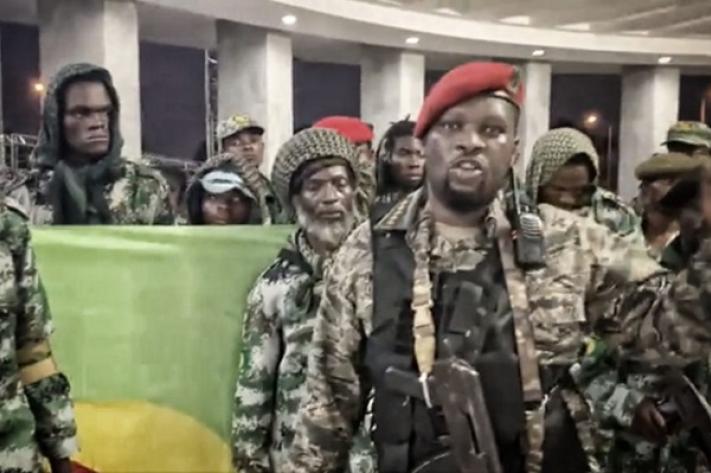
On the morning of the 19th of May, 2024, a small grouping of armed militants linked to self-exiled former opposition leader of the Democratic Republic of the Congo (DRC), and self-declared “President of New Zaire”, Christian Malanga, attempted and failed to overthrow the government of centre-left President Félix Tshisekedi. Tshisekedi is the son of Étienne Tshisekedi, the former Prime Minister of Zaire (As the DRC was known under the rule of fascist demagogue Mobutu Sese Seko). The older Tshisekedi, the longtime leader of the Union for Democracy and Social Progress (UDSP), briefly served as Prime Minister on three occasions towards the end of Mobutu’s reign and was a long-time Opposition Leader and leading figure in the democratic campaign against the western comprador’s rule despite taking up cabinet posts on various occasions.
Not to simply be dismissed as yet another a modern-day pretender, Malanga had a long, and often bizarre political and business histories both within the Congo and internationally. This includes time spent groomed by western governments as a potential future president, the owner of several NGOs and mining firms, and as leader of a Washington D.C.-based Congolese diaspora movement known as “New Zaire”, which aimed to bring his self-proclaimed “government-in-exile” to power. For several years he maintained a sizeable following in the diaspora and within the Congo itself, as well as a degree of unofficial recognition from several western governments. From the available evidence I will attempt to map Malanga’s ideology, career, and connections. I will then explain in detail the events that transpired on the morning of the failed coup.
Early life
Christian Malanga’s family fled political persecution under Mobutu in the 1990s when he was a child. They were eventually granted asylum in the United States and settled in Salt Lake City when he was 15. At 18 years of age in 2001, he received a thirty-day jail sentence for assault using a firearm. In the following three years he faced domestic violence charges on two separate occasions which were dismissed. Court records since 2004 showed that he had a long-standing custody dispute and a child support dispute.
He then owned multiple small businesses in the area until 2006 including a car dealership known as Malanga Auto Sale. He returned to the Congo in 2006 to briefly serve in the military, which he would later use to build up his image during his political career. Malanga campaigned for a seat during the 2011 parliamentary elections, during which time he was detained for several weeks. Having failed to win a seat, he returned to the U.S. the following year, where he founded the right-wing United Congolese Party (UCP) to campaign among the Congo’s diaspora.
Return to the U.S. and foundation of “New Zaire”
Specific details of what his activities in the United States entailed from this point on are hard to come by, though several points of data brought to the fore in recent days provide us with clues as to what circles he had been running in in this period. Seemingly around this time, he allied himself with a Maryland-based cannabis entrepreneur by the name of Benjamin Zalman-Polun, who later personally took part in Malanga’s coup attempt. Through Zalman-Polun, Malanga has met influential Republicans in Washington D.C., including some who are members of the House Intelligence Committee. On a separate date, Malanga and Zalman-Polun were also photographed visiting an IDF (Israel Defence Force) training camp in occupied Palestine7. On several occasions he professed his love for Israel and the IDF.
In 2016 Malanga, on the recommendation of the British government, led a 28-member delegation of “African political leaders” (sic) to a Business and Economic Centre workshop in Tbilisi, Georgia. Participants in the workshop met with representatives of the Georgian political and financial classes, and repressive state apparatuses, to learn about reforms enacted in the country following the world-historic defeat of the Soviet Union. In 2017, Malanga formed his government-in-exile in Brussels, which he named “New Zaire”.
Mozambique mine companies
Malanga, Zalman-Polun, and a third American by the name of Cole Ducey also owned among each other three Mozambique-based mining companies established in 2022: CCB Mining Solutions, Bantu Mining Company, and Global Solutions Mozambique. The last company was designated to operate in mining, construction, security, education, and health. Interestingly, none of these companies were officially registered, and Malanga never owned a license to mine in Mozambique.
Elements of the leadership of FRELIMO (Mozambique Liberation Front), the formerly Marxist-Leninist party that led the country’s struggle for independence against Portugal, are personally familiar with Malanga. This has been highlighted due to photos that have emerged of Malanga with Mozambican liberation hero and FRELIMO heavy, General Alberto Chipande. According to a 2023 Facebook post by Malanga, the two had discussed “reforming security” in the DRC. A representative of Chipande claimed that he did not know of Malanga’s previous illegal activities, however he did not specify what the contents of his conversation with him entailed.
Social media activity
The coup attempt was preceded by several months of sporadic and occasionally cryptic posts on Malanga’s social media, including his official LinkedIn and Facebook accounts, in which he denounced the rampant corruption within the Tshisekedi administration, and accused them of human rights violations, embezzlement of funds, and being fundamentally unable to bring “order to the country”. He would often promise to return power to the de-classed, vaguely defined “people”, a commonality amongst fascists.
It is evident the diaspora movement he led fed on Congolese disappointment with the very real, long-term, and aggregate crises afflicting the DRC. However, he puts the entirety of the blame of these crises in the Congo squarely at the feet of the country’s political class, and occasionally even the nation as a whole. He explicitly denies the roles played by outside, particularly western nations, in causing and exacerbating the general crisis in the Congo. In his deflections of western responsibility, he dismisses the centuries-long imperialist exploitation of the country that is undoubtedly the aggregate cause of the long-standing general crisis.
Mineral smuggling apologism
Malanga has claimed on numerous occasions that the crisis in the eastern Congo is entirely manufactured by the DRC’s political elites for self-enrichment, and that blame placed by the government on Rwanda for causing or exacerbating the current crises are misplaced. Rwanda is known to play a role in the crisis by supplying the M23 (March 23 Movement) insurgency and is blamed by the current DRC government for this. Rwanda also plays a role in the current Congo Crisis as it is a conduit through which minerals necessary for the construction of renewables, such as coltan and gold are smuggled.
Rwanda is well-known for exporting more minerals than it mines. Smuggled materials are then exported to foreign markets such as the European Union, which recently signed a mineral export deal with Rwanda earlier this month. Alleged war criminal and long-reigning President of Rwanda Paul Kagame and his sympathisers in the western tech industry deny responsibility in robbing the Congo of its mineral wealth due to having no direct involvement in illicit mineral transfer. That Malanga would claim to bring “prosperity to the Congo” should he be made President, whilst aligning himself with a government that is outright robbing that same country, would be laughable if it was not downright cynical.
Political context in the DRC before the coup
It must be noted that the recognised government of the DRC led by Félix Tshisekedi was beset by a months-long political crisis before the attempted coup, with the legitimacy of the results of the most recent election on the 20th of December 2023 called into question by opposition figures. The election overwhelmingly saw Tshesekedi and his government re-elected. The campaign was marred by logistical issues that caused voting materials to not be delivered voting stations until after polling booths were meant to open. The electoral commission made a last-minute extension of voting to the following day for locations that had not been able to vote that day, which was rejected by opposition presidential candidates as being illegal, and that new elections needed to be called. New elections were never called, and Tshisekedi was re-inaugurated four weeks later. Internal rivalries have so far prevented the ruling coalition from forming government.
The three-hour coup attempt and its aftermath
It should be firstly noted that the exact circumstances around the events of the coup are still not known, and the events listed in the next paragraph are the at-now unverifiable account given by the Congolese government. The first clues that a coup was underway were heard at 4am on the 19th of May, when gunshots were fired near the office of President Felix Tshisekedi. Militants tried to target the houses of new Prime Minister Judith Suminwa, and Defence Minister Jean-Pierre Bemba. The house of the former they could not find, and the latter was not home. The group then attacked the house of Economy Minister Vital Kamerhe, who was home but unharmed from the attack. Two guards and an attacker were killed in the firefight. The attackers then moved on to the Palais de la Nacion, the official residence and workplace of the President. They then entered the building and began to announce their amateur coup attempt via social media.
Two short, identical reading “New zaire” (sic) were posted on Malanga’s official Facebook page only twenty minutes apart on the morning of the 19th of May. Within the next thirty minutes, three livestream videos announcing the coup attempt were posted on the Facebook page. All three of the videos have since been taken down.
In one of the rather disorganised and seemingly ad hoc videos, Malanga, clad in military fatigues, made threats to the current president as his armed supporters went back and forth between cheering and pottering around. The militants stated their opposition to the current general crisis, citing corruption, and the ongoing war in the East. Malanga declared that he will “free the Congo”, and stated “Felix, you’re out!” Some men present bore flag patches of the old Zaire regime, with some visibly bearing U.S. flag patches. Some members present unfurled the flag of Zaire before the camera. Apparently believing occupying the building would grant them control of the country, the militants were later quickly routed by the military. Six of the militants died, and over fifty were captured by the Congolese military. At least two Americans were captured, including Malanga’s 21-year-old son Marcel, and business partner Zalman-Polun.
Conclusions
As noted elsewhere, Malanga and his associates in the coup were clearly unprepared for what their goals would entail. They were uncoordinated, ill-disciplined, and had no base of support in the DRC. Despite prior international interest in developing Malanga as a leader of the DRC, it seems unlikely there was any external support for his latest endeavour. Details of what happened during the coup attempt, and Malanga’s connections within the DRC, however, remain scant, and it is possible that the emergence of new details in the future could help make sense of who made the plotters confident enough to risk it all.
 PARTISAN!
You must be logged in to post a comment.